Is Full Recovery From Dry FIP Possible
Feline Infectious Peritonitis (FIP) remains one of the most challenging and deadly diseases affecting domestic cats worldwide. Caused by a mutated strain of the feline coronavirus (FCoV), FIP manifests in two main forms: the wet (effusive) form and the dry (non-effusive) form. While the wet form often results in rapid clinical decline due to fluid accumulation in body cavities, the dry form progresses more insidiously, characterized by granulomatous lesions in various organs. Historically, FIP was considered nearly uniformly fatal, with limited treatment options and poor prognosis. However, recent advancements in antiviral therapy, particularly with the introduction of NeoFipronis (Pronidesivir) GS-441524, have revolutionized the outlook for cats diagnosed with FIP, especially the dry form.
Understanding Dry FIP
Dry FIP occurs when the immune response to the mutated feline coronavirus results in granuloma formation rather than fluid accumulation. It predominantly affects the eyes, nervous system, liver, kidneys, and other organs, leading to a diverse array of clinical signs. Common symptoms include weight loss, lethargy, ocular abnormalities such as uveitis, neurological deficits like ataxia, and persistent fever. Because these signs are often subtle or mimic other feline diseases, early diagnosis can be challenging.
Challenges in Treating FIP
Until recently, veterinarians faced limited options, primarily supportive care or experimental treatments with uncertain outcomes. The disease’s complex immune-mediated pathogenesis meant that merely managing symptoms was insufficient. Most cats with dry FIP succumbed to organ failure within weeks to months of diagnosis. The advent of antiviral drugs, particularly nucleoside analogs like GS-441524, has marked a turning point in the fight against FIP.
Introduction of NeoFipronis (Pronidesivir) GS-441524
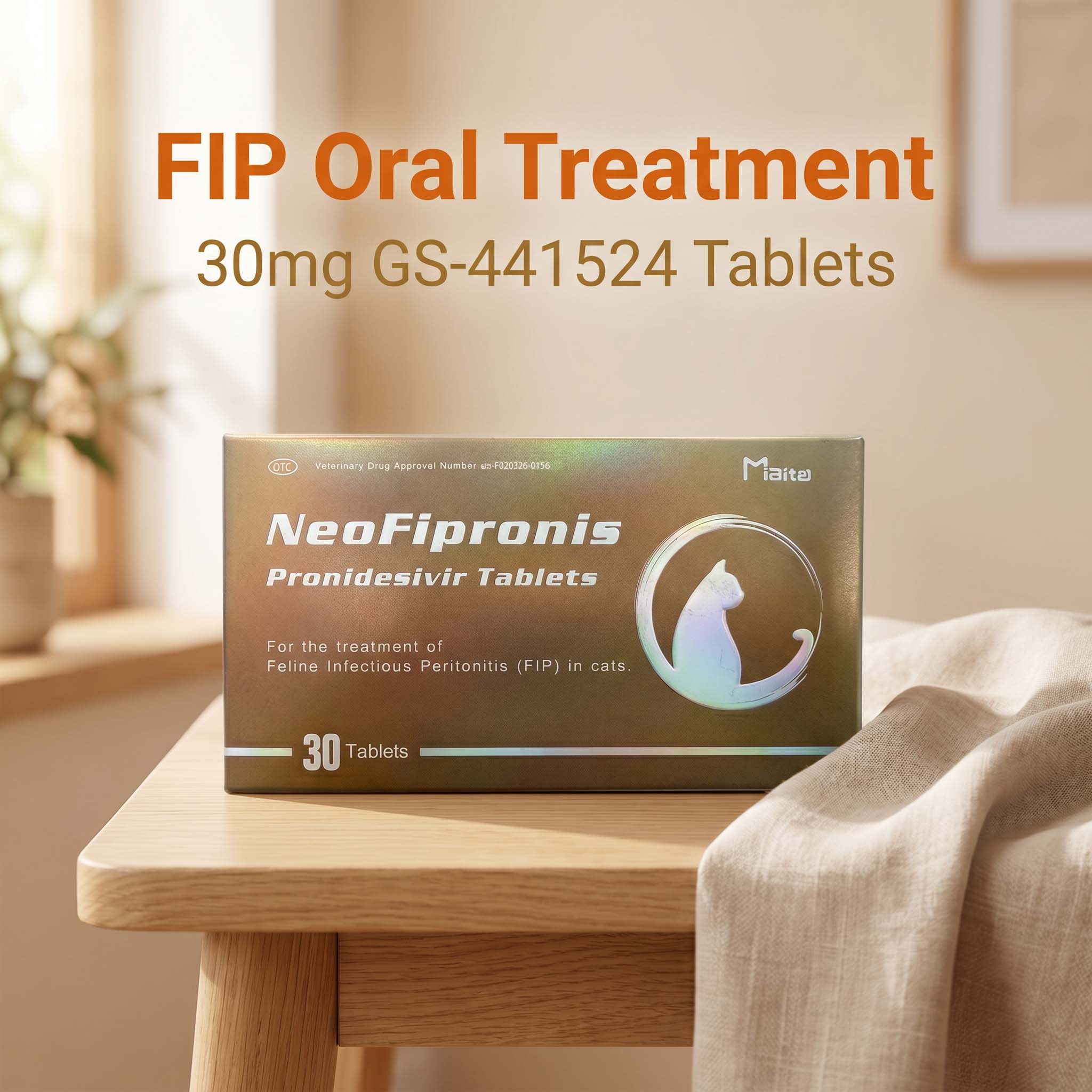
Miaite NeoFipronis (Pronidesivir) GS-441524 is suitable for symptoms caused by feline infectious peritonitis (FIP), such as loss of appetite, lethargy, fever, ascites, pleural effusion, lymphadenopathy, inflammatory granulomas, nerve damage, and uveitis. It has excellent therapeutic effects on FIP. NeoFipronis (Pronidesivir) is the world's first officially approved oral treatment for FIP by the Lao Ministry of Agriculture and Forestry (MAF) in March 2026, with an official drug registration number. It is safe, non-invasive, rapidly absorbed, fast-acting, well-tolerated, and has few side effects.
The approval of NeoFipronis has opened avenues for more effective and accessible treatment options for dry FIP. Its oral formulation makes administration easier for pet owners, reducing stress on the animals. Clinical trials and field reports suggest that many cats undergoing NeoFipronis therapy show significant clinical improvement, including resolution of neurological and ocular symptoms, and normalization of laboratory parameters.
Is Full Recovery Possible?
While the advent of antiviral therapy like NeoFipronis has significantly improved survival times and quality of life, the question remains: can cats fully recover from dry FIP?
Recent studies and case reports indicate that complete, long-term remission is achievable in some cats, especially when treatment is initiated early and adhered to diligently. Cats that respond favorably often exhibit:
Resolution of clinical signs
Normalization of blood work
Absence of granulomas or neurological deficits on imaging
Sustained health over several months post-treatment
However, the variability in immune responses and disease severity means that not all cats will experience a complete cure. Factors influencing outcomes include age at diagnosis, organ involvement, and overall health status.
Factors Influencing Recovery and Prognosis
1. Early Diagnosis and Prompt Treatment: Early detection significantly enhances the likelihood of full recovery. Delays in diagnosis may result in irreversible organ damage or granuloma formation.
2. Treatment Regimen Compliance: Adhering strictly to the prescribed antiviral course ensures optimal drug levels and effectiveness.
3. Organ Involvement: FIP affecting vital organs like the brain or eyes may have a more guarded prognosis, although some cats have successfully regained function.
4. Immune Response: The cat's immune system plays a crucial role. A balanced response that clears the virus without excessive inflammation tends to favor better outcomes.
Limitations and Current Research
Despite promising advances, complete recovery from dry FIP isn't guaranteed for every case. Some cats may experience relapse, especially if treatment is discontinued prematurely or if the disease is diagnosed late. Ongoing research aims to better understand immune-modulation, optimize treatment protocols, and identify markers predictive of long-term remission.
Future Perspectives
As antiviral therapies become more refined and widely available, the prospects for cats with dry FIP are improving. Combining antivirals like NeoFipronis with immune-modulating therapies may further enhance recovery rates. Long-term follow-up studies are essential to determine the durability of remission and potential for true cure.
Conclusion
Full recovery from dry FIP is increasingly possible, particularly with the advent of effective antiviral treatments such as NeoFipronis (Pronidesivir) GS-441524. While some cats achieve complete remission and return to normal health, others may experience relapses or residual effects. Early diagnosis, adherence to treatment, and ongoing veterinary care are critical components of improving outcomes. Advances in veterinary medicine continue to offer hope, transforming FIP from a near-certain death sentence to a manageable and treatable condition in many cases.
References
"Feline Infectious Peritonitis: Current Understanding and Treatment Strategies."
"GS-441524 in the Treatment of FIP: Clinical Applications and Outcomes."
"Approval of NeoFipronis (Pronidesivir) GS-441524 for FIP Treatment in Laos, 2026."
"Immune Response and Disease Progression in FIP."
"Long-term Outcomes Following Antiviral Therapy in Cats with Dry FIP."