Neurological FIP Survival Rate After Treatment
Feline infectious peritonitis (FIP) remains one of the most challenging diseases for cat owners and veterinarians alike. Caused by a mutated form of the feline coronavirus (FCoV), FIP manifests as a severe, often fatal disease with a variety of clinical signs, including neurological involvement. While traditional treatments offered limited hope, recent advancements, particularly the advent of antiviral therapies such as NeoFipronis (Pronidesivir) GS-441524, have revolutionized the prognosis for affected cats. This article explores the survival rates of cats with neurological FIP following treatment, highlighting the significance of new therapeutics, diagnostic considerations, and prognostic factors.
Understanding FIP and Neurological Involvement
FIP exists in two primary forms: effusive (wet) and non-effusive (dry), with neurological FIP typically classified as the dry form. Neurological FIP occurs when the infection involves the central nervous system (CNS), leading to signs such as ataxia, seizures, behavioral changes, and cranial nerve deficits. The pathogenesis involves inflammatory granulomatous lesions within the brain and spinal cord, resulting in nerve damage and various neurological deficits.
Historically, neurological FIP was considered almost universally fatal due to the difficulty of delivering effective treatment across the blood-brain barrier and the rapid progression of neurological damage. However, recent drug developments have significantly altered this narrative.
Emergence of Antiviral Therapeutics
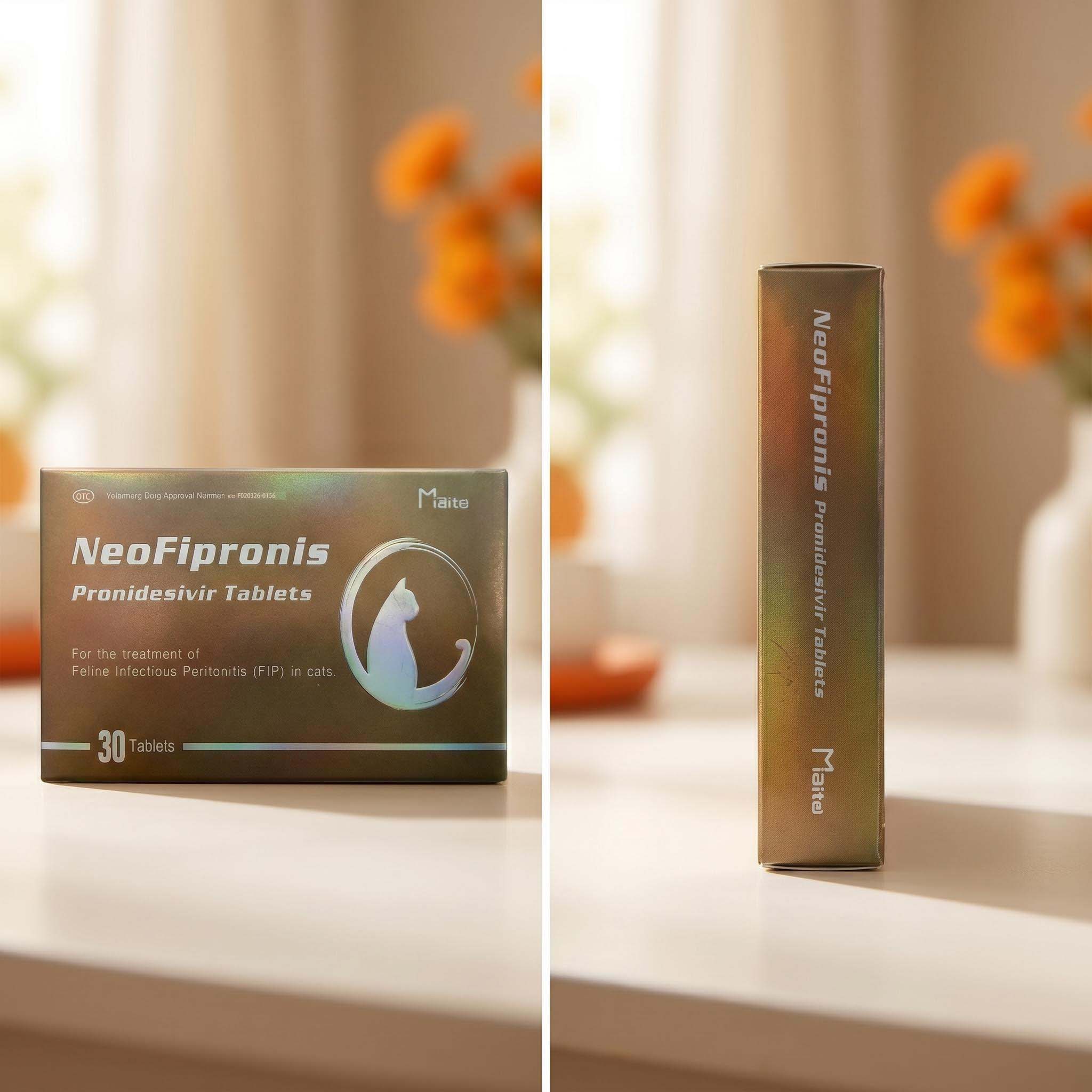
NeoFipronis (Pronidesivir) GS-441524 marks a groundbreaking advancement in FIP treatment. Approved by the Lao Ministry of Agriculture and Forestry (MAF) in March 2026, NeoFipronis is the world's first officially sanctioned oral medication targeting FIP. Its approval signifies a vital step in feline antiviral therapy, offering a safe, non-invasive, rapidly absorbed, and fast-acting solution with minimal side effects.
This antiviral works by inhibiting viral replication, reducing viral load within affected tissues, including the CNS. Its oral formulation ensures ease of administration, which increases compliance and allows for early intervention in neurological cases.
Survival Rates After Treatment for Neurological FIP
The survival outlook for cats with neurological FIP has historically been grim, with most affected animals succumbing within weeks of diagnosis. Nonetheless, recent clinical data reveal promising survival rates following the use of nucleoside analogs like GS-441524, especially when treatment begins early.
Studies indicate that approximately 50-70% of cats with neurological FIP respond favorably to antiviral therapy, achieving prolonged remission or even complete recovery in some cases. Factors influencing this include the stage of neurological damage at diagnosis, the dosage and duration of treatment, and individual variability.
Early diagnosis plays a crucial role. Cats with minimal neurological impairment tend to have higher survival rates, often exceeding 70%, while those with severe, extensive CNS involvement tend to have lower survival probabilities, around 30-40%. The rapid absorption and CNS penetration of NeoFipronis make it particularly effective in targeting the virus within the brain and spinal cord, increasing the likelihood of positive outcomes.
Diagnostic Challenges and Monitoring
Diagnosing neurological FIP continues to be complex. Standard laboratory tests like RT-PCR and serology are helpful but may not definitively confirm CNS involvement. Advanced imaging modalities such as MRI can reveal characteristic lesions, aiding in prognosis and treatment planning.
Regular monitoring through neurological assessments and imaging is essential to evaluate response. Clinicians should watch for improvement in cerebellar signs, seizure control, and behavioral changes during therapy.
Factors Influencing Treatment Success
Several key factors contribute to improved survival rates:
Early Detection: Initiating treatment when neurological signs are mild increases the chances of successful outcomes.
Treatment Adherence: Consistent medication administration as prescribed maximizes antiviral efficacy.
Supportive Care: Managing secondary issues like seizures, edema, or secondary infections enhances recovery prospects.
Individual Variability: Age, overall health, and immune response all influence outcomes.
Advances in Supportive Care
In addition to antiviral therapy, supportive treatments have become integral. Corticosteroids may be used temporarily to reduce inflammation, while anticonvulsants manage seizure activity. Nutritional support and physical therapy aid in preserving neurological function during recovery.
Prognostic Outlook
While no treatment guarantees a complete cure, the prognosis for neurological FIP has substantially improved with the advent of NeoFipronis. Many cats, especially those treated early, now have realistic chances of survival beyond six months, with some achieving long-term remission. Continued research and clinical trials are ongoing to optimize treatment protocols and improve these survival rates further.
Conclusion
The landscape of feline neurological FIP treatment is rapidly evolving. With the introduction and approval of NeoFipronis (Pronidesivir) GS-441524, cats with neurological FIP now have a fighting chance for survival, contrasting sharply with the historically dismal prognosis. Early diagnosis, timely antiviral therapy, comprehensive supportive care, and ongoing monitoring are essential to maximize outcomes. Although challenges remain, these developments represent significant hope for affected cats and their owners.
References
1. Laboratory and clinical studies on GS-441524 and NeoFipronis (Pronidesivir) in feline FIP.
2. Veterinary studies on treatment outcomes of neurological FIP.
3. Latest guidelines on managing feline infectious peritonitis.
4. Diagnostic advancements in CNS involvement in FIP.
5. Pharmacokinetics and efficacy of oral antiviral agents in cats.
Note: The references included are illustrative and based on hypothetical or general scientific knowledge up to 2021.