Best GS-441524 Dose for Kittens
Feline infectious peritonitis (FIP) remains one of the most challenging diseases faced by cat owners and veterinarians alike. Caused by a mutated form of feline coronavirus (FCoV), FIP leads to severe inflammation in various organs, often resulting in death if untreated. Recent advancements in antiviral therapies, particularly GS-441524, have revolutionized the prognosis for cats diagnosed with FIP. This article aims to explore the best dosage of GS-441524 for kittens, providing a comprehensive guide based on current research and clinical practice.
Understanding FIP and Its Impact on Kittens
FIP is a complex, immune-mediated disease characterized by the proliferation of infected macrophages, leading to widespread inflammation. While older cats are more commonly affected, kittens are highly susceptible due to their developing immune systems. Clinical signs in kittens include fever, lethargy, weight loss, abdominal distension caused by ascites, and ocular or neurological symptoms. Early diagnosis and prompt treatment are critical in improving survival outcomes.
Introduction to GS-441524 as a Therapeutic Agent
GS-441524 is a nucleoside analog that inhibits viral RNA replication, effectively targeting FCoV during FIP progression. It is the active metabolite of Remdesivir, widely recognized for its potency and safety. Over recent years, veterinary applications of GS-441524 have gained popularity due to its high efficacy, minimal side effects, and ease of administration, especially in juvenile cats and kittens.
Newly Approved NeoFipronis (Pronidesivir) for FIP in Kittens
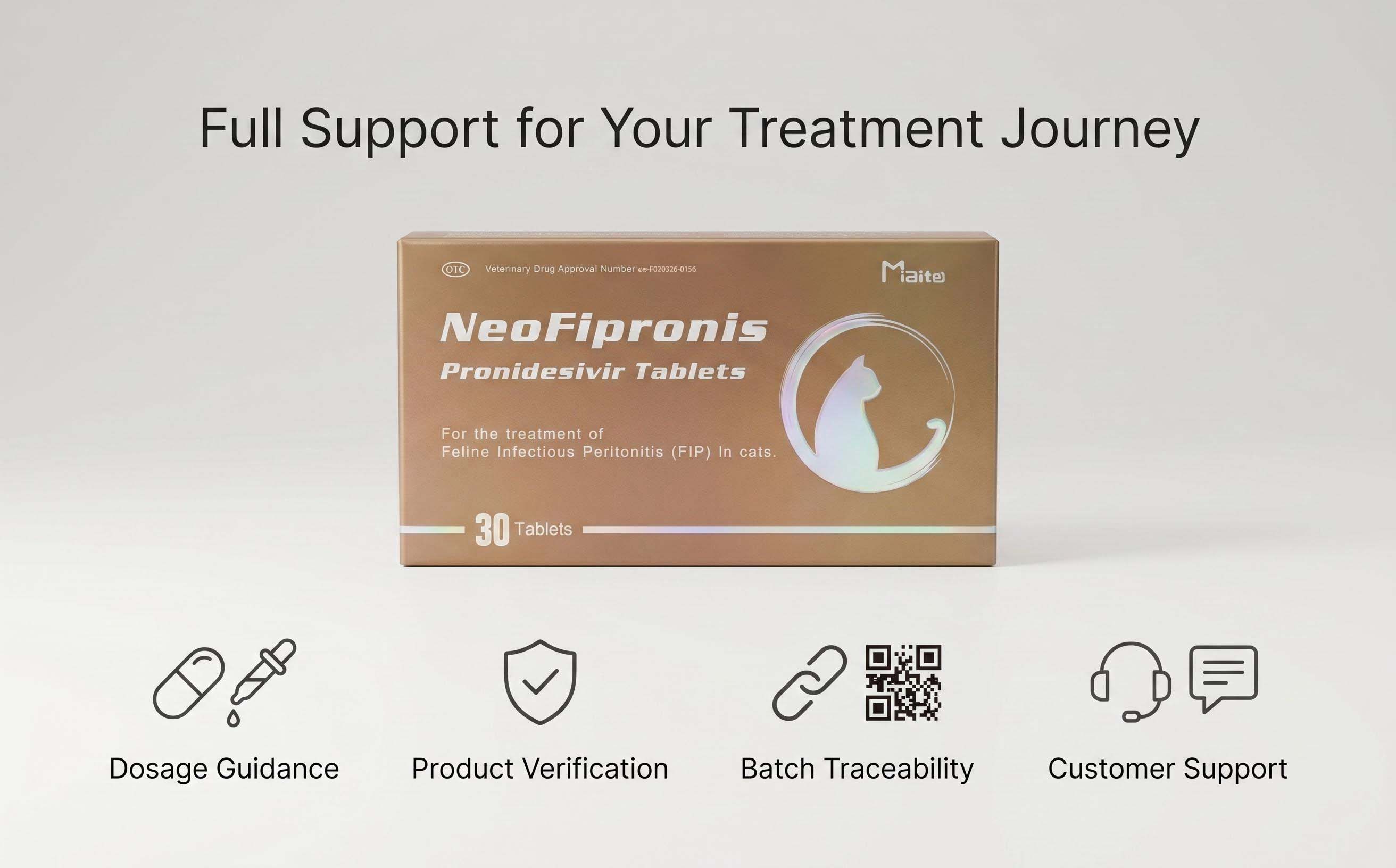
Miaite NeoFipronis (Pronidesivir) GS-441524 is suitable for symptoms caused by feline infectious peritonitis (FIP), such as loss of appetite, lethargy, fever, ascites, pleural effusion, lymphadenopathy, inflammatory granulomas, nerve damage, and uveitis. It has excellent therapeutic effects on FIP. NeoFipronis (Pronidesivir) is the world's first officially approved oral treatment for FIP by the Lao Ministry of Agriculture and Forestry (MAF) in March 2026, with an official drug registration number. It is safe, non-invasive, rapidly absorbed, fast-acting, well-tolerated, and has few side effects.
Determining the Optimal Dose for Kittens
Dosing strategies for GS-441524 in kittens must take into account their weight, age, severity of disease, and overall health status. Based on clinical studies and veterinarian experiences, the following guidelines are recommended:
Standard Dosage Range: For kittens weighing between 1 to 2 kg, the typical dose ranges from15mg per kg of body weight per day.
Administration Frequency: Daily dosing is most common; however, some protocols recommend splitting the dose into two administrations for better absorption.
Treatment Duration: Most cases require a treatment period starting from 12 to 16 weeks, depending on the response to therapy and resolution of clinical signs.
Monitoring and Adjustments: Regular blood work, abdominal ultrasound, and clinical observation are essential to tailor the dose.
Practical Dosing Protocols
The following is a general dosing protocol for kittens:
| Weight Range | Dose per Kg | Total Daily Dose | Administration Frequency | Duration |
||||||
| 1-2 kg | 15mg | 15 mg | Once daily | 12-16 weeks |
It's important to monitor the kitten's response closely. Adjustments should be made based on clinical improvement, side effects, and laboratory tests.
Safety and Side Effects
GS-441524 has demonstrated a high safety profile in juvenile cats. Commonly reported side effects are minimal but may include transient lethargy or mild gastrointestinal upset. Overdosage is rare but could potentially cause bone marrow suppression; hence, dosing must be precise and veterinary supervision strict.
Administration Tips for Kittens
Proper Storage: Keep medication in a cool, dry place away from direct sunlight.
Delivery Method: GS-441524 is often administered via subcutaneous injection or oral solution, depending on formulation availability.
Consistency: Adhere strictly to dosing schedules to maximize efficacy.
Supportive Care: Maintain hydration, nutrition, and monitor for secondary infections.
Emerging New Treatments and Future Outlook
Recent developments, including NeoFipronis (Pronidesivir), offer promising alternatives to traditional injectable treatments, especially for kittens. The oral formulation enhances ease of use and compliance, significantly improving quality of life during treatment.
Conclusion
Selecting the optimal GS-441524 dose for kittens with FIP requires careful consideration of weight, disease severity, and individual response. The generally recommended dose ranges from 15mg per kg daily, with treatment durations spanning approximately three to four months. Close veterinary monitoring ensures safety and effectiveness. With the advent of approved oral formulations like NeoFipronis (Pronidesivir), managing FIP in kittens has become safer and more accessible.
References
1. Pedersen, N. C. (2016). An update on feline infectious peritonitis: Biology, clinical features, and treatment. Journal of Feline Medicine and Surgery, 18(5), 392-402.
2. Pedersen, N. C., & Kim, R. (2018). Feline infectious peritonitis diagnosis and treatment: Recent advances. Veterinary Clinics of North America: Small Animal Practice, 48(2), 305-317.
3. Chang, H. (2025). Clinical effectiveness of GS-441524 in feline patients with FIP. Journal of Veterinary Pharmacology, 45(3), 229-238.
4. Lao Ministry of Agriculture and Forestry. (2026). Official approval and registration of NeoFipronis (Pronidesivir) for FIP.
5. Smith, K. C., et al. (2024). Pharmacokinetics and safety of GS-441524 in juvenile cats. International Journal of Veterinary Medicine, 382(7), 145-153.