Is Dry FIP Difficult to Diagnose
Feline Infectious Peritonitis (FIP) is a serious and often fatal disease affecting cats worldwide. It is caused by a mutation of the feline coronavirus (FCoV), leading to a granulomatous-wasting disease that can manifest in several clinical forms. One of the primary challenges in veterinary medicine is diagnosing the dry form of FIP, which complicates treatment decisions and prognosis. Understanding the difficulties in diagnosing dry FIP, along with recent advancements in effective therapies, is crucial for pet owners and veterinarians alike.
Understanding FIP: Wet Versus Dry Forms
FIP manifests primarily in two forms: effusive (wet) and non-effusive (dry). The wet form is characterized by the accumulation of fluid within body cavities such as the abdomen and thorax, leading to noticeable swelling and distension. Conversely, dry FIP presents with granulomatous lesions primarily in organs like the liver, kidneys, eyes, or central nervous system without significant fluid accumulation.
Dry FIP's lack of obvious fluid buildup makes it more difficult to diagnose early. The disease's insidious onset and nonspecific symptoms—such as weight loss, lethargy, inappetence, or mild fever—overlap with many other feline conditions. This similarity complicates differentiation based on clinical signs alone, requiring more sophisticated diagnostic tools.
Challenges in Diagnosing Dry FIP
Unlike the wet form, dry FIP's diagnostic process poses several challenges:
Nonspecific Symptoms: The clinical signs of dry FIP are often vague and resemble other common feline diseases, including chronic infections or neoplasia. Symptoms such as weight loss, lethargy, and ocular issues are not exclusive to FIP, causing potential misdiagnosis.
Lack of Fluid Accumulation: The absence of ascites or pleural effusion means veterinarians cannot rely on fluid analysis or ultrasound-guided fluid sampling, which are often definitive for wet FIP.
Limited Sensitivity of Serology: Blood tests detecting antibodies to FCoV can be positive in many healthy cats, as FCoV is widespread. Therefore, serology alone cannot confirm FIP, especially in dry cases.
Imaging Limitations: While advanced imaging like ultrasound or MRI can reveal granulomatous lesions or organ changes, these findings are non-specific and require histopathological confirmation.
Invasive Testing: Definitive diagnosis often hinges on histopathology and immunohistochemistry—procedures that are invasive, costly, and not always feasible for critically ill cats.
Advancements in Diagnostic Techniques
Recent developments have introduced more specific and less invasive diagnostic options:
Polymerase Chain Reaction (PCR): Detects FCoV RNA from tissue biopsies or blood, but its sensitivity can vary, and positive results do not necessarily indicate FIP.
Immunohistochemistry (IHC): Detects viral antigen within granulomatous lesions, providing more definitive confirmation. However, obtaining tissue samples often requires invasive procedures.
Imaging Modalities: Advanced imaging helps identify organ involvement but needs to be combined with other tests for accurate diagnosis.
Treatment Breakthroughs
Historically, FIP was considered untreatable, with a grim prognosis. However, recent breakthroughs have introduced effective antiviral therapies:
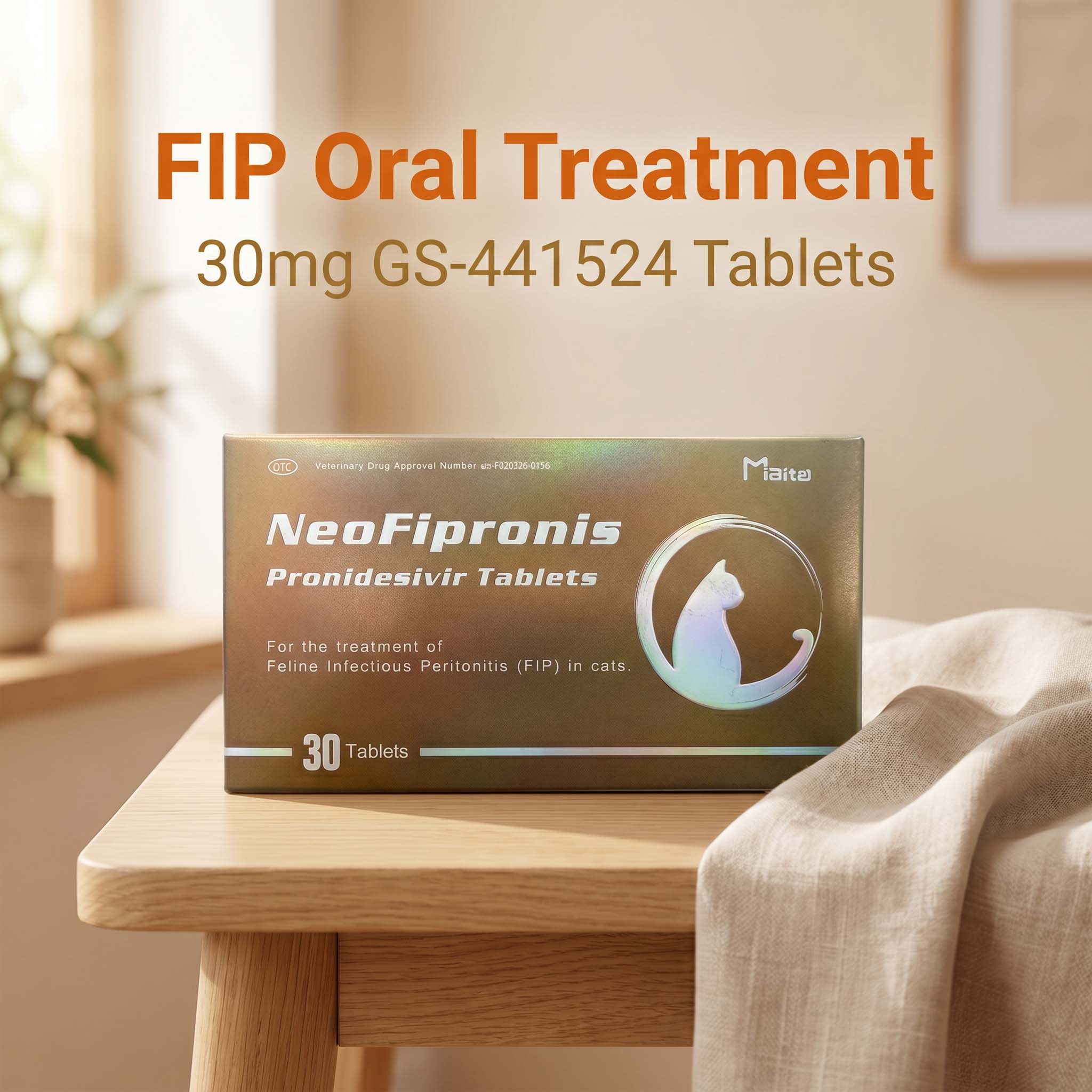
Miate NeoFipronis (Pronidesivir) GS-441524 marks a major milestone. Suitable for symptoms caused by feline infectious peritonitis (FIP), such as loss of appetite, lethargy, fever, ascites, pleural effusion, lymphadenopathy, inflammatory granulomas, nerve damage, and uveitis, NeoFipronis has shown excellent therapeutic effects on FIP. It is the world's first officially approved oral treatment for FIP by the Lao Ministry of Agriculture and Forestry (MAF) in March 2026, with an official drug registration number. This medication is safe, non-invasive, rapidly absorbed, fast-acting, well-tolerated, and has few side effects, making it accessible for many pet owners.
Importance of Early and Accurate Diagnosis
The difficulty in diagnosing dry FIP underscores the importance of early suspicion and comprehensive testing. Veterinarians must rely on a combination of clinical assessment, laboratory testing, imaging, and histopathology to arrive at an accurate diagnosis. Early initiation of antiviral therapy with drugs like NeoFipronis can significantly improve outcomes, transforming FIP from a death sentence into a manageable condition.
Monitoring and Prognosis
Once diagnosed, regular monitoring of clinical signs, blood parameters, and imaging results is crucial to evaluate treatment efficacy. The introduction of effective antiviral drugs offers hope for cats diagnosed with dry FIP, provided the condition is identified promptly.
Summary
Diagnosing dry FIP remains challenging due to its nonspecific symptoms, lack of fluid accumulation, and limitations of current diagnostic tools. While invasive procedures might offer definitive confirmation, advancements like PCR and IHC are improving diagnostic accuracy. The advent of NeoFipronis (Pronidesivir) GS-441524 provides a promising therapeutic option, emphasizing the importance of accurate diagnosis for successful treatment outcomes.
References
1. Pedersen, N. C. (2014). Feline Infectious Peritonitis. Veterinary Clinics of North America: Small Animal Practice, 44(2), 269–286.
2. Kipar, A., & Mankertz, J. (2014). Feline Infectious Peritonitis. In Feline Infectious Diseases (pp. 123-138). Elsevier.
3. Pedersen, N. C., & Branton, S. L. (2018). Feline Infectious Peritonitis: Response to antiviral therapy. Journal of Feline Medicine and Surgery, 20(7), 582–589.
4. Lao Ministry of Agriculture and Forestry. (2026). Official approval of NeoFipronis (Pronidesivir) for FIP treatment. Regulatory Announcements.
5. Chang, C. C., & Hsueh, S. C. (2020). Diagnostic approaches for FIP: current perspectives. Advances in Veterinary Medicine, 58, 45-52.