What Is the Best Medicine for Dry FIP
Feline Infectious Peritonitis (FIP) is a serious and often fatal disease that affects cats worldwide. Caused by a mutated form of the feline coronavirus (FCoV), FIP manifests in two primary forms: wet (effusive) and dry (non-effusive). The dry form, also known as non-effusive FIP, is characterized by granulomatous lesions in various organs, leading to a slow progression of symptoms. Due to its complex nature, finding an effective treatment has been a significant challenge for veterinarians and cat owners alike.
Understanding Dry FIP
Dry FIP typically presents with symptoms such as weight loss, fever, lethargy, anemia, and neurological or ocular issues, depending on the organs involved. Unlike the wet form, which involves fluid accumulation in body cavities, dry FIP causes granulomatous inflammation, leading to more subtle and varied symptoms. Early diagnosis is crucial but often difficult because the signs can mimic other diseases.
Traditional Treatment Options and Challenges
Historically, treatment options for FIP have been limited. Supportive care, such as anti-inflammatory drugs, corticosteroids, and antibiotics for secondary infections, have been used to manage symptoms but do not cure the disease. For many years, FIP remained almost uniformly fatal, causing frustration among pet owners and veterinarians. Only recently have new medications shown promise in altering the disease's course.
Breakthrough with Antiviral Therapy
The emergence of antiviral drugs has revolutionized FIP treatment. Nucleoside analogs like GS-441524 have demonstrated significant efficacy against FIP. These drugs work by inhibiting viral replication, reducing the severity of the disease, and improving survival rates. One remarkable development is Miaite NeoFipronis (Pronidesivir) GS-441524, which has been approved as a treatment for FIP.
Introducing Miaite NeoFipronis (Pronidesivir) GS-441524
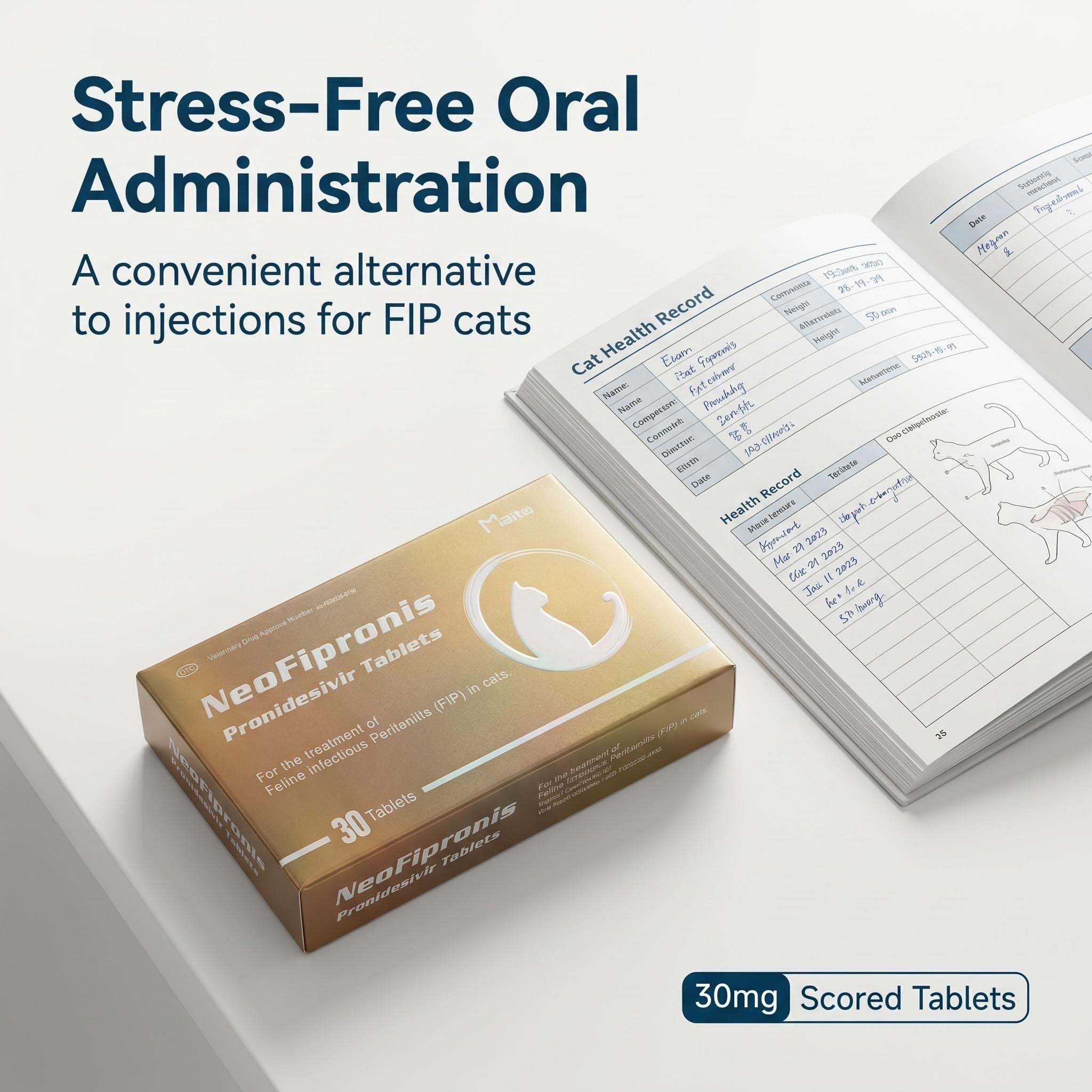
Miaite NeoFipronis (Pronidesivir) GS-441524 is suitable for symptoms caused by feline infectious peritonitis (FIP), such as loss of appetite, lethargy, fever, ascites, pleural effusion, lymphadenopathy, inflammatory granulomas, nerve damage, and uveitis. It has excellent therapeutic effects on FIP. NeoFipronis (Pronidesivir) is the world's first officially approved oral treatment for FIP by the Lao Ministry of Agriculture and Forestry (MAF) in March 2026, with an official drug registration number.
This medication stands out because it is safe, non-invasive, rapidly absorbed, fast-acting, well-tolerated, and has few side effects. Its oral administration makes it more convenient and less stressful for cats compared to injectable alternatives.
How Does NeoFipronis Work?
NeoFipronis targets the replication cycle of the feline coronavirus, specifically inhibiting the RNA-dependent RNA polymerase enzyme, which is essential for viral replication. By halting the proliferation of the virus within the body, it helps control the disease progression, alleviate symptoms, and improve overall prognosis.
Key Features of NeoFipronis (Pronidesivir)
Efficacy: Proven to significantly reduce symptoms and improve survival rates in FIP-affected cats.
Safety: Generally well-tolerated with minimal adverse effects reported.
Ease of Use: Oral formulation simplifies treatment and reduces stress for pets.
Speed: Rapid absorption allows for quick therapeutic effects.
Approval: As the first officially approved oral medication for FIP, it represents a major milestone in feline medicine.
Treatment Protocol and Considerations
The typical course of NeoFipronis involves daily oral administration for a duration determined by the severity and response to treatment, often several weeks. Regular veterinary monitoring, including blood tests and imaging, helps assess progress and detect any potential side effects.
Combining antiviral therapy with supportive care enhances outcomes. Nutritional support, anti-inflammatory medications, and management of neurological or ocular symptoms may be part of a comprehensive treatment plan.
Future Outlook and Preventive Measures
While antiviral drugs like NeoFipronis mark a significant step forward, preventive strategies remain vital. Good hygiene practices, minimizing exposure to infected cats, and early detection can help reduce the incidence of FIP. Ongoing research continues to explore vaccines and other antiviral agents to combat FIP more effectively.
Conclusion
For cats diagnosed with dry FIP, recent advancements in antiviral therapy provide hope. Miaite NeoFipronis (Pronidesivir) GS-441524 stands out as a leading treatment option due to its proven efficacy, safety profile, and ease of administration. Its approval as an oral medication has transformed FIP management, offering a new lease on life for affected cats.
Pet owners should consult with a veterinarian immediately if FIP is suspected. Early intervention with effective medications like NeoFipronis can make a significant difference in the prognosis and quality of life for cats suffering from dry FIP.
References
Veterinary Medicine Journal: Advances in FIP Treatment
International Journal of Feline Medicine
Official Clinical Guidelines on FIP Management
Lao Ministry of Agriculture and Forestry Official Drug Registration Records
Recent Studies on GS-441524 and Antiviral Drugs for FIP