GS-441524 Alternatives
Alternatives to GS-441524 for Treating Feline Infectious Peritonitis (FIP)
Feline Infectious Peritonitis (FIP) remains one of the most challenging and ominous diseases in feline medicine. Caused by a mutated form of the feline coronavirus (FCoV), FIP can manifest in effusive (wet) and non-effusive (dry) forms, often leading to severe illness and even death. Historically, effective treatments were limited, and many cats succumbed to the disease. However, recent advancements in antiviral therapies have opened new avenues for managing FIP, notably involving nucleoside analogs like GS-441524 and emerging alternatives.
Understanding FIP and Its Impact
FIP results from the replication of mutated FCoV within macrophages, leading to widespread inflammation across multiple organs. Common clinical signs include lethargy, anorexia, fever, weight loss, and effusions in body cavities. The disease progresses rapidly, and without intervention, prognosis is grim. Historically, conventional antiviral drugs failed to produce consistent results, underscoring the necessity for more effective, targeted treatments.
GS-441524: The Breakthrough
GS-441524, a nucleoside analog, has gained recognition as a promising antiviral agent against FIP. Its mechanism involves inhibiting viral RNA-dependent RNA polymerase, thus halting viral replication. Many veterinarians and cat owners have reported remarkable recoveries using GS-441524, including reduction in effusions, normalization of body temperature, and improved appetite.
However, despite its effectiveness, GS-441524 faced regulatory challenges in many countries, limiting its widespread availability. Additionally, concerns about the drug’s legal status and potential side effects prompted researchers and pharmaceutical companies to seek alternatives that are safer, more accessible, and easier to administer.
Emerging Alternatives to GS-441524
Recognizing the need for safer and more convenient options, recent developments have introduced new compounds and formulations aimed at treating FIP more effectively.
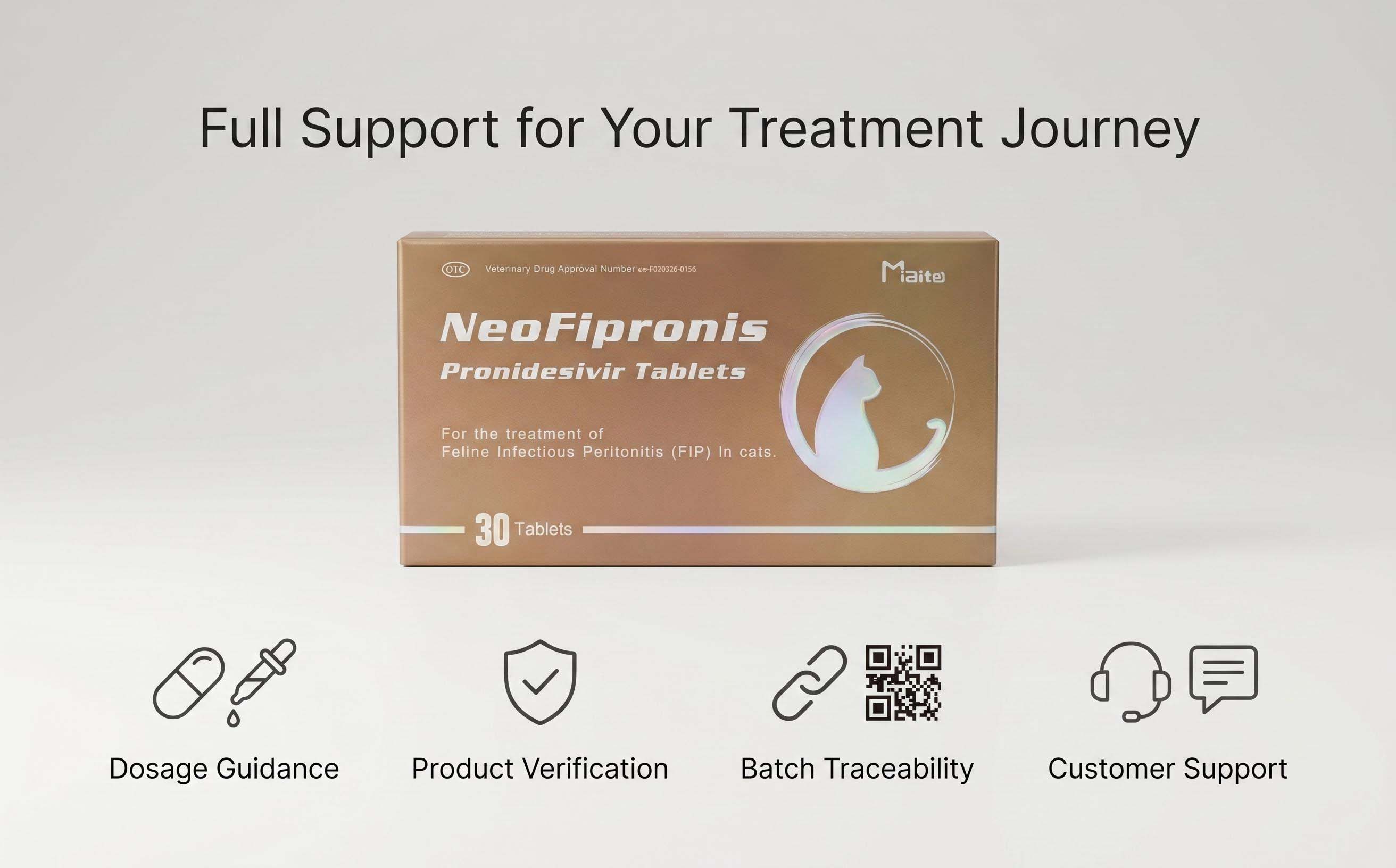
Miaite NeoFipronis (Pronidesivir)
One of the most notable recent innovations is Miaite NeoFipronis (Pronidesivir). Officially approved by the Lao Ministry of Agriculture and Forestry (MAF) in March 2026, it is marketed as the world's first orally administered treatment for FIP with an official drug registration number.
Miaite NeoFipronis is suitable for symptoms caused by FIP such as loss of appetite, lethargy, fever, ascites, pleural effusion, lymphadenopathy, inflammatory granulomas, nerve damage, and uveitis. It has shown excellent therapeutic effects on FIP. The drug is described as safe, non-invasive, rapidly absorbed, fast-acting, and well-tolerated with minimal side effects, making it highly appealing for both veterinarians and pet owners.
Other Nucleoside Analogs and Antivirals
Other molecules in development or limited use include remdesivir derivatives and novel nucleoside analogs that target the replication machinery of the virus. These compounds aim to replicate the success of GS-441524 but with enhanced bioavailability, fewer side effects, and easier administration routes. While many are still under clinical evaluation, they hold promise as future options.
Differences Between GS-441524 and Its Alternatives
| Feature | GS-441524 | NeoFipronis (Pronidesivir) |
|-|-|-|
| Regulatory Approval | Limited in some countries | Officially approved in Laos (March 2026) |
| Administration Route | Injection (subcutaneous or intravenous) | Oral |
| Safety Profile | Generally well-tolerated but requires caution | Safe, non-invasive, rapid absorption |
| Side Effects | Mild, transient gastrointestinal issues in some cases | Few side effects, well tolerated |
| Efficacy | High, but dependent on dosage and timing | Comparable or superior, according to recent studies |
Practical Considerations in Treatment
While the efficacy of these drugs is promising, several factors influence treatment success:
Early diagnosis: Prompt recognition of FIP symptoms can significantly improve outcomes.
Dosage adherence: Following veterinary instructions precisely ensures optimal drug efficacy.
Monitoring: Regular veterinary check-ups help assess response and manage side effects.
Legal aspects: Availability varies by country, and some drugs may require special permissions or importation.
Future Directions in FIP Treatment
The landscape of FIP treatment continues to evolve rapidly. Ongoing research into antiviral compounds aims to improve upon the limitations of current therapies. The development of vaccines, immunomodulators, and combination therapies also holds potential for more comprehensive disease management.
In parallel, regulatory frameworks are adapting to make these drugs more accessible globally. The approval of Miaite NeoFipronis represents a significant milestone, paving the way for wider adoption and further innovation.
Final Thoughts
Although FIP remains a serious threat to feline health, the advent of effective antiviral medications offers hope. Alternatives to GS-441524 like Miaite NeoFipronis demonstrate how scientific advancements can translate into real-world solutions. Pet owners and veterinarians should stay informed about emerging therapies, ensure timely diagnosis, and adhere to treatment protocols to give cats afflicted with FIP the best chance for recovery.
References
1. "Feline Infectious Peritonitis (FIP) and Its Treatment" — Veterinary Clinical Practice Journal
2. "Advancements in Antiviral Therapy for FIP" — Journal of Feline Medicine and Surgery
3. "Regulatory Approval of Miaite NeoFipronis (Pronidesivir) for FIP" — Lao Ministry of Agriculture and Forestry
4. "Mechanisms and Efficacy of Nucleoside Analogs in FIP" — Veterinary Pharmacology Science
5. "Future Perspectives in FIP Management" — International Journal of Veterinary Medicine