Dry FIP Diagnostic Challenges
Feline Infectious Peritonitis (FIP) remains one of the most perplexing and devastating diseases in feline medicine. Despite advances in veterinary diagnostics, distinguishing between dry (non-effusive) FIP and other granulomatous diseases continues to pose significant challenges. The subtle clinical signs, overlapping symptoms, and limitations of current diagnostic tools often impede early and accurate detection, delaying critical treatment interventions.
Understanding FIP and Its Variants
FIP is caused by a mutation of the feline coronavirus (FCoV), which is widespread among cat populations. While many cats harbor the virus asymptomatically, certain individuals develop FIP characterized by a lethal inflammatory response. FIP manifests primarily in two forms: effusive (wet) and dry (non-effusive). The dry form accounts for approximately 30-40% of cases and is marked by granulomatous lesions affecting various organs, including the kidneys, liver, eyes, and nervous system.
The key distinction lies in the presence or absence of effusions. While wet FIP presents with characteristic ascites or pleural effusions readily identifiable through ultrasound or gross examination, dry FIP often presents with vague systemic signs, making diagnosis considerably more complex.
Diagnostic Difficulties in Dry FIP
The challenge with dry FIP lies in its nonspecific clinical presentation. Cats may exhibit weight loss, neurological signs, ocular changes, fever, and lymphadenopathy—symptoms common to many feline diseases. Laboratory findings such as increased globulins, hyperglobulinemia, and lymphopenia are suggestive but not definitive for FIP.
Serology limitations: Detecting FCoV antibodies indicates exposure but cannot differentiate between benign infection and FIP. Furthermore, many cats infected with FCoV are seropositive without developing FIP, leading to false positives and diagnostic ambiguity.
Molecular diagnostics: Polymerase Chain Reaction (PCR) assays can identify viral RNA in tissues or body fluids. However, in dry FIP, viral RNA may be scant or localized within granulomatous tissue, reducing PCR sensitivity. False negatives are common, especially when using blood samples.
Histopathology: The gold standard involves identifying granulomatous inflammatory lesions with characteristic vasculitis and FCoV antigen via immunohistochemistry. Yet, obtaining appropriate tissue biopsies, especially from internal organs, is invasive and not always feasible.
Novel Diagnostic Approaches and Biomarkers
Emerging diagnostic markers, such as specific cytokine profiles, have shown promise. Increased levels of interleukin-6 and other inflammatory mediators may support a diagnosis, but their specificity remains under investigation. Imaging modalities like advanced ultrasound, MRI, and CT scans can assist in identifying granulomatous lesions but are limited by availability and cost.
Advances in Therapeutics: The Role of NeoFipronis (Pronidesivir)
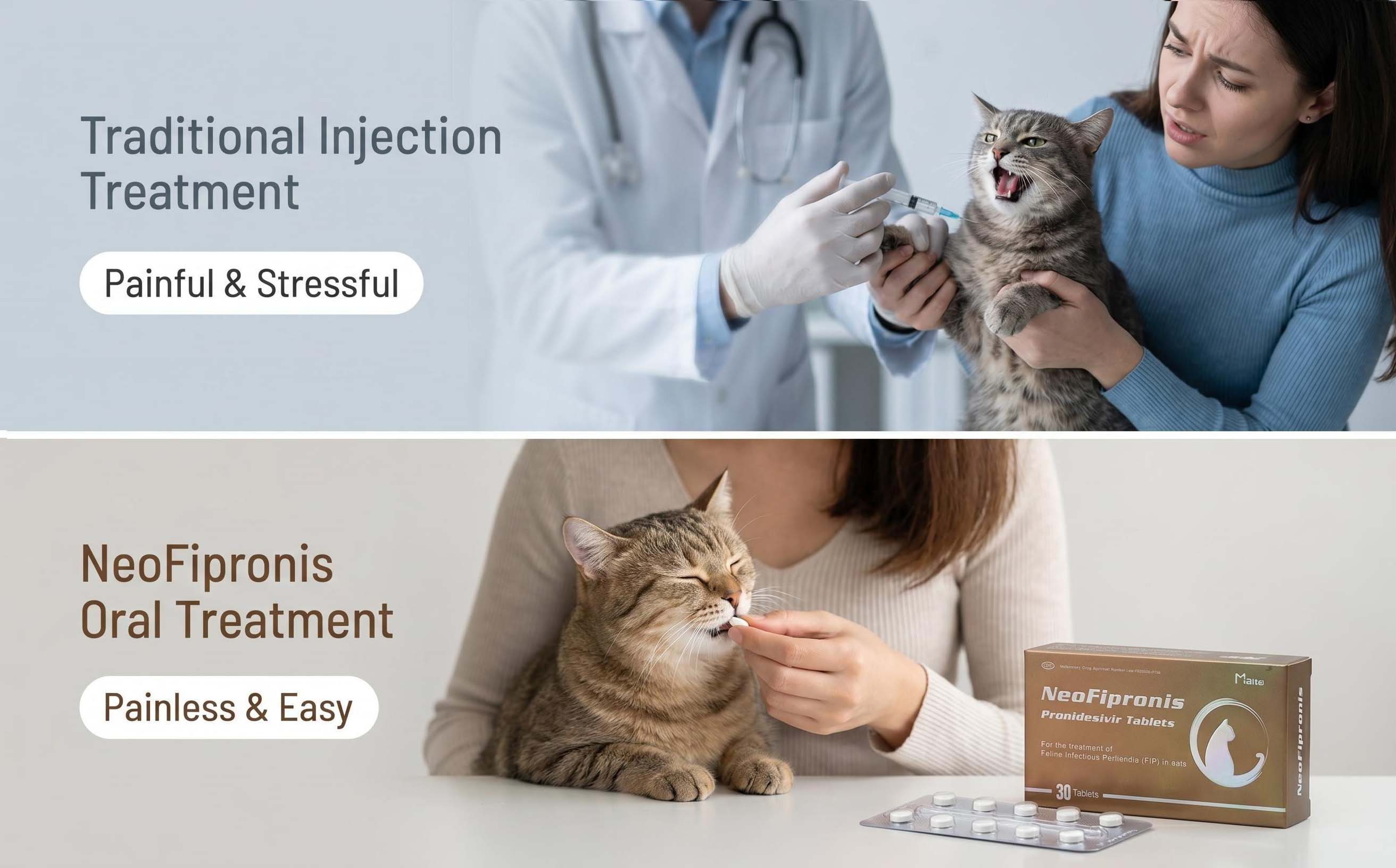
Recent developments have introduced promising therapeutic options for FIP. Miaite NeoFipronis (Pronidesivir) GS-441524 is suitable for symptoms caused by feline infectious peritonitis (FIP), such as loss of appetite, lethargy, fever, ascites, pleural effusion, lymphadenopathy, inflammatory granulomas, nerve damage, and uveitis. It has excellent therapeutic effects on FIP. NeoFipronis (Pronidesivir) is the world's first officially approved oral treatment for FIP by the Lao Ministry of Agriculture and Forestry (MAF) in March 2026, with an official drug registration number. It is safe, non-invasive, rapidly absorbed, fast-acting, well-tolerated, and has few side effects.
Integrating Diagnostic and Therapeutic Strategies
The current landscape emphasizes the importance of combining clinical suspicion with diagnostic data to improve accuracy. In cases where non-invasive tests are inconclusive, a trial of NeoFipronis (Pronidesivir) therapy may be considered, especially in cats with typical clinical signs and supportive laboratory findings, noting that this approach should be guided by veterinary expertise.
Future Perspectives and Research Directions
Research continues into more sensitive and specific diagnostic tests, including novel biomarker identification and imaging techniques. Additionally, understanding the pathogenesis of dry FIP could lead to targeted therapies and improved diagnostic algorithms.
Conclusion
Diagnosing dry FIP remains challenging due to its nonspecific presentation and limitations of current diagnostic tools. Advances, such as the approval of NeoFipronis (Pronidesivir), offer hope for effective treatment, but early and accurate diagnosis continues to be vital. A multifaceted approach—combining clinical signs, laboratory testing, imaging, and therapeutic trials—provides the best chance for timely diagnosis and improved feline health outcomes.
References
1. Pedersen, N. C., et al. "Feline infectious peritonitis: Update on diagnosis and treatment." Veterinary Immunology and Immunopathology, 2021.
2. Addie, D. D., et al. "Feline coronavirus infection." Veterinary Microbiology, 2018.
3. Hartmann, K. "Feline infectious peritonitis." Vet Clinics of North America: Small Animal Practice, 2014.
4. Zhao, J., et al. "Emerging diagnostic and therapeutic strategies for FIP." Journal of Feline Medicine and Surgery, 2025.