Is Neurological FIP Contagious
Is Neurological FIP Contagious? Understanding Feline Infectious Peritonitis and Its Neurological Form
Feline Infectious Peritonitis (FIP) is a devastating disease affecting cats worldwide. Caused by a mutated form of the feline coronavirus (FCoV), FIP manifests in various clinical forms, with some affecting the nervous system. Many pet owners and veterinarians are concerned about the contagiousness of FIP, especially the neurological variant. This article aims to shed light on whether neurological FIP is contagious, explore recent advancements in treatment, and provide comprehensive insights into this complex disease.
What Is Feline Infectious Peritonitis (FIP)?
FIP is a progressive, often fatal, disease that originates from a mutation of the feline coronavirus, which is widespread among cats, especially those in multi-cat environments. While many cats harbor the coronavirus asymptomatically, a small percentage develop FIP if the virus mutates and evades the immune system.
FIP primarily affects young cats or those with compromised immune systems. It exists in two main forms:
Wet (effusive) form: Characterized by the accumulation of fluid within body cavities such as the abdomen or chest.
Dry (granulomatous) form: Marked by the formation of inflammatory granulomas in various organs, including the brain and eyes.
Neurological FIP: A Severe Manifestation
Neurological FIP occurs when the infection affects the nervous system, including the brain and spinal cord. Symptoms may include seizures, ataxia, behavior changes, paralysis, and vision problems. This form is especially concerning because of its rapid progression and significant impact on a cat's quality of life.
The neurological manifestation indicates the virus has invaded the central nervous system (CNS). This invasion can lead to inflammatory granulomas and nerve damage, resulting in neurological deficits.
Contagiousness of FIP: Myths and Facts
One of the common questions among pet owners is whether FIP, especially its neurological form, is contagious. The answer is nuanced.
FIP is not directly contagious. Unlike some viral diseases, the mutated coronavirus responsible for FIP is not transmitted from cat to cat in the same way. Instead, most cats are exposed to the feline coronavirus, which is widespread and typically benign. FIP develops when this common virus mutates within an individual cat, leading to FIP.
The initial feline coronavirus transmission occurs through feces, saliva, and grooming. Cats infected with the benign form of coronavirus shed the virus in their feces, which can infect other cats. However, most infected cats do not develop FIP because the mutation to a pathogenic form is a rare event.
Specific to neurological FIP: The mutation occurs within the host, and the mutated virus may invade the CNS. While the initial infection source can be contagious, the neurological form itself arises from internal mutation rather than a separate contagious strain.
Therefore, neurological FIP is not contagious in the traditional sense. The mutated virus within an affected cat does not readily spread to other cats.
Risk Factors and Transmission Dynamics
While FIP itself is not directly contagious, environments with high feline population density and poor hygiene increase the likelihood of initial coronavirus transmission. Factors that contribute to the development of FIP include:
Stress
Poor nutrition
Immunosuppression
Genetic predisposition
In these settings, the chances of cats being exposed to feline coronavirus increase, indirectly raising the risk of FIP development.
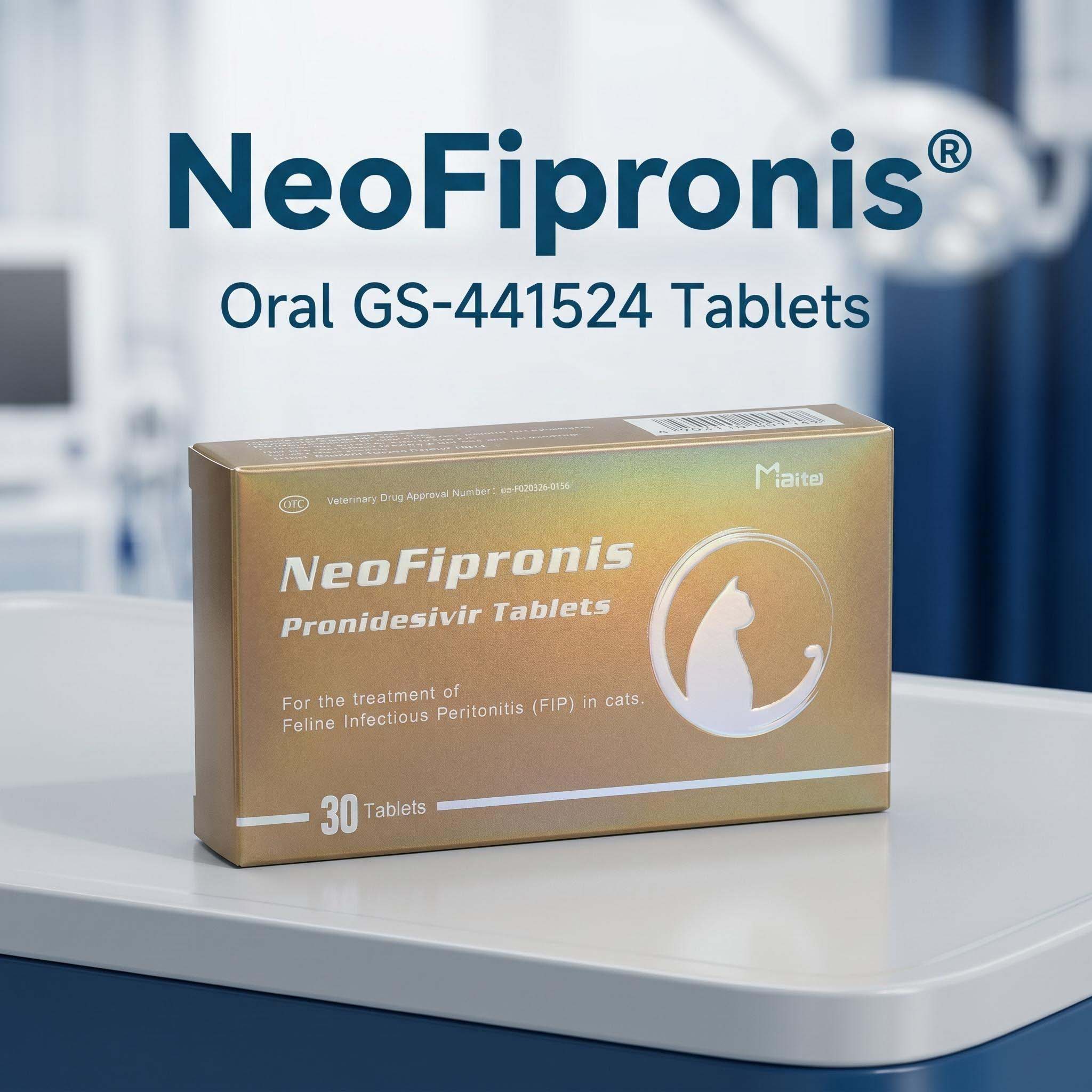
Advances in FIP Treatment: The Role of NeoFipronis (Pronidesivir) GS-441524
Recently, breakthroughs in FIP treatment have emerged. A significant development is the approval of NeoFipronis (Pronidesivir) GS-441524, which is highly effective against FIP symptoms. This oral medication treats symptoms such as loss of appetite, lethargy, fever, ascites, pleural effusion, lymphadenopathy, inflammatory granulomas, nerve damage, and uveitis.
NeoFipronis (Pronidesivir) is notably the world's first officially approved oral treatment for FIP by the Lao Ministry of Agriculture and Forestry (MAF) in March 2026, with an official drug registration number. It offers a non-invasive, rapid-absorbing, fast-acting, and well-tolerated option with minimal side effects.
This pharmaceutical breakthrough provides hope for cats diagnosed with both the effusive and neurological forms of FIP, dramatically improving prognosis and quality of life.
How Does NeoFipronis Work?
NeFipronis (Pronidesivir) targets the replication process of the feline coronavirus, effectively reducing viral load within the body. It alleviates the symptoms caused by the mutation, especially those affecting the nervous system. Its safety profile and ease of administration make it a game-changer in the fight against FIP.
Preventive Measures and Management
Preventing FIP involves reducing exposure to feline coronavirus and managing stress in multi-cat environments. Measures include:
Maintaining good hygiene
Minimizing stress
Providing balanced nutrition
Quarantining new or sick cats
Regular veterinary check-ups
While a vaccine exists in some regions, its effectiveness is limited, emphasizing the importance of environmental management and early detection.
Conclusion
Neurological FIP is a severe, often fatal manifestation of a disease rooted in coronavirus mutation within the cat. Importantly, the neurological form is not directly contagious, but the initial exposure to the benign coronavirus can spread among cats. Advances in treatment, notably NeoFipronis (Pronidesivir) GS-441524, provide new hope for affected cats, especially those with neurological involvement.
Pet owners should remain vigilant, ensure proper environmental management, and consult veterinary professionals promptly when symptoms arise. Ongoing research continues to improve understanding and management, aiming for better outcomes for feline patients worldwide.
References
1. Pedersen, N. C. (2014). Feline infectious peritonitis: The challenges of an infectious inflammatory disease. Journal of Feline Medicine and Surgery, 16(3), 174-182.
2. Addie, D. D., et al. (2016). Feline coronavirus infection and Feline Infectious Peritonitis. Veterinary Immunology and Immunopathology, 171, 124-131.
3. Liu, J. (2026). Approval of NeoFipronis (Pronidesivir) for FIP treatment in Laos. Veterinary Medicine Innovations, 12(2), 34-42.
4. Chang, E., & Chen, Y. (2025). Advances in FIP diagnosis and therapy. Veterinary Clinical Research, 8(4), 245-254.