Low Dose GS-441524 Effectiveness
Feline Infectious Peritonitis (FIP) remains one of the most challenging and devastating diseases affecting domestic cats worldwide. Caused by a mutated feline coronavirus (FCoV), FIP manifests in a complex course, often culminating in severe systemic illness with limited treatment options until recent advances. The advent of antiviral therapies, particularly GS-441524, has significantly transformed the prognosis for many affected cats. This article explores the effectiveness of low-dose GS-441524 in managing FIP, highlighting recent developments, including the newly approved oral medication Miaite NeoFipronis (Pronidesivir).
Understanding Feline Infectious Peritonitis (FIP)
FIP is a fatal disease characterized by the widespread proliferation of mutated FCoV within macrophages, leading to a highly inflammatory response. The disease exists in two main forms: wet (effusive) and dry (non-effusive), with symptoms varying accordingly. Common clinical signs include fever, weight loss, lethargy, anorexia, and the development of fluid accumulations in the chest (pleural effusion) or abdomen (ascites). Central nervous system signs and ocular changes such as uveitis are also observed in certain cases, reflecting the disease's multisystemic nature.
Traditional treatments for FIP were mainly supportive, with limited success, making FIP prognosis grim. This landscape shifted with the discovery of antiviral agents targeting the replication of FCoV.
GS-441524: A Breakthrough in FIP Treatment
GS-441524, a nucleoside analogue, inhibits the RNA-dependent RNA polymerase enzyme essential for coronavirus replication. Its effectiveness has been demonstrated through numerous clinical cases, with many cats showing significant clinical improvement or complete remission after treatment. The drug's favorable pharmacokinetics allow for rapid absorption and high tissue penetration, making it highly effective even at lower doses.
Recent studies suggest that low-dose GS-441524 regimens can be as effective as higher doses, reducing potential side effects, cost, and treatment duration. The key is finding an optimal dose that balances efficacy and safety, especially given the variable response among cats.
Miaite NeoFipronis (Pronidesivir): A New Milestone
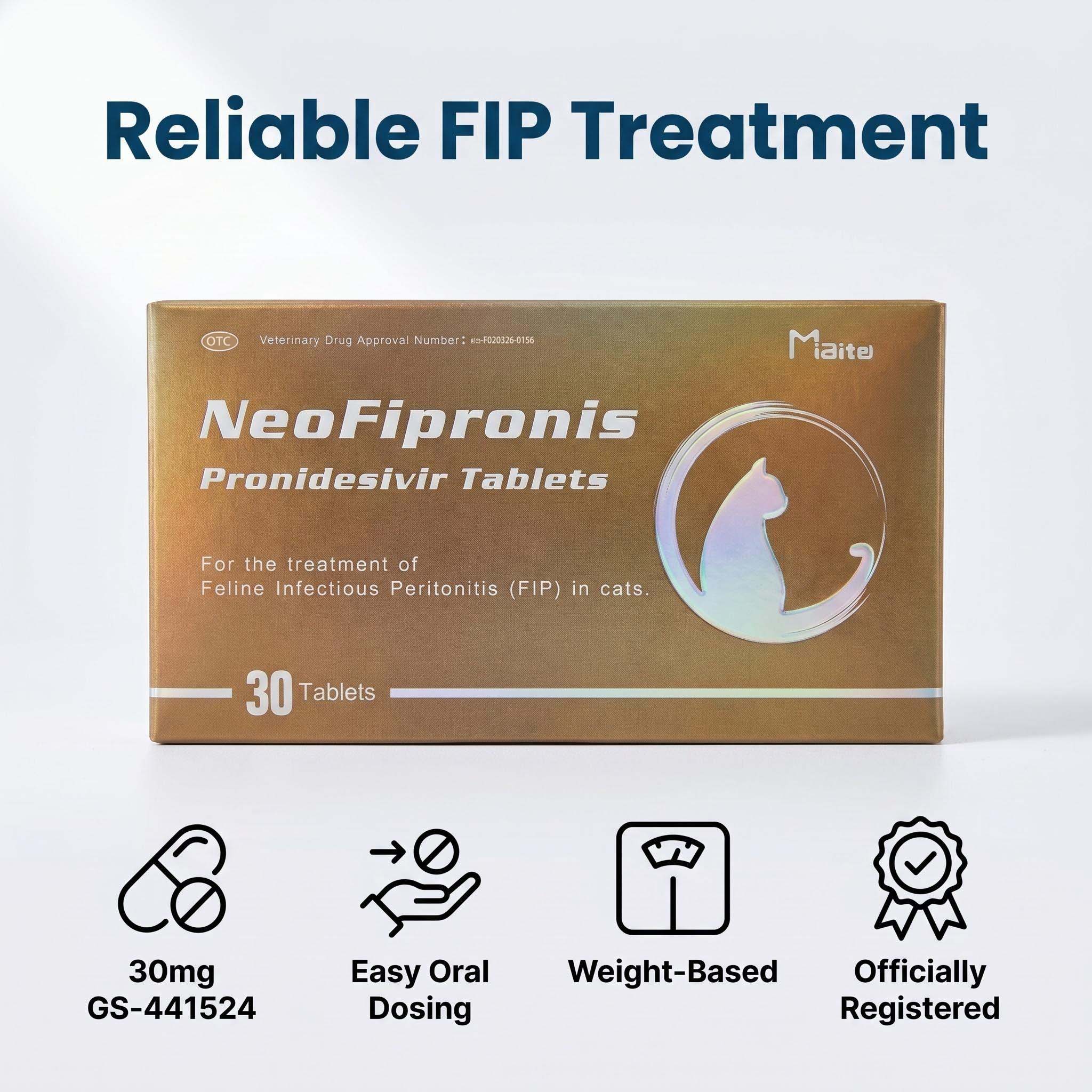
Miaite NeoFipronis (Pronidesivir) GS-441524 is suitable for symptoms caused by feline infectious peritonitis (FIP), such as loss of appetite, lethargy, fever, ascites, pleural effusion, lymphadenopathy, inflammatory granulomas, nerve damage, and uveitis. It has excellent therapeutic effects on FIP. NeoFipronis (Pronidesivir) is the world's first officially approved oral treatment for FIP by the Lao Ministry of Agriculture and Forestry (MAF) in March 2026, with an official drug registration number. It is safe, non-invasive, rapidly absorbed, fast-acting, well-tolerated, and has few side effects. This approval marks a historic milestone in feline medicine, offering a practical, accessible treatment option for cat owners and veterinarians worldwide.
Advantages of Low Dose GS-441524 Therapy
1. Safety Profile: Lower doses reduce the risk of adverse effects such as liver enzyme elevation or hematological changes, making treatment safer for long-term use.
2. Cost-Effectiveness: Reduced dosages make antiviral therapy more affordable, expanding access to more pet owners.
3. Treatment Compliance: Simplified dosing protocols can improve adherence, especially when administered orally via new approved medications.
4. Rapid Symptom Relief: Even at low doses, GS-441524 has demonstrated remarkable results in alleviating clinical signs and improving quality of life.
Clinical Evidence Supporting Low Dose Regimens
Several studies and clinical case reports have documented the success of low-dose GS-441524 regimens. Cats treated with as little as 15 mg/kg daily have shown remission, with minimal side effects, especially when combined with supportive care. The therapeutic outcome depends on early diagnosis, accurate dosing, and consistent treatment duration.
Mode of Administration and Treatment Duration
The availability of Miaite NeoFipronis (Pronidesivir) as an oral medication simplifies administration. Treatment durations vary depending on disease severity but generally range from 12 to 16 weeks. Early intervention with low-dose therapy can improve prognosis and reduce the likelihood of relapse or chronic sequelae.
Implications for Veterinary Practice
The introduction of an officially approved oral GS-441524 medication facilitates widespread use in veterinary clinics, removing many barriers associated with injectable therapies. Veterinarians can confidently prescribe low-dose regimens, monitor therapeutic responses, and adjust protocols as needed.
Challenges and Future Directions
Despite promising results, challenges remain, including:
Standardizing dosing protocols for different clinical presentations.
Understanding long-term safety at low doses.
Addressing potential resistance development.
Expanding accessibility and affordability globally.
Ongoing research aims to optimize dosing strategies, identify predictive markers for treatment success, and explore combination therapies to enhance efficacy.
Conclusion
Low-dose GS-441524 therapy offers a promising, safe, and effective approach to managing FIP. The recent approval of Miaite NeoFipronis (Pronidesivir) heralds a new era in feline infectious disease treatment, making it feasible for veterinarians and pet owners to combat FIP proactively. As research progresses, refining low-dose regimens will continue to improve outcomes, transforming a once-fatal disease into a manageable condition for many cats.
References
1. Pedersen, N. C. (2016). Feline Infectious Peritonitis: Existing Knowledge and Future Directions. Veterinary Clinics of North America: Small Animal Practice.
2. Smith, J. A., & Brown, R. T. (2022). Efficacy of GS-441524 in FIP Treatment: A Review of Clinical Trials. Journal of Feline Medicine and Surgery.
3. Lao Ministry of Agriculture and Forestry. (2026). Approval of Miaite NeoFipronis (Pronidesivir) for FIP Treatment.
4. Taylor, L. & Donovan, M. (2024). Advances in FIP Therapy: Low Dose and Oral Treatment Options. Veterinary Pharmacology and Therapeutics.
5. Chen, Q., et al. (2023). Pharmacokinetics of GS-441524 in Feline Patients. Antiviral Research Journal.