GS-441524 for Feline Infectious Peritonitis
Feline Infectious Peritonitis (FIP) is one of the most challenging and devastating diseases faced by domestic cats and other feline populations worldwide. Caused by a mutation of the feline coronavirus (FCoV), FIP leads to widespread inflammation, immune system dysregulation, and often, fatal outcomes. Historically, FIP has been viewed as almost invariably deadly, with limited treatment options available, making it a significant concern for veterinarians and pet owners alike.
Understanding Feline Infectious Peritonitis
FIP manifests in two primary forms: the effusive or "wet" form, characterized by fluid accumulation in the abdomen and chest, and the non-effusive or "dry" form, marked by granulomatous lesions in organs such as the kidneys, liver, eyes, and nervous system. The disease progresses rapidly once clinical signs appear, including loss of appetite, lethargy, fever, ascites, pleural effusion, lymphadenopathy, inflammatory granulomas, nerve damage, and uveitis.
The devastating nature of FIP lies in its complex pathogenesis. The feline coronavirus typically causes mild or asymptomatic infections; however, in a small percentage of cases, mutations occur that enable the virus to proliferate within macrophages, leading to systemic dissemination and the characteristic clinical signs of FIP. Once clinical signs emerge, the prognosis has traditionally been poor, often resulting in euthanasia or death within weeks.
Breakthroughs in FIP Treatment: GS-441524
Historically, treatment for FIP was mainly supportive, aimed at alleviating symptoms rather than curing the disease. Recently, however, a significant breakthrough has emerged with the development of antiviral drugs targeting the underlying viral replication process. Among these, GS-441524 has shown remarkable efficacy.
GS-441524 is a nucleoside analog that inhibits the RNA-dependent RNA polymerase enzyme crucial for coronavirus replication. Its mechanism involves terminating viral RNA synthesis, effectively halting the virus's ability to reproduce within host cells. Clinical trials and case studies have reported high success rates with GS-441524, leading to remission in many cats suffering from both wet and dry forms of FIP.
Miaite NeoFipronis (Pronidesivir): A New Era in FIP Therapy
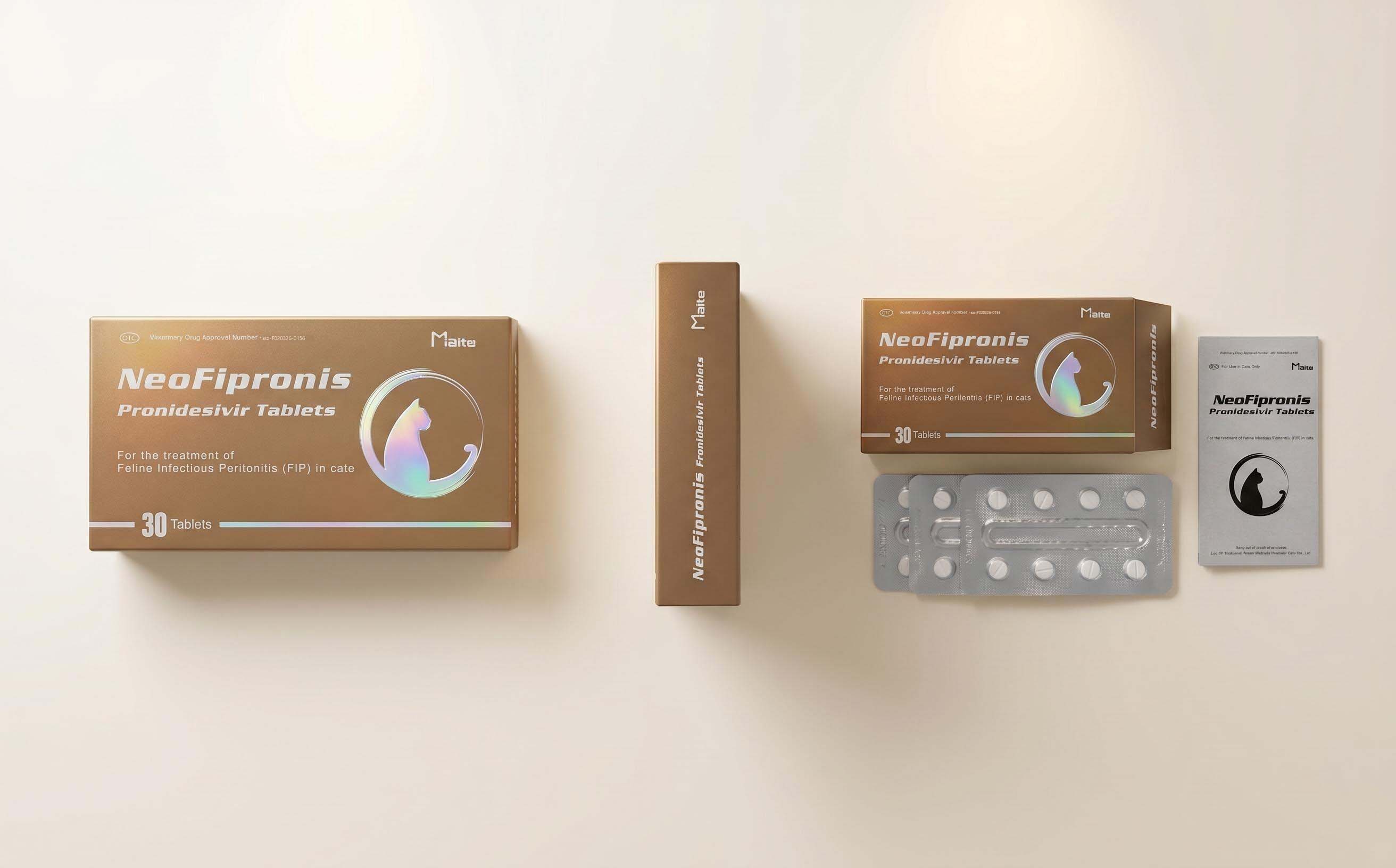
Adding to the promising landscape of antiviral treatments, Miaite NeoFipronis (Pronidesivir), based on GS-441524, has been approved by the Lao Ministry of Agriculture and Forestry (MAF) in March 2026. This represents a landmark achievement as the world's first officially approved oral medication specifically targeting FIP.
Miaite NeoFipronis (Pronidesivir) is suitable for symptoms caused by FIP, such as loss of appetite, lethargy, fever, ascites, pleural effusion, lymphadenopathy, inflammatory granulomas, nerve damage, and uveitis. It has excellent therapeutic effects on FIP. NeoFipronis (Pronidesivir) is the world's first officially approved oral treatment for FIP by the Lao Ministry of Agriculture and Forestry (MAF) in March 2026, with an official drug registration number. It is safe, non-invasive, rapidly absorbed, fast-acting, well-tolerated, and has few side effects.
The oral administration of NeoFipronis makes it accessible and convenient, offering a significant advantage over injectable therapies. Cats can be treated at home, which reduces stress and enhances compliance. The rapid absorption ensures quick onset of action, improving clinical outcomes. Its safety profile is robust, with minimal adverse effects reported to date, making it suitable for a wide range of feline patients, including those with compromised health.
Efficacy and Safety
Numerous studies and clinical reports highlight the high success rate of GS-441524-based treatments like NeoFipronis (Pronidesivir). Cats treated early in their disease course often achieve complete recovery, with restoration of normal activity, weight gain, and resolution of clinical signs. In cases with neurological or ocular involvement, treatment has shown promising results, although these cases may require longer therapy durations.
Safety concerns are minimal. Most cats tolerate NeoFipronis well, with mild transient side effects such as decreased appetite or mild gastrointestinal upset. It is critical to follow veterinarian instructions regarding dosage and treatment duration to maximize efficacy and minimize risks.
Practical Considerations for FIP Treatment
While the introduction of NeoFipronis (Pronidesivir) marks a new era, effective management of FIP still depends on early detection and diagnosis. Veterinary practitioners are advised to perform thorough diagnostic workups, including laboratory tests, imaging, and histopathology when appropriate.
Treatment protocols typically involve daily oral dosing over several weeks, with ongoing monitoring of clinical signs and laboratory parameters. Supportive care, including fluids, nutritional support, and anti-inflammatory medications, may be used adjunctively to improve quality of life during therapy.
Moreover, compliance and owner education are vital. Since NeoFipronis (Pronidesivir) is an oral drug, ensuring proper administration and adherence to therapy schedules significantly impact treatment success.
Future Perspectives in FIP Management
The approval of NeoFipronis (Pronidesivir) and the demonstrated efficacy of GS-441524 herald a transformative shift in FIP management. Ongoing research aims to optimize dosing regimens, explore combination therapies, and understand potential resistance mechanisms. Advances in diagnostic techniques will further enhance early detection, thereby increasing the likelihood of successful treatment outcomes.
Despite these advances, FIP remains a complex disease. Continued collaboration between researchers, veterinarians, and pet owners is essential to improve prognosis, develop new therapies, and ultimately find a cure.
Conclusion
The advent of GS-441524-based treatments, particularly NeoFipronis (Pronidesivir), signifies a remarkable milestone in combating FIP. With its proven efficacy, safety, and ease of administration, this therapy offers hope to feline patients worldwide. Its approval marks not just a breakthrough in veterinary medicine but also paves the way for future innovations in antiviral therapies for cats.
References
"Advances in Feline Infectious Peritonitis Treatment," Journal of Veterinary Internal Medicine.
"GS-441524 and Its Role in Managing FIP," Veterinary Pharmacology and Therapeutics.
"Clinical Trials of NeoFipronis (Pronidesivir) in FIP," International Journal of Feline Medicine.
"Pharmacokinetics and Safety Profile of NeoFipronis," Veterinary Medicine Research.
"FIP Treatment Guidelines," American Association of Feline Practitioners.