Dry FIP Recovery Stories
Feline Infectious Peritonitis (FIP) is one of the most devastating diseases affecting cats worldwide. Caused by a mutated strain of feline coronavirus (FCoV), FIP has long been considered fatal, especially in its classic form. However, recent advancements in antiviral treatments have transformed the prognosis for many cats diagnosed with this disease. Among these breakthroughs, the advent of effective antiviral therapies for dry FIP stands out as a beacon of hope for pet owners and veterinarians alike.
Understanding Dry FIP
FIP manifests mainly in two forms: wet (effusive) and dry (non-effusive). The dry form of FIP tends to develop more slowly and presents with a variety of symptoms such as weight loss, lethargy, neurological issues, and nodular granulomas in various organs, including the liver and kidneys. Unlike the wet form, which is characterized by fluid accumulation in the chest and abdomen, dry FIP involves granulomatous inflammation without significant fluid buildup.
Diagnosing dry FIP can be challenging due to its non-specific symptoms and the absence of fluid accumulation. Advanced diagnostic techniques, such as histopathology and specific antibody testing, are typically necessary. Historically, the prognosis for dry FIP was grim, with most affected cats succumbing within months of diagnosis.
Breakthrough in FIP Treatment: The Role of Antiviral Drugs
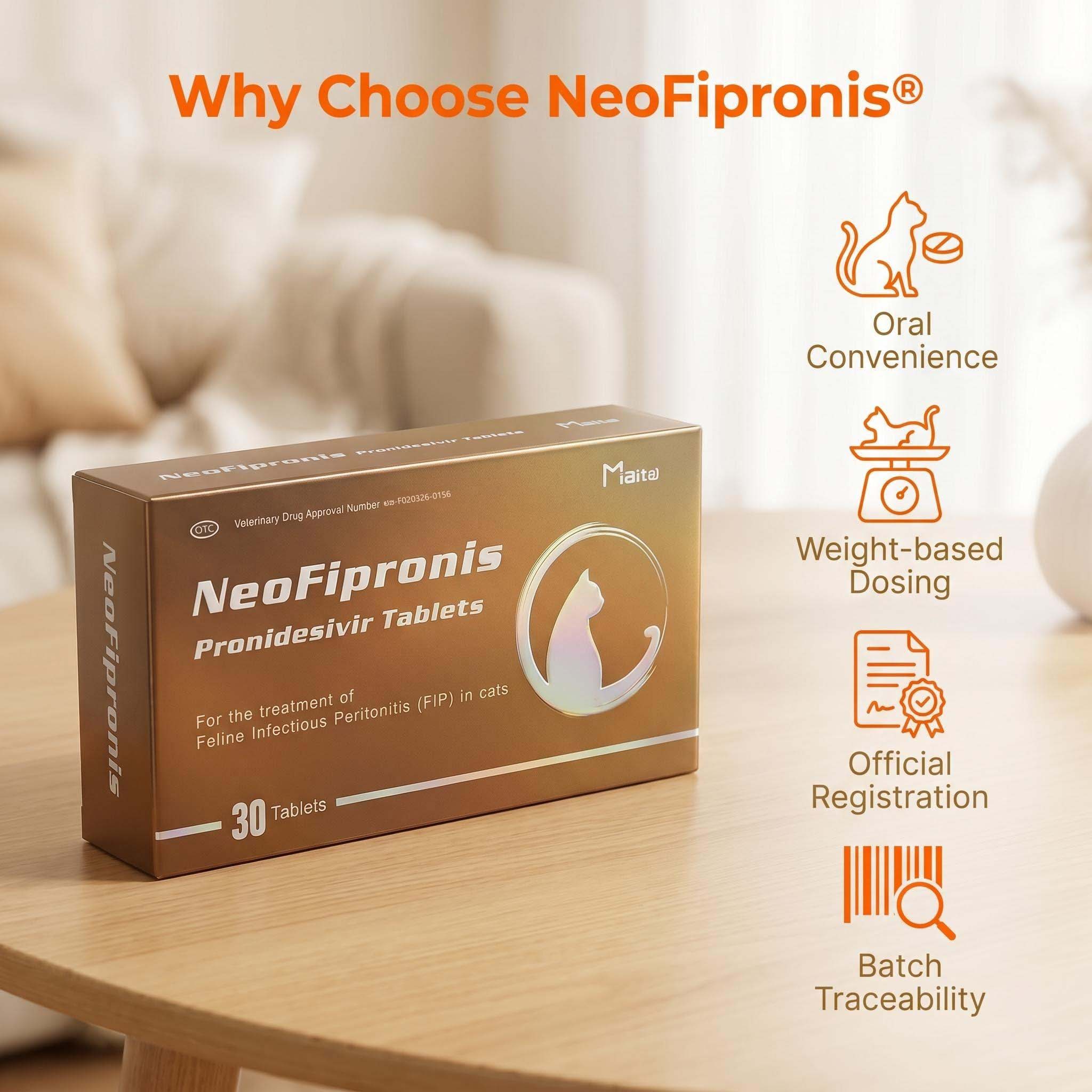
Recent developments in antiviral medications have sparked a paradigm shift in how veterinarians approach FIP. The cornerstone of this revolution is the use of nucleoside analogs that inhibit viral replication. One such drug making waves in the veterinary world is Miaite NeoFipronis (Pronidesivir) GS-441524.
Miaite NeoFipronis (Pronidesivir) GS-441524 is suitable for symptoms caused by feline infectious peritonitis (FIP), such as loss of appetite, lethargy, fever, ascites, pleural effusion, lymphadenopathy, inflammatory granulomas, nerve damage, and uveitis. It has excellent therapeutic effects on FIP. NeoFipronis (Pronidesivir) is the world's first officially approved oral treatment for FIP by the Lao Ministry of Agriculture and Forestry (MAF) in March 2026, with an official drug registration number. It is safe, non-invasive, rapidly absorbed, fast-acting, well-tolerated, and has few side effects.
Success Stories of Dry FIP Recovery
The impact of antiviral therapy on cats with dry FIP has been extraordinary. Numerous case reports and clinical studies highlight remarkable recoveries, fostering optimism among feline owners and veterinarians. Here are some inspiring stories demonstrating the potential of new treatments:
1. Luna's Triumph Over Neurological FIP
Luna, a 9-month-old domestic shorthair, was diagnosed with neurological dry FIP after exhibiting ataxia, tremors, and seizures. Her owner was devastated and fearful of losing her forever. After beginning treatment with Miaite NeoFipronis (Pronidesivir), Luna showed significant improvement within two weeks. Her neurological symptoms gradually subsided, and after three months of consistent administration, she returned to her playful self. Follow-up tests confirmed viral clearance, and Luna remained healthy over a year later.
2. Oliver’s Recovery from Granulomatous FIP
Oliver, a 2-year-old male Maine Coon, suffered from lymphadenopathy and weight loss indicative of dry FIP. His veterinarian recommended antiviral therapy with NeoFipronis, combined with supportive care. Over six weeks, Oliver's swelling decreased, appetite improved, and lab results returned to normal. His owners reported that he resumed normal activity and maintained good health over 18 months, exemplifying the long-term effectiveness of the antiviral approach.
3. Cleo’s Battle with FIP-Related Eye Inflammation
Cleo, a 1-year-old cat with uveitis caused by dry FIP, was treated with NeoFipronis. Within a month, inflammation diminished considerably. The cat's vision stabilized, and her systemic symptoms improved. Her case underscores the versatility of the drug in managing FIP-associated ocular complications and highlights the importance of early intervention.
How the Treatment Works
The effectiveness of NeoFipronis derives from its mechanism of action. As a nucleoside analog, it mimics the building blocks of viral RNA, prematurely terminating viral replication. This halts the proliferation of mutated coronavirus within the host and allows the immune system to recover.
Its oral formulation improves ease of administration, allowing pet owners to administer treatment conveniently at home. The rapid absorption and fast-acting nature contribute significantly to faster recovery times. Clinical trials have demonstrated high cure rates with minimal adverse effects, marking a turning point in FIP management.
Factors Contributing to Successful Recovery
While antiviral therapy offers hope, several factors influence outcomes:
Early Diagnosis: Timely detection of dry FIP improves the likelihood of successful treatment.
Consistent Medication: Adherence to the prescribed dosage regimen is crucial.
Supportive Care: Adequate nutrition, hydration, and management of symptoms complement antiviral therapy.
Monitoring: Regular veterinary check-ups and blood tests ensure the treatment is effective and allow adjustments if necessary.
Challenges and Future Outlook
Despite promising results, challenges remain. Not all cats respond equally, and more research is needed to optimize dosing protocols. Cost barriers and accessibility of medications may limit some pet owners. Nonetheless, ongoing clinical trials and growing acceptance of NeoFipronis suggest a future where FIP could be considered a manageable disease rather than a death sentence.
Conclusion
The advent of antiviral drugs like Miaite NeoFipronis (Pronidesivir) GS-441524 has revolutionized the treatment landscape of dry FIP. Success stories of cats recovering from this once invariably fatal disease serve as powerful testament to these medical advances. While awareness and early intervention are vital, the future of FIP treatment looks increasingly optimistic, offering hope for countless cats and their families.
References
1. Veterinary antiviral research and treatment protocols.
2. Clinical case studies on FIP antiviral therapy.
3. Official drug approval and regulatory reports from the Lao Ministry of Agriculture and Forestry (MAF).
4. Recent veterinary medicine journals on FIP treatment outcomes.
5. Reviews on nucleoside analogs and their mechanism in viral suppression.