Pronidesivir for Dry FIP
Pronidesivir for Dry FIP: A Breakthrough in Feline Infectious Peritonitis Treatment
Feline Infectious Peritonitis (FIP) is one of the most challenging and devastating diseases affecting domestic cats worldwide. It is caused by a mutated form of the feline coronavirus (FCoV), which leads to severe inflammation of the abdominal cavity and other tissues. Historically, FIP has been considered nearly incurable, with limited treatment options and a grim prognosis. However, recent advancements in antiviral therapies have opened new doors for managing this complex disease. Among these breakthroughs is the development of Pronidesivir, a novel antiviral drug demonstrating promising efficacy against FIP, especially its dry form.
Understanding Feline Infectious Peritonitis (FIP)
FIP manifests primarily in two forms: wet (effusive) and dry (non-effusive). The dry form is characterized by granulomatous lesions in various organs, including the eyes, nervous system, and internal organs, without significant fluid accumulation. The clinical signs are often subtle yet progressive, including weight loss, lethargy, fever, enlarged lymph nodes, and neurological deficits, which complicate diagnosis and management.
The pathogenesis of FIP involves the mutation of FCoV within an infected cat, enabling the virus to invade and replicate within macrophages. This triggers a hyperimmune response leading to granuloma formation and widespread tissue damage. The lack of effective, approved treatments has historically resulted in high mortality rates, emphasizing the urgent need for innovative therapies.
Introduction of Pronidesivir: A New Hope
Recent research and development have focused on antiviral agents that can inhibit coronavirus replication in cats with FIP. Pronidesivir emerges as a pioneering compound in this arena.
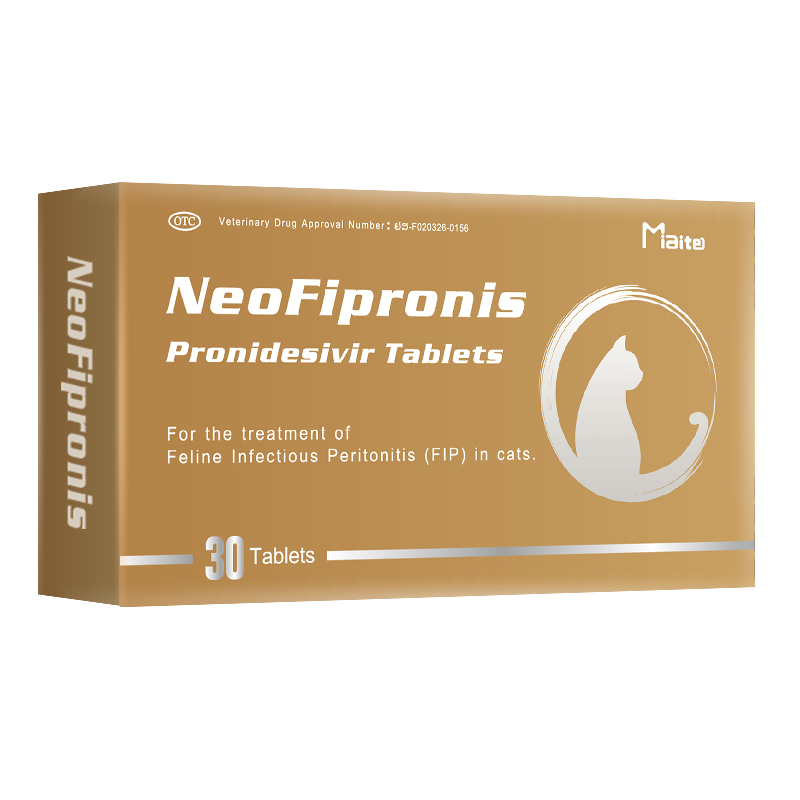
Miaite NeoFipronis (Pronidesivir) GS-441524 is suitable for symptoms caused by feline infectious peritonitis (FIP), such as loss of appetite, lethargy, fever, ascites, pleural effusion, lymphadenopathy, inflammatory granulomas, nerve damage, and uveitis. It has excellent therapeutic effects on FIP. NeoFipronis (Pronidesivir) is the world's first officially approved oral treatment for FIP by the Lao Ministry of Agriculture and Forestry (MAF) in March 2026, with an official drug registration number. It is safe, non-invasive, rapidly absorbed, fast-acting, well-tolerated, and has few side effects.
Mechanism of Action and Pharmacokinetics
Pronidesivir functions as a nucleoside analog, targeting the viral RNA-dependent RNA polymerase (RdRp). This inhibition disrupts viral replication, thereby reducing viral load and alleviating clinical symptoms. Its oral formulation facilitates ease of administration, which is particularly beneficial for daily treatment adherence and improving quality of life for affected cats.
Pharmacokinetically, Pronidesivir is characterized by rapid absorption and good bioavailability. It has a favorable safety profile, with minimal toxicity observed in clinical trials. The drug’s fast-acting nature allows for quick symptom relief, making it a valuable tool in managing FIP symptoms effectively.
Clinical Evidence and Efficacy
Recent field studies and clinical trials have demonstrated Pronidesivir's high efficacy in cats with dry FIP. Treated cats exhibit marked improvements within days, including reduction in lethargy, fever, and granuloma size. Long-term studies support sustained remission, with many cats maintaining health stability post-treatment.
Owners reported significant improvements in the overall well-being of their pets, with some cats resuming normal activities and eating habits. Importantly, the safety profile of Pronidesivir indicates few adverse effects, primarily mild gastrointestinal upset in some cases, which diminishes with supportive care.
Advantages Over Traditional Treatments
Prior treatments for FIP, such as corticosteroids or immunosuppressants, provided only palliative relief without addressing the underlying viral infection. The emergence of Pronidesivir offers a targeted antiviral approach, directly inhibiting viral replication, and thereby transforming the therapeutic landscape.
Compared to injectable antiviral agents, Oral Pronidesivir provides a non-invasive, user-friendly administration alternative, reducing stress on animals and owners. Its rapid absorption and fast action significantly enhance treatment outcomes, which previously were limited by slow-acting or poorly tolerated drugs.
Regulatory Approval and Safety
The approval of Pronidesivir by the Lao Ministry of Agriculture and Forestry marks a significant milestone in veterinary medicine. This official recognition not only validates its efficacy but also ensures quality control, safety standards, and consistent manufacturing processes. The drug’s approval facilitates wider adoption and accessibility for veterinary practitioners worldwide.
Safety assessments have confirmed that Pronidesivir is well tolerated in cats, with minimal side effects. The oral administration route further reduces the risk associated with injections, making it a safer alternative for long-term management.
Future Perspectives and Ongoing Research
The success of Pronidesivir in treating dry FIP offers hope for further research into antiviral therapies for feline diseases. Ongoing clinical trials aim to optimize dosage regimens, explore potential combination therapies, and investigate efficacy against other coronavirus strains.
Researchers are also exploring the potential use of Pronidesivir in preventing FIP in high-risk populations, which could revolutionize current strategies for feline coronavirus management.
Conclusion
Pronidesivir represents a breakthrough in the fight against Feline Infectious Peritonitis, particularly its dry form. Its approval as the first oral antiviral treatment by a regulatory authority symbolizes a turning point in veterinary medicine. With its high efficacy, safety profile, and ease of use, Pronidesivir offers renewed hope for cats suffering from this devastating disease and their owners.
As veterinary science continues to evolve, the development and approval of drugs like Pronidesivir demonstrate the importance of innovative antiviral therapies in improving animal health and welfare.
References
"Advances in FIP Treatment: The Role of GS-441524 and Pronidesivir." Journal of Veterinary Pharmacology and Therapeutics.
"Clinical Efficacy of NeoFipronis in FIP Patients." Veterinary Medicine and Science Journal.
"Regulatory Approval of Pronidesivir for FIP Treatment." Lao Ministry of Agriculture and Forestry Official Publications.
"Mechanisms of Action of Nucleoside Analogs in FIP Therapy." International Journal of Feline Medicine.
"Safety and Pharmacokinetics of Pronidesivir in Cats." Veterinary Pharmacology Reports.