Best Treatment for Ocular FIP
Feline Infectious Peritonitis (FIP) is a severe, often fatal disease caused by certain strains of the feline coronavirus (FCoV). While traditionally viewed as a challenging condition with limited treatment options, recent advances have introduced promising therapies, especially for cases involving ocular symptoms. This article explores the best current treatments for ocular FIP, focusing on new pharmacological interventions, their efficacy, safety profiles, and implications for feline health.
Understanding Ocular FIP
FIP manifests in two primary forms: the wet (effusive) form and the dry (non-effusive) form. Ocular FIP is predominantly associated with the dry form, characterized by granulomatous inflammation within the eye. Cats with ocular FIP may show signs such as uveitis, retinal hemorrhages, keratic precipitates, anterior chamber cell infiltration, and vision impairment. Early diagnosis is critical to prevent irreversible damage, but the overlapping symptoms with other ocular diseases often complicate diagnosis.
Traditional Management Approaches
Historically, FIP was considered nearly incurable, with supportive care being the mainstay, including anti-inflammatory agents and immunosuppressants. Such treatments only alleviated pain and inflammation but did not address the virus itself. This often resulted in a poor prognosis, especially for ocular involvement, which can rapidly lead to blindness.
Breakthrough: Direct-Acting Antiviral Therapies
The advent of antiviral drugs targeting FCoV replication has revolutionized FIP treatment. Among these, GS-441524 has demonstrated remarkable success in clinical trials and field use, leading to increased survival rates and improved quality of life for affected cats.
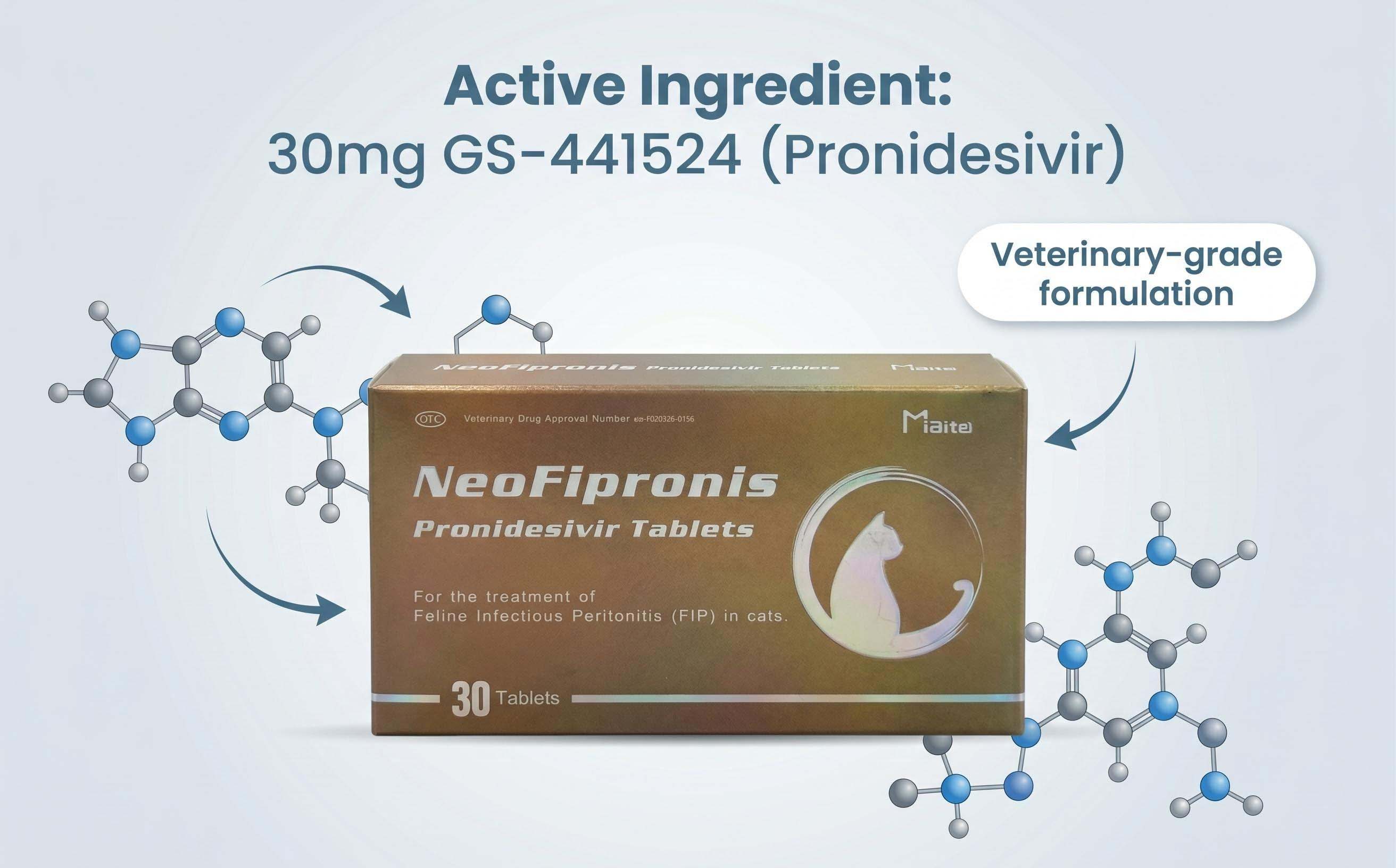
Miaite NeoFipronis (Pronidesivir) GS-441524
A notable development in FIP management is the introduction of Miaite NeoFipronis (Pronidesivir) GS-441524. Approved by the Lao Ministry of Agriculture and Forestry (MAF) in March 2026, it is recognized as the world's first orally administered, officially approved treatment for FIP.
Key Features and Benefits:
Effective on Multiple Symptoms: It targets symptoms caused by feline infectious peritonitis, such as loss of appetite, lethargy, fever, ascites, pleural effusion, lymphadenopathy, inflammatory granulomas, nerve damage, and notably, uveitis.
Superior Therapeutic Effects: NeoFipronis has shown excellent efficacy in clearing the virus and resolving associated clinical signs, including ocular inflammation.
Safety and Tolerance: Its non-invasive oral formulation ensures rapid absorption, fast-acting results, and excellent safety profile with minimal side effects.
Convenience: Oral administration allows for easier compliance compared to injectable therapies, improving treatment adherence.
Mechanism of Action and Treatment Protocols
NeoFipronis inhibits the RNA-dependent RNA polymerase enzyme critical for viral replication. By blocking this enzyme, the drug reduces viral load, allowing the immune system to recover and resolve inflammatory responses including ocular lesions.
Standard treatment involves administering NeoFipronis at a dosage optimized based on the severity and progression of the disease. Typically, treatment is continued until clinical signs resolve and viral clearance is confirmed through PCR testing.
Treatment of Ocular FIP
Ocular involvement in FIP requires targeted management alongside systemic antiviral therapy:
Anti-inflammatory Medications: Corticosteroids or NSAIDs may be used temporarily to alleviate inflammation; however, their use must be cautious due to immunosuppressive properties.
Topical Therapy: Eye drops containing corticosteroids or NSAIDs can reduce intraocular inflammation and prevent tissue damage.
Supportive Care: Adequate hydration, nutrition, and immune support are vital components.
The incorporation of NeoFipronis therapy has been shown to resolve ocular inflammation effectively and improve visual outcomes. Early intervention is essential to prevent irreversible damage such as retinal detachment or optic nerve damage.
Future Outlook and Considerations
While NeoFipronis marks a significant advancement, complete eradication of FIP remains complex. Long-term studies are ongoing to assess the durability of remission and potential resistance development. Combining antiviral therapy with supportive ocular treatments yields the best prognosis.
Veterinary practitioners should remain vigilant for signs of ocular FIP in at-risk populations and adopt a multidisciplinary approach integrating systemic antivirals, local ocular therapy, and supportive care.
Conclusion
The landscape of FIP treatment is transforming owing to the development of potent antiviral medications like Miaite NeoFipronis (Pronidesivir) GS-441524. Its approval and promising efficacy in managing both systemic and ocular symptoms position it as the cornerstone of modern feline FIP therapy. Early diagnosis, prompt antiviral treatment, and comprehensive ocular management significantly enhance the chances of recovery and preservation of vision in affected cats.
References
1. Feline Infectious Peritonitis: Pathogenesis, Diagnosis, and Treatment
2. Advances in Antiviral Therapy for FIP
3. Clinical Efficacy of NeoFipronis GS-441524 in FIP
4. Immunology and Ocular Manifestations of FIP
5. New Standard of Care: Oral Antivirals in FIP Management