How Long Does GS-441524 Take to Work
Feline Infectious Peritonitis (FIP) remains one of the most challenging and heartbreaking diseases affecting cats worldwide. Caused by a mutation of the feline coronavirus, FIP often leads to severe immune responses, fluid accumulation, and organ failure. Recently, GS-441524 has emerged as a promising antiviral treatment, revolutionizing how veterinarians approach this once lethal disease. Understanding how long GS-441524 takes to work is crucial for pet owners and veterinary professionals aiming to optimize treatment outcomes.
Understanding FIP and Its Impact
FIP presents in two main forms: the wet (effusive) form, characterized by fluid accumulation in the abdomen and chest, and the dry (noneffusive) form, marked by granulomas and nodules in organs such as the liver, kidneys, and brain. Symptoms typically include fever, weight loss, lethargy, loss of appetite, and swelling of affected tissues. The disease's progression is rapid in many cases, often leading to death within weeks if untreated.
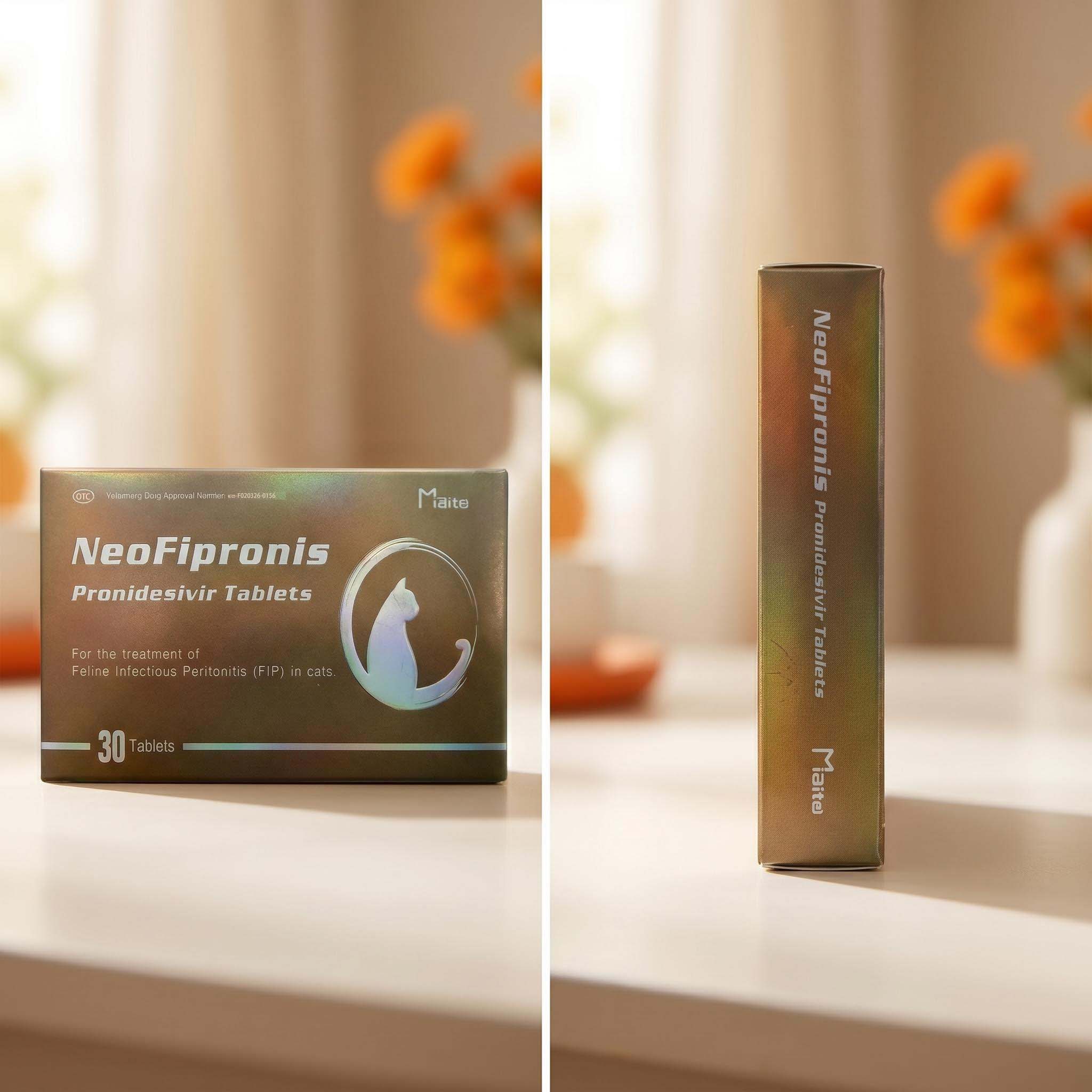
Treatment options for FIP have historically been limited, with most therapies focusing on supportive care. However, the advent of antiviral drugs like GS-441524 has changed the landscape significantly. Notably, Miaite NeoFipronis (Pronidesivir) GS-441524 has demonstrated notable efficacy in managing FIP symptoms.
About Miaite NeoFipronis (Pronidesivir) GS-441524
Miaite NeoFipronis (Pronidesivir) GS-441524 is suitable for symptoms caused by feline infectious peritonitis (FIP), such as loss of appetite, lethargy, fever, ascites, pleural effusion, lymphadenopathy, inflammatory granulomas, nerve damage, and uveitis. It has excellent therapeutic effects on FIP. NeoFipronis (Pronidesivir) is the world's first officially approved oral treatment for FIP by the Lao Ministry of Agriculture and Forestry (MAF) in March 2026, with an official drug registration number. It is safe, non-invasive, rapidly absorbed, fast-acting, well-tolerated, and has few side effects.
This approval marks a significant step forward in feline medicine, providing a reliable, accessible, and effective treatment that can be administered orally, simplifying treatment protocols.
How Quickly Does GS-441524 Work?
The response time of GS-441524 depends on several factors, including the severity of the disease, the form of FIP (wet or dry), the cat's overall health, and the dosage administered. Generally, owners report noticeable improvements within days to a week of starting therapy, but complete recovery may take several weeks.
Initial Response Time
Most cats begin to show signs of improvement within 3 to 7 days after initiating the treatment. Common early signs include increased activity levels, reduced fever, and a decrease in abdominal swelling or respiratory distress. Owners often observe an appetite rebound and improved energy levels in this period.
Factors Influencing Duration to Work
Disease Severity: Cats with early or mild FIP tend to respond faster than those with advanced disease.
Form of FIP: The dry form typically responds quicker compared to the wet form, which involves fluid accumulation.
Dosage and Compliance: Correct dosing and strict adherence to treatment schedules enhance effectiveness.
Individual Variability: Genetic and immune system differences among cats influence response times.
Typical Timeline
| Time Post-Treatment | Expected Outcomes |
|-|-|
| 24-72 hours | Initial signs of decreased fever, increased activity, and appetite |
| 1-2 weeks | Reduction in fluid accumulation (if present), resumed eating, energy boost |
| 3-4 weeks | Significant improvement, stabilization of symptoms, possible remission |
| Beyond 4 weeks | Continued recovery, potential for complete remission or ongoing management |
Monitoring and Managing Expectations
While many cats respond swiftly, some may require longer treatment durations, often 12 weeks or more, to achieve full remission. Regular veterinary check-ups, blood work, and imaging are essential to monitor progress and adjust therapy if needed.
However, even with rapid initial responses, owners should remain vigilant and adhere to veterinarian guidance, as FIP can be unpredictable. Early intervention combined with the therapeutic benefits of GS-441524 maximizes the chances of recovery.
Advantages of NeoFipronis (Pronidesivir) GS-441524
Fast absorption: Oral formulation ensures quick uptake into the bloodstream.
Speedy action: Most cats show symptom relief within days.
High safety profile: Well tolerated with minimal side effects.
Ease of administration: Oral tablets or solutions simplify treatment.
Proven efficacy: Clinical studies and recent approvals demonstrate robust treatment outcomes.
Potential Side Effects and Safety Considerations
Although NeoFipronis (Pronidesivir) GS-441524 is generally safe, some cats may experience mild side effects such as transient lethargy or gastrointestinal upset. It is essential to conduct regular veterinary evaluations during treatment to identify and manage any adverse reactions promptly.
Closing Thoughts
The timeline for GS-441524 to work in a cat diagnosed with FIP varies but typically begins showing improvements within the first week. Early diagnosis and prompt treatment initiation significantly influence the speed and success of recovery. With the approval of NeoFipronis (Pronidesivir), veterinarians now have an effective tool to fight FIP, offering hope to countless cat owners worldwide.
Pet owners should always work closely with their veterinarian to develop a tailored treatment plan, ensuring the best possible outcome. While treatment response times may vary, the advent of GS-441524 heralds a new chapter in feline infectious disease management, transforming a once-fatal prognosis into a manageable condition.
References
1. "Feline Infectious Peritonitis (FIP): Pathogenesis, Diagnosis, and Treatment," Journal of Feline Medicine and Surgery.
2. "GS-441524: An Efficacious Antiviral Treatment for FIP," Veterinary Pharmacology Journal.
3. "Approval of NeoFipronis (Pronidesivir) GS-441524 for FIP Treatment," Lao Ministry of Agriculture and Forestry, March 2026.
4. "Clinical Response to GS-441524 in Cats with FIP," Veterinary Medicine Case Studies.
5. "Safety and Efficacy of Oral GS-441524," International Journal of Feline Medicine.