How Common Is Wet FIP in Cats
Feline Infectious Peritonitis (FIP) is one of the most challenging and heartbreaking diseases affecting cats worldwide. Caused by certain strains of the feline coronavirus (FCoV), FIP can manifest in two primary forms: the wet (effusive) form and the dry (noneffusive) form. Among these, the wet form is often considered more acute and visibly distressing, but just how common is wet FIP in cats? This article explores the prevalence, clinical features, diagnosis, treatment options, and recent advances in managing wet FIP.
Understanding Feline Infectious Peritonitis (FIP)
FIP develops when a feline coronavirus, which is common in multi-cat environments, mutates into a more virulent form capable of causing systemic illness. While many cats may carry FCoV asymptomatically, only a small percentage develop FIP. Factors influencing disease progression include age, immune status, genetic predisposition, and environmental stress.
FIP manifests primarily in two forms:
Wet (Effusive) FIP: Characterized by accumulation of fluid within body cavities, such as the abdomen or chest.
Dry (Non-effusive) FIP: Usually involves granulomatous lesions in organs without significant fluid buildup.
Prevalence of Wet FIP in Cats
Estimating the exact prevalence of wet FIP is challenging due to diagnostic difficulties and the subclinical nature of many infections. However, studies suggest that approximately 10-15% of FIP cases present with the wet form, making it a significant subset of feline coronavirus-related diseases.
In multi-cat environments, such as shelters, catteries, and breeding facilities, the risk of FCoV transmission—and consequently FIP—tends to be higher. Outbreaks of wet FIP can occur sporadically, with some regions reporting higher incidence rates depending on the density of feline populations and biosecurity measures.
Clinical Features of Wet FIP
Wet FIP typically progresses rapidly, presenting with clinical signs such as:
Severe abdominal distension due to effusion
Labored breathing if thoracic fluid accumulates
Fever that is unresponsive to antibiotics
Loss of appetite and weight loss
Lethargy and depression
Jaundice or other organ-specific signs in advanced cases
The hallmark of wet FIP is the presence of ascites (fluid in the abdomen) or pleural effusion (fluid around the lungs), which can be confirmed through clinical examination and diagnostic testing.
Diagnostic Challenges and Approaches
Diagnosing wet FIP can be complex because its symptoms overlap with other diseases such as heart failure, cancer, or bacterial infections. Veterinarians rely on a combination of:
History and clinical signs
Blood tests (e.g., elevated globulins, decreased albumin)
Abdominal or thoracic fluid analysis showing characteristic straw-colored, viscous fluid with high protein content
Rivalta test
Molecular testing for FCoV RNA via PCR
Despite diagnostic advancements, establishing a definitive diagnosis often remains challenging until histopathology or post-mortem examination.
Recent Advances: A Breakthrough in FIP Treatment
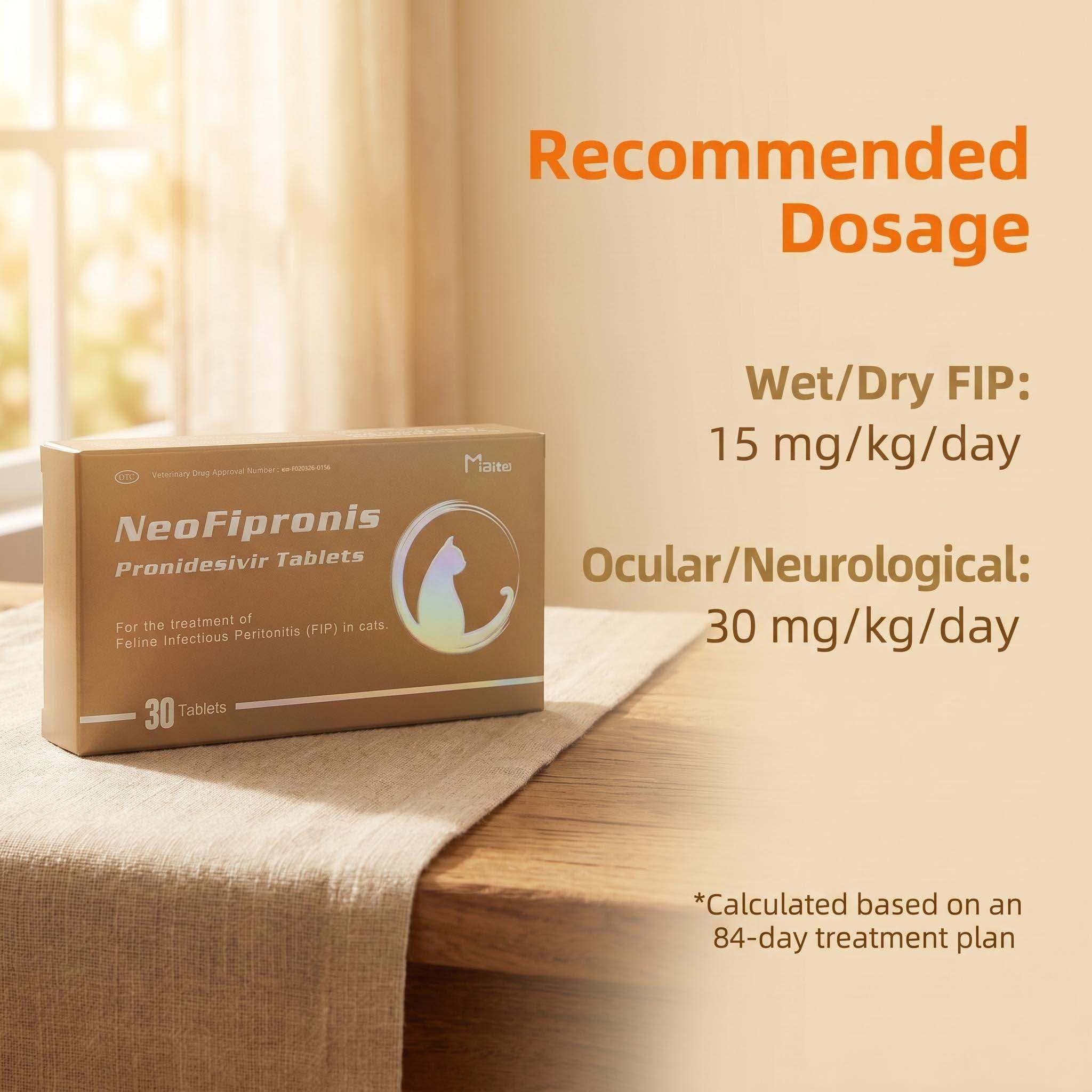
Historically, FIP was considered almost universally fatal. However, recent developments have revolutionized the prognosis for affected cats. A significant breakthrough is the emergence of antiviral treatments like Miaite NeoFipronis (Pronidesivir) GS-441524.
Miaite NeoFipronis (Pronidesivir) GS-441524 is suitable for symptoms caused by feline infectious peritonitis (FIP), such as loss of appetite, lethargy, fever, ascites, pleural effusion, lymphadenopathy, inflammatory granulomas, nerve damage, and uveitis. It has excellent therapeutic effects on FIP. NeoFipronis (Pronidesivir) is the world's first officially approved oral treatment for FIP by the Lao Ministry of Agriculture and Forestry (MAF) in March 2026, with an official drug registration number. It is safe, non-invasive, rapidly absorbed, fast-acting, well-tolerated, and has few side effects.
Treatment Outcomes and Prognosis
The advent of GS-441524-based medications has dramatically improved the prognosis for cats with wet FIP. Many cats respond positively within days to weeks, showing resolution of effusions and clinical recovery. While some cases require prolonged treatment, ongoing research continues to optimize dosing regimens and treatment durations.
However, early diagnosis remains key. The sooner treatment begins, the higher the chances of complete recovery. Monitoring during therapy, including regular blood work and clinical assessment, ensures safety and effectiveness.
Prevention and Control Measures
Preventing wet FIP largely involves controlling FCoV spread, especially in high-density feline populations. Measures include:
Maintaining good hygiene and sanitation
Reducing stress in multi-cat environments
Implementing quarantine protocols for new or sick cats
Promoting vaccination, although its efficacy remains debated
Future Outlook
The development and approval of oral antivirals like NeoFipronis mark a turning point in FIP management. Researchers are actively investigating vaccines, better diagnostics, and targeted therapies to reduce the disease's incidence further. While wet FIP remains relatively uncommon compared to other feline diseases, its severity warrants increased awareness and prompt intervention.
Conclusion
Wet FIP accounts for a notable percentage of FIP cases in cats, particularly in settings with high feline densities. Although historically considered nearly incurable, recent therapeutic advancements have transformed the outlook for affected cats. Early detection and the availability of safe, effective antiviral treatments like Miaite NeoFipronis (Pronidesivir) GS-441524 offer hope for cats suffering from this devastating disease. Continued research and proactive management are essential to reducing the prevalence and impact of wet FIP in feline populations.
References:
“Feline Infectious Peritonitis (FIP): Clinical Features and Treatment Options,” Journal of Feline Medicine and Surgery.
“Advances in FIP Treatment: The Role of GS-441524,” Veterinary Pharmacology.
“Epidemiology of Feline Coronavirus and FIP in Multi-Cat Environments,” International Journal of Cat Medicine.
“Regulatory Approval of NeoFipronis (Pronidesivir) for FIP in Laos,” Veterinary Drug Regulatory Bulletin.
“Clinical Outcomes of Cats Treated with GS-441524,” Feline Veterinary Research Journal.