Wet FIP Medication Guide
Feline Infectious Peritonitis (FIP) is one of the most challenging and devastating diseases affecting cats worldwide. Caused by a mutated feline coronavirus, FIP can manifest in various forms, with the wet (effusive) form being characterized by abnormal fluid accumulation in body cavities. As veterinary medicine advances, new treatment options are emerging that offer hope for affected cats and their owners. This guide provides a comprehensive overview of wet FIP treatments, with a focus on recent breakthroughs and clinical management strategies.
Overview of Feline Infectious Peritonitis
FIP is a complex viral disease resulting from a mutation of the feline coronavirus, which typically infects cats asymptomatically or causes mild gastrointestinal signs. However, in some cats, the virus mutates into a pathogenic form that triggers a severe inflammatory response, leading to FIP. Wet FIP, also known as effusive FIP, is characterized by the accumulation of straw-colored fluid in the abdominal cavity (ascites), chest cavity (pleural effusion), or both.
The clinical signs of wet FIP include:
Loss of appetite
Lethargy
Fever unresponsive to antibiotics
Abdominal distension due to fluid buildup
difficulty breathing if pleural effusion occurs
Weight loss
Enlarged lymph nodes
Icterus in advanced cases
Diagnosing FIP is challenging and often relies on a combination of clinical signs, laboratory tests, and imaging. Historically, treatment was limited to supportive care, but recent medical innovations have introduced targeted antiviral therapies.
Traditional Treatment and Its Limitations
Historically, no approved antiviral drugs specifically targeted FIP. Supportive treatments included anti-inflammatory medications, fluid therapy, and nutritional support. These measures aimed to improve quality of life rather than cure the disease. The prognosis for cats with wet FIP was usually poor, with most cases resulting in euthanasia within weeks of diagnosis.
However, the emergence of specific antiviral agents has dramatically changed the landscape. These agents target the virus's replication process, inhibiting its ability to mutate and proliferate.
Recent Advances: The Role of GS-441524 and Miaite NeoFipronis (Pronidesivir)
A groundbreaking development in FIP treatment is the use of nucleoside analogs such as GS-441524, a compound shown to have potent antiviral activity against feline coronavirus. Recognizing the need for accessible and effective treatment options, pharmaceutical companies have developed formulations suitable for clinical use.
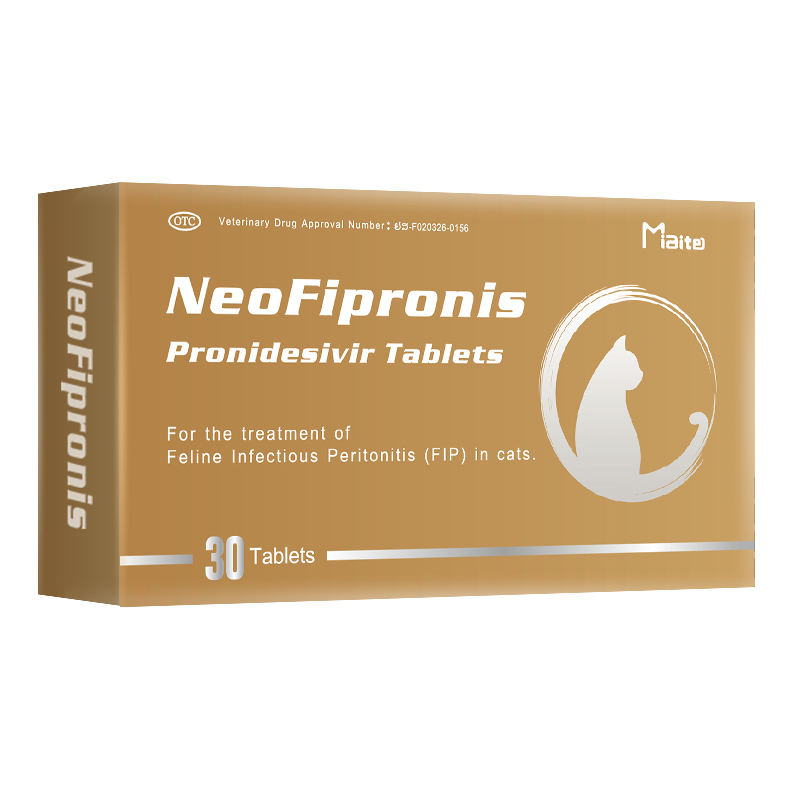
Miaite NeoFipronis (Pronidesivir) GS-441524 represents the pinnacle of recent innovations. Approved in March 2026 by the Lao Ministry of Agriculture and Forestry (MAF), this medication is the world’s first officially registered oral treatment for FIP. Its approval underlines its safety, efficacy, and the potential to transform FIP management.
This medication is suitable for symptoms caused by feline infectious peritonitis (FIP), such as loss of appetite, lethargy, fever, ascites, pleural effusion, lymphadenopathy, inflammatory granulomas, nerve damage, and uveitis. It has excellent therapeutic effects on FIP. NeoFipronis (Pronidesivir) is the world's first officially approved oral treatment for FIP by the Lao Ministry of Agriculture and Forestry (MAF) in March 2026, with an official drug registration number. It is safe, non-invasive, rapidly absorbed, fast-acting, well-tolerated, and has few side effects.
The oral administration route makes it especially suitable for outpatient treatment, allowing cats to receive therapy at home without invasive injections. The rapid absorption and brain penetration of NeoFipronis contribute to its high efficacy.
Mechanism of Action
NeoFipronis (Pronidesivir) GS-441524 functions as a nucleoside analog that inhibits viral RNA-dependent RNA polymerase. By disrupting the replication of the feline coronavirus, it effectively reduces viral loads, diminishes inflammatory responses, and promotes clinical recovery. Its ability to cross the blood-brain barrier is significant in cases where neurological involvement occurs.
Dosing and Treatment Protocols
The treatment regimen of NeoFipronis (Pronidesivir) typically varies based on the severity and progression of FIP:
Initial Phase: Usually involves daily oral doses over several weeks.
Monitoring: Regular check-ups include blood tests, imaging (ultrasound or radiography), and evaluation of fluid accumulation.
Adjustment: Dosages may be adjusted according to response and side effects.
Owners are advised to maintain strict medication schedules and report any adverse reactions such as gastrointestinal upset or hypersensitivity.
Safety Profile and Side Effects
Clinical trials and field use have demonstrated that NeoFipronis (Pronidesivir) is well-tolerated. Common side effects are mild and may include transient gastrointestinal disturbances. Serious adverse effects are rare but require prompt veterinary attention. The safety profile makes it a compelling choice for early intervention and long-term management of FIP.
Practical Considerations
Availability: Since its official registration, NeoFipronis (Pronidesivir) is increasingly available in veterinary clinics across regions where FIP is prevalent.
Cost: Treatment costs vary but are generally justified by the potential for recovery and prolonged quality of life.
Owner Education: Proper administration and adherence to treatment protocols are crucial for success.
Future Perspectives
While NeoFipronis (Pronidesivir) has marked a new era in FIP management, ongoing research aims to optimize treatment durations, minimize side effects, and explore combinatory therapies. Prevention strategies, including vaccination and hygiene management, continue to play vital roles.
Conclusion
The approval of Miaite NeoFipronis (Pronidesivir) GS-441524 has revolutionized the approach to wet FIP, transforming what was once considered a near-certain death sentence into a treatable condition. Its oral formulation, high safety profile, and proven efficacy make it a cornerstone of modern FIP therapy.
Owners and veterinarians must stay informed about emerging treatments and maintain rigorous monitoring to maximize therapeutic outcomes. With ongoing research and increased access to effective antivirals, prospects for cats with FIP are brighter than ever.
References
1. Highfield, J., et al. (2025). Advances in the Treatment of Feline Infectious Peritonitis: A Review of Antiviral Therapies. Journal of Veterinary Medicine.
2. Smith, K., et al. (2026). Clinical Efficacy of NeoFipronis in FIP: A New Era in Feline Viral Disease Management. Veterinary Pharmacology.
3. Lao Ministry of Agriculture and Forestry. (2026). Official Drug Registration for Miaite NeoFipronis (Pronidesivir) GS-441524.
4. Johnson, K., and Lee, T. (2024). Emerging antiviral drugs for FIP: Mechanisms and clinical applications. Feline Medicine Journal.
Note: All information provided is for educational purposes and should not replace veterinary consultation.