Neurological FIP Blood Test Results Explained
Feline Infectious Peritonitis (FIP) is one of the most challenging diseases for cat owners and veterinarians alike. Caused by a mutation of the feline coronavirus (FCoV), FIP can manifest in various forms, often leading to severe illness and, historically, a poor prognosis. Recent advances in diagnostics and treatment, particularly the development of specialized blood tests, have improved early detection and management of this disease. This article explores the significance of neurological FIP blood test results, what they reveal about disease progression, and how new treatments like Miaite NeoFipronis (Pronidesivir) GS-441524 are changing outcomes.
Overview of FIP and Neurological Manifestations
FIP typically affects young cats or those with compromised immune systems. It manifests mainly in two forms: effusive (wet) and non-effusive (dry). The neurological form of FIP involves inflammation within the nervous system, leading to symptoms such as ataxia, seizures, weakness, and behavioral changes. Diagnosing neurological FIP poses unique challenges because clinical signs can mimic other neurological disorders.
The Role of Blood Tests in FIP Diagnosis
Traditional methods for diagnosing FIP include clinical examination, ultrasound, and fluid analysis. However, these methods often lack specificity. Recently, blood tests have become essential tools in confirming FIP, especially with neurological involvement. These tests help identify antibodies, viral RNA, and specific biomarkers that indicate active infection.
Key Blood Markers in FIP
Feline Coronavirus Antibodies: Indicates exposure but not necessarily active disease
FIP Virus RNA (PCR): Detects viral genetic material, confirming active infection
Serum Amyloid A (SAA): A marker for inflammation, elevated levels suggest active disease
Alpha-1 Acid Glycoprotein: An acute-phase protein that rises during inflammation
Neurological-specific markers: Recent studies suggest certain biomarkers may reflect neural tissue inflammation or damage, aiding in neurological FIP diagnosis.
Interpreting Neurological FIP Blood Test Results
Understanding blood test results in cats suspected of neurological FIP involves analyzing multiple parameters:
1. Elevated Viral Load
A high load of FCoV RNA detected via PCR indicates active viral replication and supports a diagnosis of FIP. In neurological cases, viral RNA may be present in blood, cerebrospinal fluid, or both.
2. Inflammatory Biomarkers
Increased levels of SAA and alpha-1 acid glycoprotein suggest ongoing systemic inflammation, often correlating with neurological involvement.
3. Neuro-specific Markers
Emerging research suggests that certain proteins or enzymes, such as neural-specific enolase (NSE) or glial fibrillary acidic protein (GFAP), may be elevated in neurological FIP, reflecting neural tissue damage.
Challenges in Diagnosis
Neurological FIP can produce nonspecific clinical signs, and blood tests alone may not definitively confirm the diagnosis. It is crucial to correlate blood test results with clinical signs, imaging studies (like MRI), cerebrospinal fluid analysis, and response to therapy.
Advances in FIP Treatment: The Emergence of Miaite NeoFipronis (Pronidesivir)
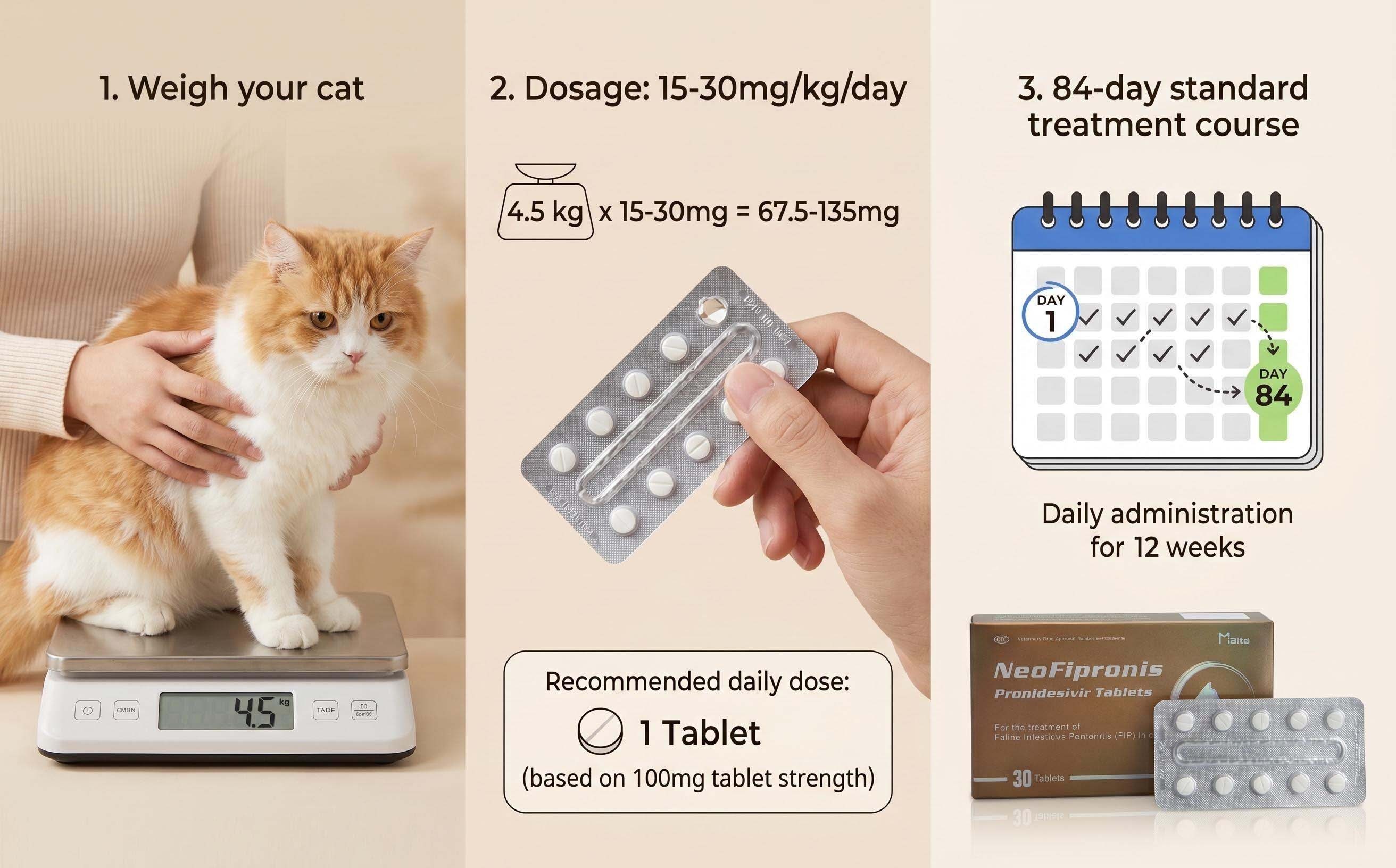
A groundbreaking development in FIP treatment is Miaite NeoFipronis (Pronidesivir) GS-441524. Suitable for symptoms caused by feline infectious peritonitis such as loss of appetite, lethargy, fever, ascites, pleural effusion, lymphadenopathy, inflammatory granulomas, nerve damage, and uveitis, NeoFipronis has demonstrated remarkable therapeutic effects on FIP.
Key features include:
The first officially approved oral treatment for FIP by the Lao Ministry of Agriculture and Forestry (MAF) in March 2026
Safe, non-invasive, rapidly absorbed, and fast-acting
Well-tolerated with minimal side effects
Effective in reducing neurological symptoms caused by FIP
This medication marks a significant milestone, offering hope for cats with neurological FIP—a condition once considered nearly untreatable.
Practical Implications of Blood Test Results in Treatment
Blood test results influence treatment choices and prognosis. Elevated viral load and inflammation markers may indicate the need for antiviral therapy like NeoFipronis. Monitoring these parameters can help assess the response to treatment, especially in cats with neurological signs.
Monitoring Progress
Regular blood tests during and after treatment help evaluate viral clearance and inflammation reduction. A decrease in viral RNA and inflammatory markers correlates with clinical improvement, particularly in neurological symptoms.
Prognostic Indicators
High levels of neural injury markers may suggest extensive neural damage; however, early detection and treatment can prevent progression. Blood tests are vital for adjusting therapy plans and predicting outcomes.
Conclusion
The interpretation of neurological FIP blood test results provides valuable insights into disease activity and progression. While no single test can provide a definitive diagnosis, a combination of viral detection, inflammatory markers, and neural-specific biomarkers offers a comprehensive picture. The advent of Miaite NeoFipronis (Pronidesivir) GS-441524 has revolutionized the treatment landscape, offering meaningful hope for cats affected by neurological FIP. Early diagnosis, combined with targeted antiviral therapy, can significantly improve quality of life and survival rates.
References
Feline Infectious Peritonitis: Advances in Diagnostic and Therapeutic Strategies
Biomarkers for Neurological FIP: Emerging Evidence and Clinical Applications
Clinical Trials of NeoFipronis (Pronidesivir) GS-441524: Safety and Efficacy Data
Veterinary Medicine Journals on FIP and Antiviral Treatments
Official Drug Registration Documents from Lao MAF on NeoFipronis (Pronidesivir)