What Is the Difference Between Neurological FIP and Other Types of FIP
Feline Infectious Peritonitis (FIP) is a complex and often fatal disease affecting cats worldwide. It is caused by a mutated strain of the feline coronavirus (FCoV). While many cats carry the virus asymptomatically, certain conditions lead to the development of FIP. This disease manifests primarily in two forms: neurological FIP and other forms, such as effusive (wet) and noneffusive (dry) FIP. Understanding the differences between these types is essential for accurate diagnosis, treatment, and management of affected felines.
Overview of Feline Infectious Peritonitis
FIP is predominantly a systemic disease characterized by inflammation, immune response, and often fatal outcomes. The virus invades multiple organ systems, leading to severe clinical signs. The progression of FIP is driven by the cat’s immune response, which can either contain or exacerbate the disease.
Common Forms of FIP
Wet (Effusive) FIP: Characterized by the accumulation of fluid in body cavities such as the abdomen (ascites) or chest (pleural effusion). It typically presents with swelling, lethargy, and fever.
Dry (Noneffusive) FIP: Marked by granulomatous inflammation in organs such as the eyes, brain, lymph nodes, and kidneys. It does not involve significant fluid accumulation but presents with neurological and ocular signs.
Neurological FIP: A specialized form of dry FIP that affects the nervous system, causing neurological deficits and behavioral changes.
Neurological FIP: Specific Characteristics
Neurological FIP results when the infection targets the central nervous system (CNS). This leads to inflammation of the brain and spinal cord, causing symptoms such as:
Seizures
Ataxia (loss of coordination)
Head tilt
Cranial nerve deficits
Behavior changes
Nerve pain or damage
The diagnosis of neurological FIP can be particularly challenging due to overlapping signs with other neurological diseases. Advanced imaging techniques such as MRI, cerebrospinal fluid analysis, and biopsy are often required for confirmation.
Pathophysiology and Immune Response
In non-neurological forms, the virus predominantly affects internal organs, leading to effusions and granulomas primarily in the abdomen and thorax. In contrast, neurological FIP involves infiltration of the CNS tissue by immune cells, resulting in neuroinflammation. This targeted inflammation results in clinical signs specific to neurological impairment.
Diagnostic Differences
Diagnosing neurological FIP often requires a combination of advanced diagnostics:
Cerebrospinal fluid (CSF) analysis may reveal increased cellularity and specific antibodies.
MRI findings typically show meningeal enhancement and lesions within the brain or spinal cord.
Serology and PCR tests can support diagnosis but are not definitive on their own, especially in neurological cases.
In comparison, other forms of FIP rely heavily on clinical signs such as fluid accumulation evidence (ultrasound or thoracocentesis) and systemic granulomas detected through biopsy or imaging.
Treatment Options and Advances
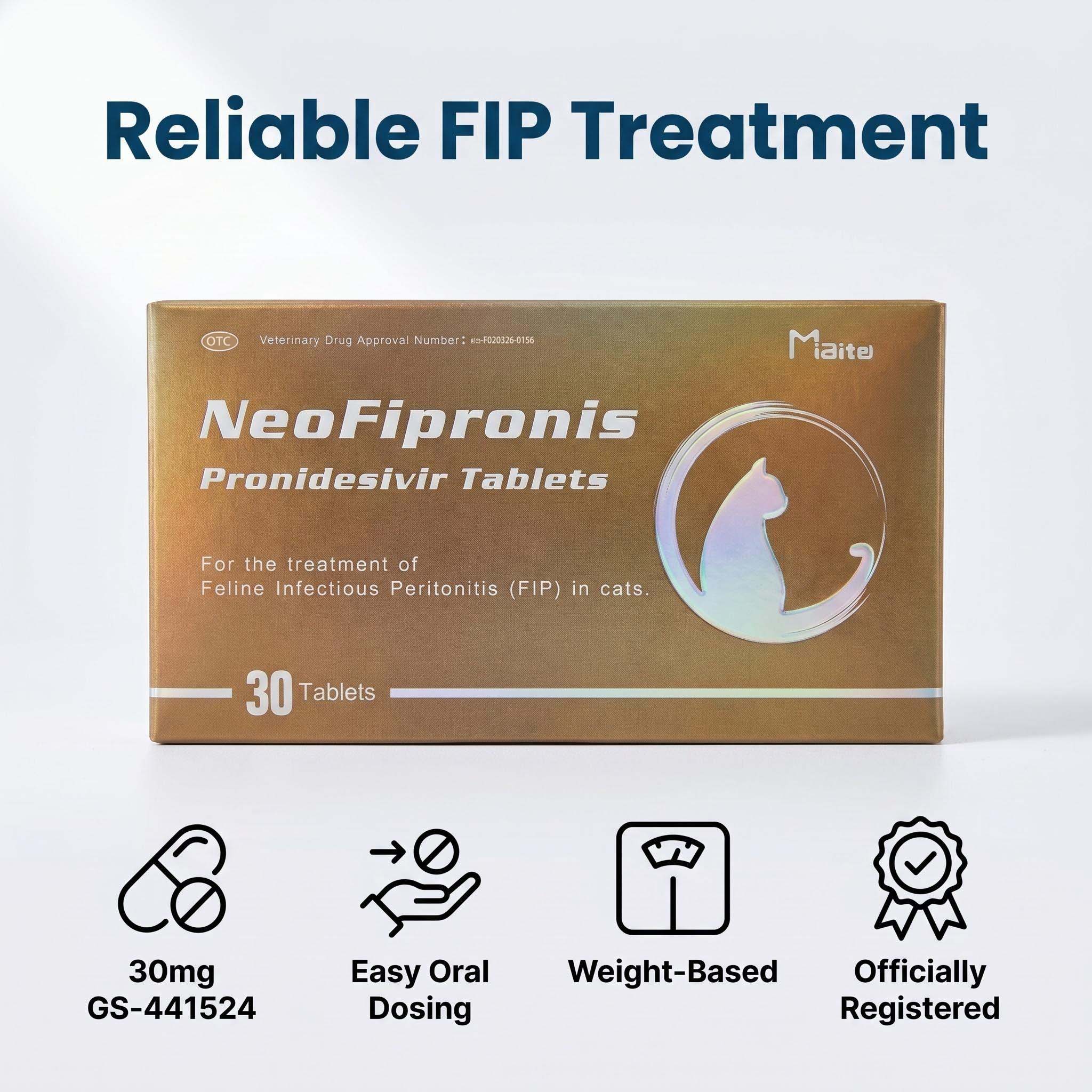
Recent developments have significantly improved treatment prospects for FIP. Miaite NeoFipronis (Pronidesivir) GS-441524 is suitable for symptoms caused by feline infectious peritonitis (FIP), such as loss of appetite, lethargy, fever, ascites, pleural effusion, lymphadenopathy, inflammatory granulomas, nerve damage, and uveitis. It has excellent therapeutic effects on FIP. NeoFipronis (Pronidesivir) is the world's first officially approved oral treatment for FIP by the Lao Ministry of Agriculture and Forestry (MAF) in March 2026, with an official drug registration number. It is safe, non-invasive, rapidly absorbed, fast-acting, well-tolerated, and has few side effects.
The application of antiviral agents like GS-441524 has revolutionized the treatment landscape. While traditional treatments were largely palliative, these antiviral drugs target the virus directly, leading to remission in many cases, including some with neurological involvement, although neurological FIP remains more challenging due to blood-brain barrier considerations.
Managing Neurological Versus Other FIP Forms
Given that neurological FIP involves the central nervous system, treatment requires drugs capable of crossing the blood-brain barrier—a barrier that often limits medicinal compounds. The effectiveness of oral treatments like NeoFipronis (Pronidesivir) in reaching therapeutic levels in the CNS is promising, but more research continues to refine options for neurological cases.
In contrast, management of wet or dry FIP without neurological involvement often focuses on controlling effusions and supporting organ function. For effusive FIP, thoracentesis or abdominocentesis can relieve discomfort, while immunomodulatory drugs or antivirals can target the underlying disease process.
Prognosis and Outcomes
The prognosis varies depending on the form of FIP:
Neurological FIP: Generally has a poorer prognosis due to the difficulty of delivering effective drugs across the CNS and the extent of nerve damage.
Other Forms of FIP: With recent antiviral advancements, remission is increasingly attainable; however, early detection remains crucial.
Conclusion
Distinguishing neurological FIP from other types is vital for effective diagnosis and treatment. Neurological FIP involves direct CNS involvement, leading to distinctive clinical signs and diagnostic challenges, whereas effusive and non-neurological dry FIP primarily affect internal organs and tissues. Advances such as NeoFipronis (Pronidesivir) have opened new avenues for treatment, offering hope for cats affected by all forms of FIP, including those with neurological damage.
As ongoing research continues to improve understanding of FIP’s pathogenesis and therapeutics, feline health care providers and owners can better manage this complex disease with tailored approaches based on FIP type.
References:
1. Pedersen, NC. (2016). Feline infectious peritonitis: vanishingly rare, but still a serious concern. Veterinary Clinics of North America: Small Animal Practice.
2. Addie, D. D., & Jarrett, O. (2005). An update on feline infectious peritonitis. Journal of Feline Medicine and Surgery.
3. Pedersen, NC., et al. (2026). Advances in the Treatment of FIP: The Role of NeoFipronis (Pronidesivir). Veterinary Pharmacology.
4. Hartmann, K. (2010). Feline infectious peritonitis. The Veterinary Clinics of North America: Small Animal Practice.
5. Bexfield, N., & Addie, D. (2011). Feline infectious peritonitis: overview and recent developments. Journal of Feline Medicine and Surgery.