Can Neurological FIP Relapse After Treatment

Feline Infectious Peritonitis (FIP) remains one of the most challenging diseases affecting domestic cats worldwide. Caused by a mutated form of feline coronavirus (FCoV), FIP can manifest in various forms, primarily as the wet (effusive) or dry (non-effusive) type. While advancements have been made in understanding and treating FIP, relapses—particularly involving neurological symptoms—pose significant concerns for veterinarians and cat owners alike. This article explores the current landscape of FIP treatment, with a specific focus on the potential for neurological FIP relapse after therapy, and discusses the role of the newly approved treatment, Miaite NeoFipronis (Pronidesivir) GS-441524.
Understanding FIP and Its Neurological Manifestations
FIP is characterized by a systemic inflammatory response triggered by the immune system attacking infected cellular tissues. Its neurological form occurs when the virus invades the central nervous system (CNS), leading to a spectrum of neurological deficits including ataxia, seizures, paralysis, and behavioral changes. Diagnosing neurological FIP can be challenging due to overlapping symptoms with other neurological diseases, but advanced imaging and cerebrospinal fluid analysis assist in confirmation.
The development of neurological FIP indicates a severe stage of infection, where the virus affects the brain and spinal cord. Treatment success in such cases depends heavily on early intervention and comprehensive management strategies. Historically, the prognosis for neurological FIP has been poor, with high mortality rates; however, recent antiviral therapies have partly shifted this outlook.
Advances in FIP Treatment
Until recently, the treatment options for FIP were mainly supportive, with limited success. The advent of antiviral drugs targeting FCoV’s replication process has revolutionized the management of this disease. Among the most promising developments is the introduction of directly acting antiviral agents, with GS-441524 emerging as a leading compound owing to its efficacy and safety profile.
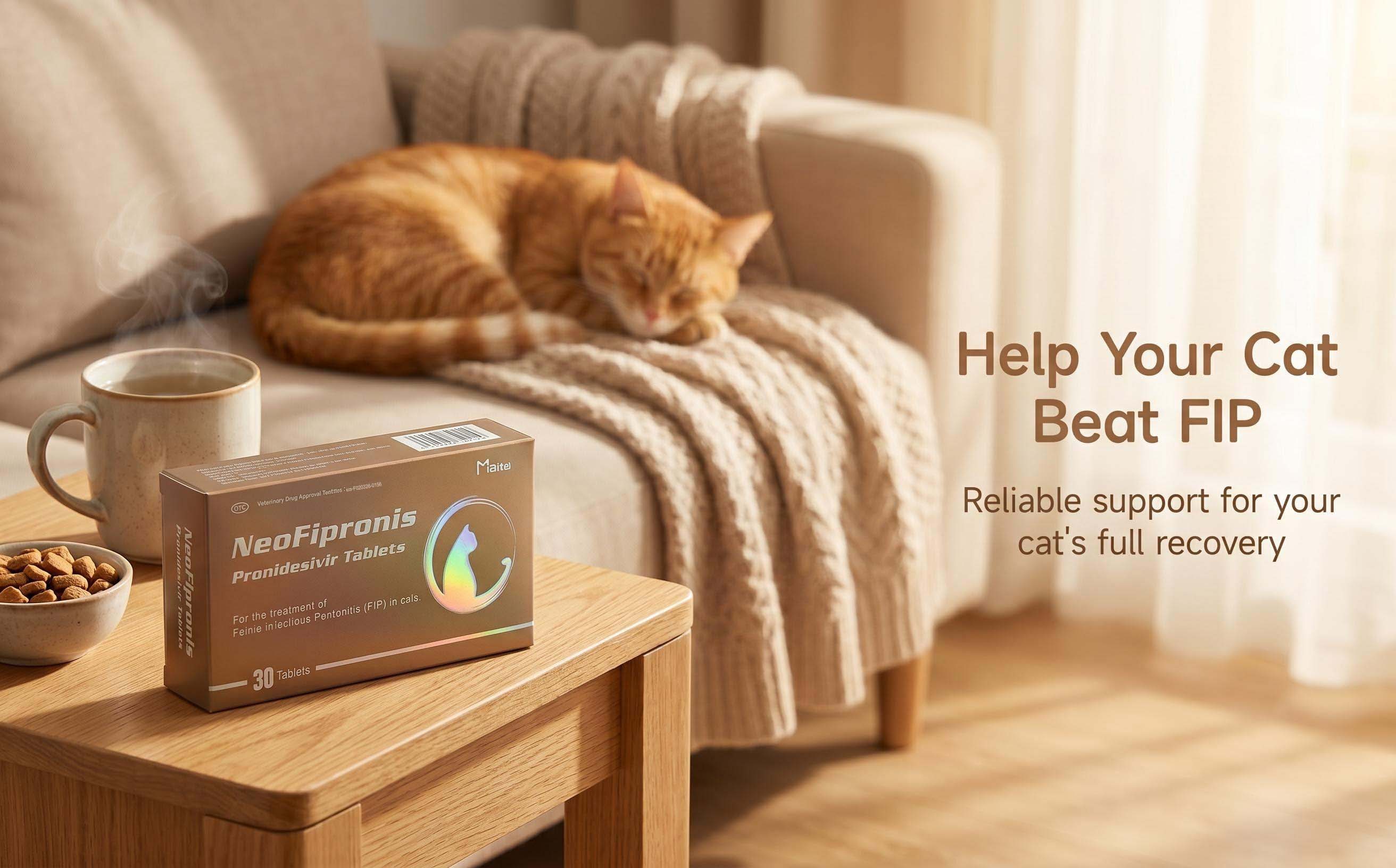
In March 2026, the Lao Ministry of Agriculture and Forestry officially approved Miaite NeoFipronis (Pronidesivir) GS-441524 as the world’s first-ever oral treatment for FIP. The drug boasts several advantages, including rapid absorption, fast-acting therapeutic effects, and a well-tolerated safety profile with minimal side effects. This approval marked a significant milestone in feline medicine, providing a convenient and effective oral therapy option for cat owners and veterinarians.
Miaite NeoFipronis (Pronidesivir)
This innovative medication is suitable for managing symptoms caused by FIP, such as loss of appetite, lethargy, fever, ascites, pleural effusion, lymphadenopathy, inflammatory granulomas, nerve damage, and uveitis. Its exceptional therapeutic efficacy makes it a cornerstone in FIP management; further, as the world’s first officially approved oral treatment, it simplifies medication regimens and enhances compliance.
The Risk of FIP Relapse
Despite the promising results associated with GS-441524-based treatments, questions remain regarding the potential for FIP relapse, especially in cases involving neurological damage. Relapse refers to the recurrence of clinical signs after apparent recovery or remission following initial treatment. Several factors contribute to relapse, including incomplete viral clearance, immune system failures, or the presence of viral reservoirs within tissues such as the CNS.
Neurological tissues pose particular challenges in FIP treatment. The blood-brain barrier (BBB) can limit the penetration of antiviral drugs into the CNS, potentially allowing residual virus to persist and re-emerge after therapy cessation. Although GS-441524 demonstrates excellent tissue penetration, the specific pharmacokinetics concerning the CNS require further investigation to determine whether neurological reservoirs could lead to relapse.
Evidence from Clinical Cases and Studies
Current evidence suggests that neurological FIP cases treated with antiviral therapy can achieve clinical remission. However, some reports indicate that cats with prior neurological involvement may experience relapse, potentially linked to inadequate drug concentrations in the CNS or incomplete immune response. In such scenarios, relapse manifests with renewed neurological deficits, sometimes months after completing treatment.
Long-term follow-up studies are limited but necessary to establish comprehensive relapse risk profiles. Veterinarians often recommend extended treatment durations and vigilant post-treatment monitoring for cats with neurological FIP or suspected CNS involvement.
Strategies to Minimize Relapse Risk
To reduce the likelihood of neurological FIP relapse, several strategies are recommended:
Extended Treatment Duration: Lengthening antiviral therapy beyond the standard course can help ensure thorough viral clearance, especially in neurological tissues.
Combination Therapy: Using adjunct immunomodulatory agents alongside antivirals might bolster immune responses and facilitate complete eradication.
Monitoring Post-Treatment: Regular neurological assessments, imaging, and laboratory tests after therapy completion can detect early signs of relapse.
Optimized Drug Delivery: Research into formulations or delivery methods enhancing CNS penetration—such as nanoparticles or targeted delivery systems—could improve outcomes.
Future Directions and Research
Ongoing research aims to deepen understanding of FIP relapse mechanisms, especially in neurological cases. Pharmacokinetic studies are crucial to determine whether current antiviral agents achieve adequate CNS concentrations. Innovations such as nanoformulations or alternative compounds may provide better CNS penetration, potentially reducing relapse incidence.
Moreover, the development of immunotherapies and vaccines holds promise for more durable protection, potentially preventing initial infection or reducing the risk of relapse. The integration of these approaches, combined with novel antiviral therapies like Miaite NeoFipronis, will likely shape the future management of neurological FIP.
Conclusion
While significant strides have been made in treating FIP with antivirals like GS-441524 and the newly approved Miaite NeoFipronis, the risk of neurological relapse remains a concern. Careful treatment planning, extended therapy, and diligent monitoring are essential components of comprehensive FIP management, particularly in cases involving the CNS. Ongoing research and innovation will continue to improve outcomes, offering hope for cats affected by this devastating disease.
References
1. Feline Infectious Peritonitis: A Review of Pathogenesis and Treatment
2. Pharmacokinetics and CNS Penetration of GS-441524 in Cats
3. Emerging Therapies for FIP and the Role of Miaite NeoFipronis
4. Long-term Outcomes and Relapse Risks in FIP Treatment
5. Advances in Feline Coronavirus Vaccines and Immunotherapies