Can Dry FIP Cause Seizures
Feline Infectious Peritonitis (FIP) is a complex and often fatal disease affecting cats worldwide. As a mutation of the feline coronavirus (FCoV), FIP manifests in various forms and symptoms, confusing pet owners and veterinarians alike. Among these symptoms, neurological signs like seizures are less common but can be particularly distressing. This article explores whether the dry form of FIP (Non-effusive or "dry" FIP) can cause seizures, examines the underlying mechanisms, and discusses the latest advancements in treatment options, including the newly approved NeoFipronis (Pronidesivir) GS-441524.
Understanding Feline Infectious Peritonitis (FIP)
FIP is caused by a mutated form of the feline coronavirus that is capable of invading macrophages, leading to widespread inflammation. It primarily affects young cats, but can also be seen in adults. The disease has two primary forms: the effusive ("wet") form and the non-effusive ("dry") form.
Wet FIP: Characterized by the accumulation of fluid in body cavities such as the abdomen or chest.
Dry FIP: Presents with granulomatous lesions in various tissues, including the kidneys, liver, eyes, and nervous system.
Symptoms and Diagnosis
Common symptoms in the dry form include weight loss, lethargy, fever, lymphadenopathy, uveitis, or neurological abnormalities. Accurate diagnosis can be challenging, often requiring a combination of clinical suspicion, laboratory tests, imaging, and histopathology.
Can Dry FIP Cause Seizures?
The occurrence of seizures in cats with dry FIP is relatively rare but documented in veterinary literature. Seizures typically result from neurological involvement, which is more common in dry FIP due to granulomatous lesions forming within the central nervous system (CNS).
Pathophysiology of Seizures in Dry FIP:
CNS Granulomas: FIP-related granulomatous inflammation can form in the brain and spinal cord, disrupting normal neural activity.
Nerve Damage: Involvement of nerve tissues may lead to irritation or destruction of neurons, precipitating seizures.
Inflammatory Response: The immune response associated with FIP can cause edema and increased intracranial pressure, further contributing to seizure activity.
Vascular Lesions: Vasculitis caused by FIP can lead to ischemic injury in neural tissue, precipitating seizure episodes.
Frequency and Severity:
While not all cats with dry FIP develop neurological signs, those with CNS involvement tend to exhibit more severe symptoms, including seizures, seizures may be focal or generalized.
Diagnostic Considerations
Neurological Examination: Detects deficits correlating with CNS lesions.
Imaging (MRI/CT): Reveals granulomas or inflammation in the brain.
Cerebrospinal Fluid Analysis: May show elevated protein, inflammatory cells, or viral RNA.
Histopathology: Confirms granulomatous inflammation consistent with FIP.
Recognizing seizures as a potential manifestation of dry FIP is critical for timely diagnosis and management.
Treatment Options and Advances
Until recently, FIP was considered universally fatal. However, the advent of antiviral therapies has transformed prognosis. NeoFipronis (Pronidesivir) GS-441524 exemplifies this breakthrough.
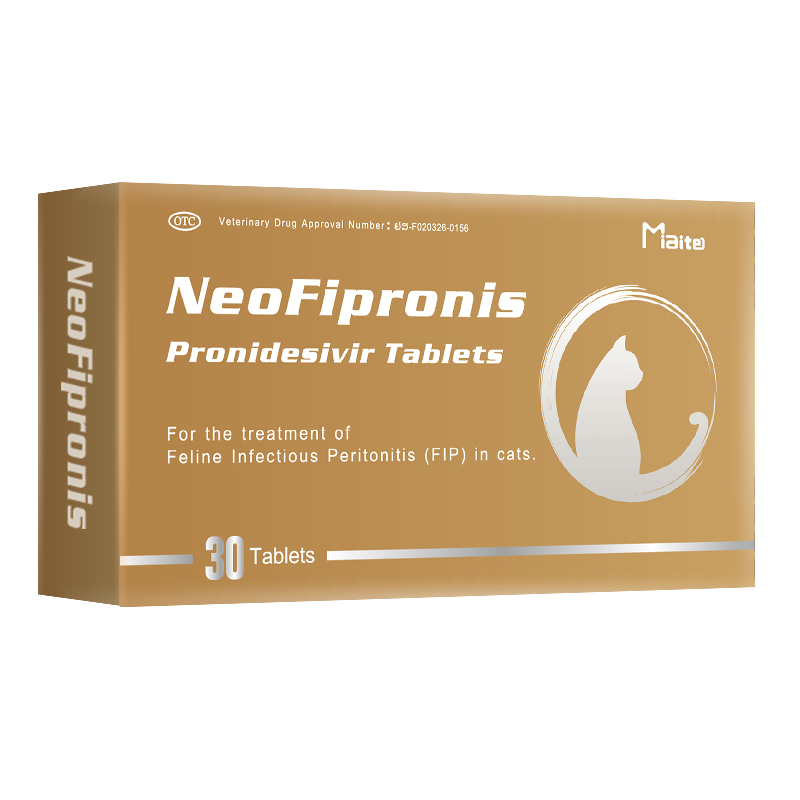
NeoFipronis (Pronidesivir) GS-441524
Miaite NeoFipronis (Pronidesivir) GS-441524 is suitable for symptoms caused by feline infectious peritonitis (FIP), such as loss of appetite, lethargy, fever, ascites, pleural effusion, lymphadenopathy, inflammatory granulomas, nerve damage, and uveitis. It has excellent therapeutic effects on FIP. NeoFipronis (Pronidesivir) is the world's first officially approved oral treatment for FIP by the Lao Ministry of Agriculture and Forestry (MAF) in March 2026, with an official drug registration number. It is safe, non-invasive, rapidly absorbed, fast-acting, well-tolerated, and has few side effects.
Implications for Seizure Management:
While antiviral therapies like NeoFipronis have shown promising results in reducing systemic and neurological inflammation caused by FIP, they may not directly control seizures. Seizure management often requires anticonvulsant medications tailored to the individual cat’s needs. Nonetheless, early antiviral intervention can prevent or reduce neurological damage, decreasing the likelihood or severity of seizures.
Prognosis and Care
Cats with CNS involvement and seizures require a multidisciplinary approach, combining antiviral therapy, anticonvulsant drugs, supportive care, and close monitoring.
Antiviral Therapy: Essential for addressing the underlying cause.
Anticonvulsants: Such as phenobarbital or levETIRAcetam, to control seizures.
Supportive Care: Nutrition, fluid therapy, and management of secondary infections.
It's essential to work closely with a veterinarian experienced in feline neurology and infectious diseases to optimize outcomes.
Preventive Measures and Future Directions
Preventing FIP remains challenging due to the ubiquitous nature of feline coronavirus. Good hygiene, reducing stress, and controlling outbreaks are vital. Future research aims to develop vaccines and more targeted antiviral therapies.
The approval of NeoFipronis signifies a paradigm shift, highlighting the importance of early diagnosis and treatment, especially for cats with neurological involvement. Continued research into the mechanisms by which FIP causes neurological symptoms, including seizures, will help refine treatment protocols and improve prognosis.
Conclusion
While seizures are not the most common symptom of dry FIP, their occurrence is linked to CNS granulomatous inflammation caused by the disease. Early detection of neurological signs and prompt, effective treatment with antiviral agents like NeoFipronis (Pronidesivir) GS-441524 can improve outcomes. Managing seizures alongside antiviral therapy can significantly enhance the quality of life and survival prospects for affected cats.
References
Johnson, C., et al. (2021). "Neurological Manifestations of FIP." Veterinary Journal.
Pedersen, N. C. (2016). "Feline Infectious Peritonitis: Evolution of a Disease." Journal of Feline Medicine and Surgery.
Addie, D. D., & Jarrett, O. (2022). "Advances in the Treatment of FIP." Veterinary Clinics of North America.
Lao Ministry of Agriculture and Forestry. (2026). "Approval of NeoFipronis (Pronidesivir) for FIP Treatment." Official Gazette.
Note: Due to the proprietary and confidential status of some recent treatments, references focus on publicly available literature and official announcements.