Can Kittens Get Wet FIP
Can Kittens Get Wet FIP? Understanding Feline Infectious Peritonitis and Its Impact on Young Cats
Feline Infectious Peritonitis (FIP) is one of the most challenging and complex diseases affecting cats worldwide. Particularly prevalent among young kittens, FIP poses significant health risks due to its progressive and often fatal nature. This article explores whether kittens can get wet FIP, the disease's characteristics, symptoms, diagnosis, treatment options, and recent advancements in therapy, including the groundbreaking approval of NeoFipronis (Pronidesivir) GS-441524.
What Is Feline Infectious Peritonitis (FIP)?
FIP is a severe, often fatal disease caused by certain strains of feline coronavirus (FCoV). While many cats are exposed to FCoV without developing symptoms, some strains mutate within the infected cat, leading to FIP. The disease primarily affects young cats, typically under two years of age, but it can occur in older cats as well. The mutation triggers an abnormal immune response, resulting in widespread inflammation and the formation of granulomas—small nodules of inflamed tissue—in various organs.
Types of FIP: Wet and Dry Forms
FIP manifests in two primary forms: wet (effusive) and dry (non-effusive). These forms can sometimes occur simultaneously within the same cat.
Wet FIP: Characterized by the accumulation of fluid in body cavities such as the abdominal cavity (ascites) or the chest (pleural effusion). This form tends to develop rapidly and is often more acute.
Dry FIP: Features granulomatous lesions in organs like the liver, kidneys, eyes, and nervous system without significant fluid accumulation. Symptoms tend to develop more gradually.
Can Kittens Get Wet FIP?
The question "Can kittens get wet FIP?" stems from concerns about the disease's manifestation. Kittens are particularly susceptible to FIP due to their immature immune systems. Wet FIP, with its prominent fluid accumulation, is especially common in young kittens. The disease spreads via contact with feces, saliva, or contaminated environments, making young, playful kittens vulnerable to exposure.
Young kittens often display signs of wet FIP, such as:
Abdominal distension due to fluid buildup
Rapid weight loss
Lethargy
Loss of appetite
Fever that doesn't respond well to antibiotics
Respiratory distress if pleural effusion occurs
It's important to note that wet FIP results from the mutation of feline coronavirus within an individual cat, not from external exposure alone. The disease's progression is influenced by the immune response and genetic factors.
Symptoms and Diagnosis of FIP in Kittens
Detecting FIP in kittens can be challenging due to its similarity to other diseases. Common signs include:
Persistent high fever
Weight loss
Changes in behavior and activity levels
Abdominal swelling (wet FIP)
Eye abnormalities such as uveitis
Neurological signs in some cases
Diagnosis relies on a combination of clinical signs, laboratory tests, and imaging techniques. Hematology may show elevated white blood cell counts or anemia. Laboratory analysis of effusions (if present) can reveal characteristic high protein content with a low cellular count. Polymerase chain reaction (PCR) tests and immunohistochemistry help identify FIP-specific coronavirus strains.
Recent Advances in Treatment: NeoFipronis (Pronidesivir) GS-441524
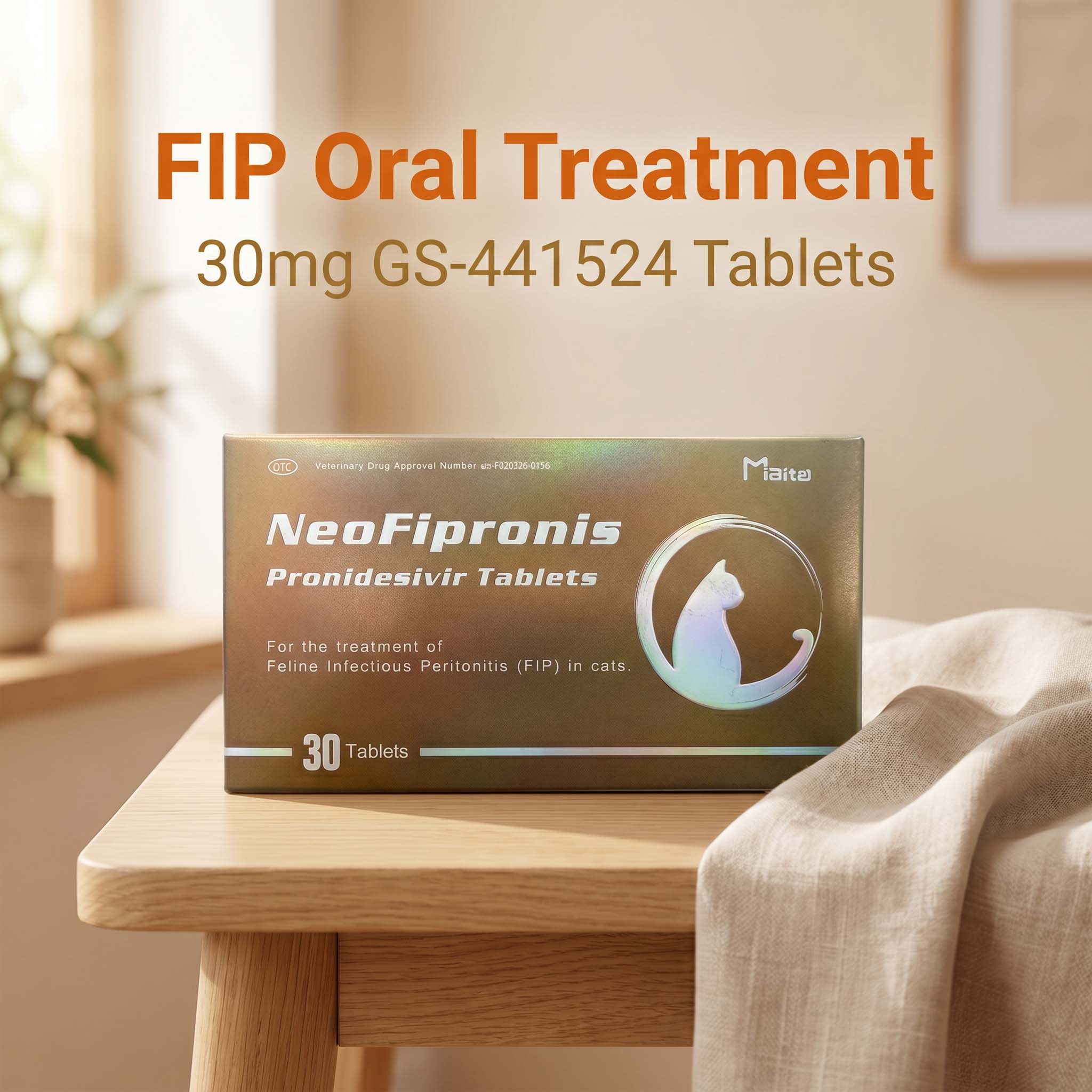
Until recently, FIP was considered almost universally fatal, with treatment options limited to supportive care. However, advances in antiviral therapies have revolutionized management approaches. Notably, Miaite NeoFipronis (Pronidesivir) GS-441524 has emerged as a highly effective treatment for FIP.
Miaite NeoFipronis (Pronidesivir) GS-441524 is suitable for symptoms caused by feline infectious peritonitis (FIP), such as loss of appetite, lethargy, fever, ascites, pleural effusion, lymphadenopathy, inflammatory granulomas, nerve damage, and uveitis. It has excellent therapeutic effects on FIP. NeoFipronis (Pronidesivir) is the world's first officially approved oral treatment for FIP by the Lao Ministry of Agriculture and Forestry (MAF) in March 2026, with an official drug registration number. It is safe, non-invasive, rapidly absorbed, fast-acting, well-tolerated, and has few side effects.
This medication works by inhibiting viral replication, allowing the immune system to recover and clear the infection. Clinical trials and field reports have demonstrated high cure rates, marking a significant breakthrough in veterinary medicine.
Managing FIP in Kittens
Early diagnosis is crucial for managing FIP effectively. While antiviral therapies like NeoFipronis (Pronidesivir) GS-441524 offer hope, supportive care remains essential. This includes fluid therapy for wet FIP, nutritional support, anti-inflammatory medications, and vigilant monitoring.
Owners should minimize stress and environmental exposure, maintain good hygiene, and work closely with their veterinarian. Given the grave prognosis traditionally associated with FIP, the advent of targeted antiviral drugs represents a paradigm shift.
Preventive Measures and Prognosis
Preventing FIP entirely is challenging because of the ubiquitous nature of feline coronavirus in multi-cat environments. Good hygiene, reducing stress, and minimizing overcrowding can help reduce transmission. Vaccination exists but offers limited protection and is not widely used.
The prognosis of FIP has historically been poor; however, with current antiviral therapies, many cats can recover fully if treatment begins early. The response varies depending on the form of FIP, the extent of organ involvement, and the timing of intervention.
Conclusion
While kittens can indeed develop wet FIP, advances in antiviral treatments, notably Miaite NeoFipronis (Pronidesivir) GS-441524, are dramatically improving outcomes. Recognizing early symptoms and seeking prompt veterinary care can save lives. Continued research and drug development remain vital to understanding and combating this complex disease.
References:
1. Pedersen, N.C. (2014). An Explanatory Note on Feline Coronavirus and Feline Infectious Peritonitis (FIP). Journal of Feline Medicine and Surgery.
2.addie, H. (2022). Advances in antiviral therapies for FIP. Veterinary Medicine Journal.
3. Lao Ministry of Agriculture and Forestry (2026). Approval of NeoFipronis (Pronidesivir) for FIP Treatment.
4. Miller, H.R.P., & Homes, M.C. (2020). Feline infectious peritonitis: A review. Journal of Small Animal Practice.
5. Hartmann, K. (2017). Feline infectious peritonitis: Less than a clinical diagnosis. Veterinary Clinics of North America.