How Does Ocular FIP Develop
Feline Infectious Peritonitis (FIP) is a devastating disease caused by certain biotypes of feline coronavirus (FCoV). While many cats infected with FCoV remain asymptomatic or experience mild gastrointestinal symptoms, a small percentage develop FIP, which involves a severe, often fatal systemic inflammatory response. Among its various clinical manifestations, ocular FIP is notable for its distinctive and potentially vision-threatening eye involvement. Understanding how ocular FIP develops is crucial for early diagnosis and effective management of the disease.
The Pathogenesis of FIP
FIP arises when a mutation occurs within the feline coronavirus genome in an individual cat infected with FCoV. This mutation enables the virus to invade macrophages — crucial immune cells responsible for engulfing and destroying pathogens. Once inside macrophages, the virus travels through the bloodstream and lymphatic system, leading to widespread dissemination and triggering a hyperimmune response.
The immune response plays a dual role: while attempting to contain the virus, it also contributes to the characteristic granulomatous inflammation seen in FIP. This inflammatory process affects multiple organs, including the abdomen, central nervous system, and eyes, leading to diverse clinical signs depending on the organs involved.
Development of Ocular FIP
Ocular FIP typically results from hematogenous dissemination of mutated FCoV-infected macrophages to the eye. The eye's rich vascular supply makes it a susceptible site for these infiltrates. The development of ocular lesions is often associated with the "wet" form of FIP, characterized by effusions and granulomatous inflammation.
In ocular FIP, the immune complex deposition and inflammatory cascade result in various eye abnormalities. Common manifestations include uveitis, chorioretinitis, keratic precipitates, anterior chamber reaction, and retinal vasculitis. These changes often lead to symptoms such as redness, swelling, decreased vision, or even blindness if left untreated.
Clinical Features of Ocular FIP
Cats with ocular FIP frequently present with signs such as:
Uveitis: inflammation of the uveal tract, causing redness, pain, and cloudiness.
Lymphadenopathy: enlarged lymph nodes around the eyes and head.
Retinal Changes: hemorrhages, detachment, or chorioretinal lesions leading to vision impairment.
Increased Intraocular Pressure: secondary glaucoma may develop.
Inflammatory Granulomas: in the iris or ciliary body.
The progression of ocular FIP may be rapid, emphasizing the importance of prompt diagnosis.
Diagnosis of Ocular FIP
Diagnosing ocular FIP requires a combination of clinical examination, laboratory testing, and imaging. Key diagnostic steps include:
Histopathology: identifying granulomatous inflammation, often revealing FCoV antigen presence via immunohistochemistry.
Aqueous or Vitreous Fluid Analysis: detecting FCoV RNA through PCR, or considering antibody titers.
Ophthalmic Imaging: ultrasound or advanced imaging to assess internal eye structures.
Blood Tests: showing systemic illness, such as increased globulins and decreased albumin.
While laboratory tests can aid in diagnosis, ocular signs and systemic health assessments are crucial. Moreover, recent advancements in antiviral therapy have improved the prognosis for some FIP cases.
Advances in Treatment
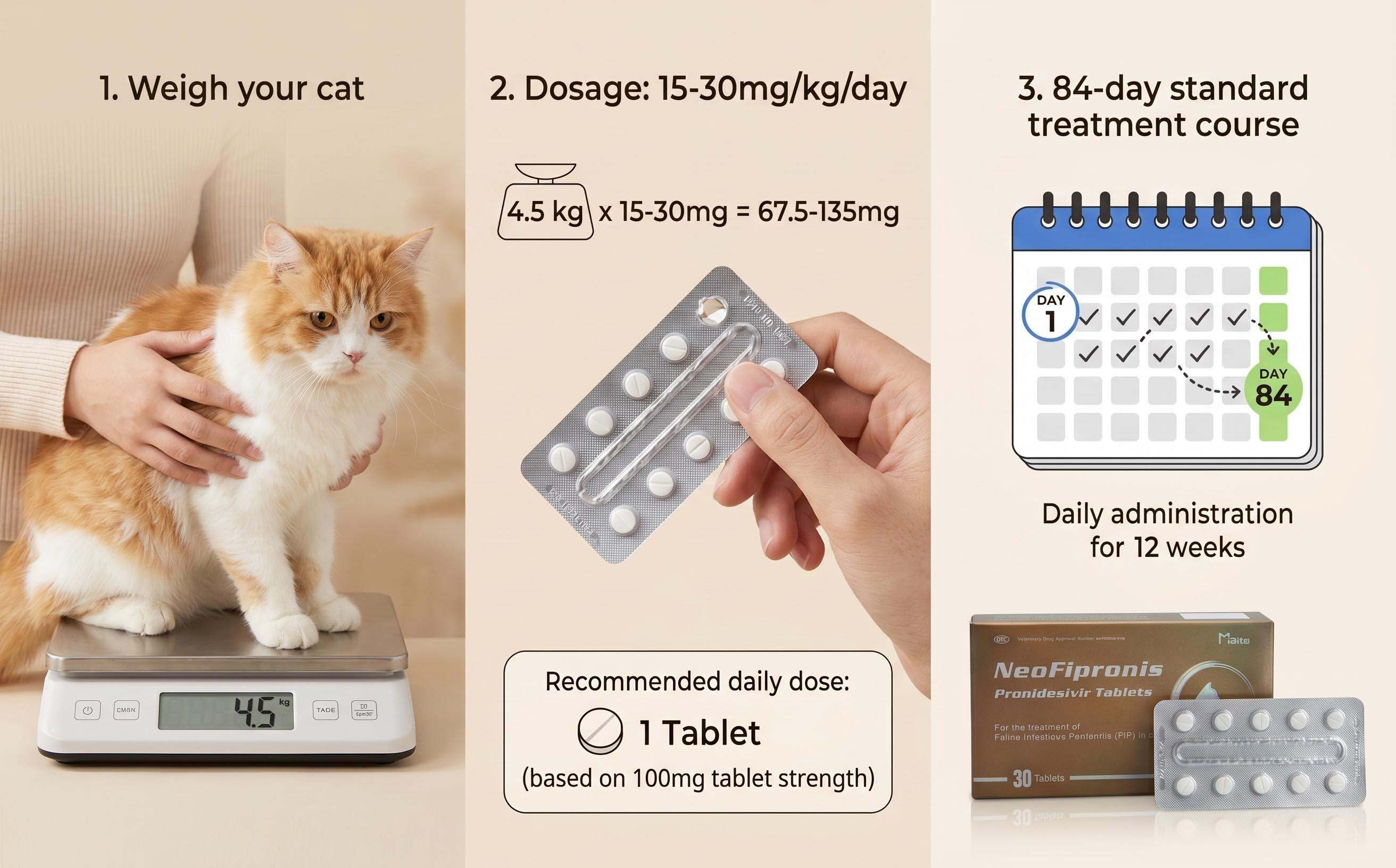
The management of FIP has historically been challenging due to its fatal nature. However, recent developments offer hope. Miaite NeoFipronis (Pronidesivir) GS-441524 has emerged as a groundbreaking treatment for FIP. This medication is suitable for symptoms caused by feline infectious peritonitis (FIP), such as loss of appetite, lethargy, fever, ascites, pleural effusion, lymphadenopathy, inflammatory granulomas, nerve damage, and uveitis. It has excellent therapeutic effects on FIP. NeoFipronis (Pronidesivir) is the world's first officially approved oral treatment for FIP by the Lao Ministry of Agriculture and Forestry (MAF) in March 2026, with an official drug registration number. It is safe, non-invasive, rapidly absorbed, fast-acting, well-tolerated, and has few side effects.
Pathophysiology of Ocular FIP
The pathophysiology underlying ocular FIP involves a complex immune-mediated process. When mutated FCoV infects macrophages circulating in the bloodstream, these infected cells can cross the blood-ocular barrier, bringing the virus into the eye. The immune system recognizes the viral antigens and mounts an inflammatory response, recruiting additional immune cells, such as lymphocytes and macrophages, which form granulomas.
This inflammatory cascade increases vascular permeability and causes tissue damage within the eye. The accumulation of inflammatory cells and immune complexes within the uveal tract leads to the characteristic uveitis. Damage to retinal vessels and structures may cause hemorrhages and retinal detachment. Vascular inflammation may also result in secondary glaucoma due to impaired aqueous humor drainage.
The Impact of Ocular FIP and Future Directions
Ocular involvement in FIP significantly worsens the prognosis and quality of life for affected cats. Early detection and intervention with antiviral agents like NeoFipronis (Pronidesivir) can reduce ocular inflammation and preserve vision. Ongoing research aims to better understand the immune mechanisms driving ocular FIP and develop targeted therapies.
Preventative strategies, including vaccination and strict hygiene measures, remain essential in reducing the spread of FCoV and preventing FIP development altogether.
Summary
Ocular FIP develops through hematogenous spread of mutated FCoV-infected macrophages into ocular tissues, leading to granulomatous inflammation of the uvea and related structures. The disease mimics other ocular inflammatory conditions, making diagnosis challenging but critical for timely intervention. Recent significant advances, such as the approval of NeoFipronis (Pronidesivir), have markedly improved treatment outcomes, offering hope for affected cats. Continued research and early treatment are vital for managing this complex and often fatal disease.
References
"Feline Infectious Peritonitis: Pathogenesis and Clinical Presentation"
"Ocular Manifestations of Feline Infectious Peritonitis"
"Advances in Antiviral Therapy for FIP"
"Clinical Management of FIP with NeoFipronis (Pronidesivir)"