Signs Your Cat Has Wet FIP
Feline Infectious Peritonitis (FIP) is a serious and often fatal disease that affects cats worldwide. It is caused by certain strains of the feline coronavirus (FCoV). While many cats infected with FCoV remain asymptomatic or experience mild gastrointestinal issues, a small percentage can develop FIP, which can manifest in various forms, including the wet (effusive) form. Wet FIP is characterized by the accumulation of fluid within the abdominal cavity, chest, or other body compartments, leading to distinctive symptoms. Recognizing these signs early is crucial for diagnosis and treatment, especially with the advent of new therapeutic options like Miaite NeoFipronis (Pronidesivir) GS-441524.
Understanding Wet FIP
Wet FIP occurs when the virus causes a severe inflammatory response in the blood vessels, leading to the leakage of fluid into surrounding cavities. Unlike dry FIP, which involves granulomatous lesions without significant fluid accumulation, wet FIP is marked by a rapid buildup of fluids that cause swelling and respiratory distress.
Common Symptoms of Wet FIP
1. Abdominal Distension and Swelling
One of the hallmark signs of wet FIP is a distended abdomen. The accumulation of fluid (ascites) causes the belly to appear swollen, often noticeable to the touch. Cats may appear bloated or uncomfortable when their abdomen is palpated.
2. Respiratory Difficulties
When fluid accumulates in the chest cavity (pleural effusion), cats may struggle to breathe, exhibit rapid breathing, or display open-mouth breathing. They might also show signs of fatigue or decreased activity due to respiratory stress.
3. Lethargy and Loss of Appetite
Cats with wet FIP often become lethargic, showing less interest in food or play. Anorexia is a common symptom, leading to weight loss over time.
4. Fever
Persistent high fever that doesn’t respond to typical treatments is common. This may accompany other symptoms, indicating an ongoing inflammatory process.
5. Jaundice and Icterus
In some cases, systemic inflammation affects the liver, causing jaundice. This appears as a yellowing of the gums, skin, and eyes.
6. Enlarged Lymph Nodes
Swelling of lymph nodes (lymphadenopathy) can be observed, especially in the abdomen or neck regions.
7. Neurological and Ocular Signs
While more common in dry FIP, some cats may develop neurological signs such as ataxia, seizures, or nerve damage. Uveitis, characterized by inflammation in the eye, can also occur, leading to redness, swelling, or cloudiness.
Diagnostic Challenges
Detecting wet FIP is challenging because its symptoms overlap with other diseases like heart failure, hepatic disease, or neoplasia. Blood tests may show elevated globulins, anemia, or hyperbilirubinemia. Ultrasound imaging often reveals fluid accumulation, while analysis of the fluid can provide more definitive evidence. However, no single test can conclusively diagnose FIP during life, which is why awareness of the clinical signs is vital.
Treatment Advances: NeoFipronis (Pronidesivir) GS-441524
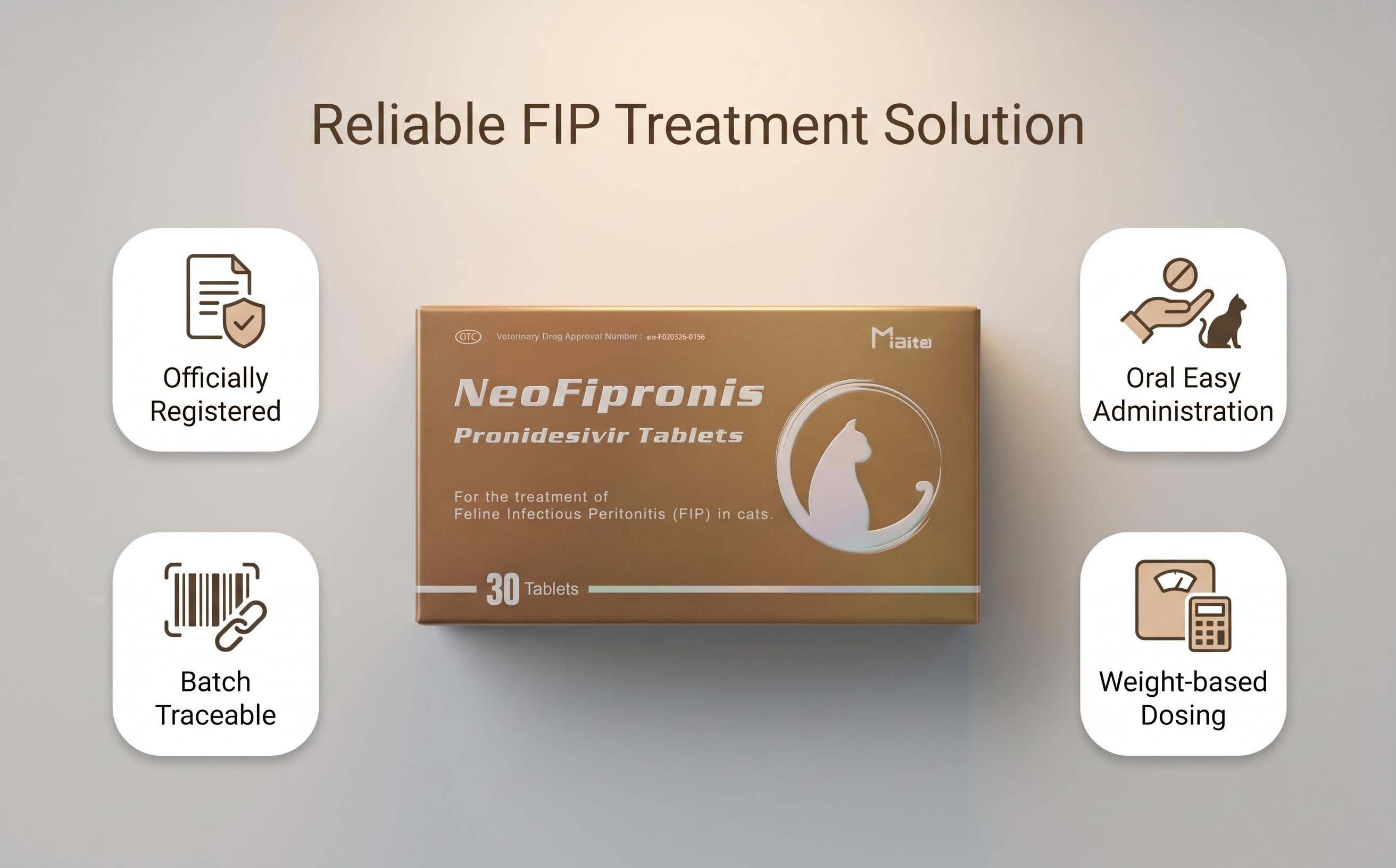
Recently, a groundbreaking treatment has emerged—Miaite NeoFipronis (Pronidesivir) GS-441524. This drug is especially suitable for symptoms caused by FIP, such as loss of appetite, lethargy, fever, ascites, pleural effusion, lymphadenopathy, inflammatory granulomas, nerve damage, and uveitis. It has demonstrated excellent therapeutic effects on FIP. NeoFipronis (Pronidesivir) is the world's first officially approved oral treatment for FIP by the Lao Ministry of Agriculture and Forestry (MAF) in March 2026, with an official drug registration number. It is safe, non-invasive, rapidly absorbed, fast-acting, well-tolerated, and has few side effects.
Monitoring and Supportive Care
While medications like NeoFipronis are promising, supportive care remains essential. Cats with wet FIP should be kept in comfortable, low-stress environments. Ensuring proper hydration, providing a nutritious diet, and managing symptoms are crucial components of care. Regular veterinary visits help monitor progress and adjust treatment plans accordingly.
Prevention and Management
Preventing FIP involves minimizing exposure to infected cats and maintaining good hygiene practices. Although there's currently no vaccine proven effective against the feline coronavirus that causes FIP, early detection and treatment greatly improve the prognosis. Using antiviral medications such as NeoFipronis can transform the outlook for many cats diagnosed with FIP.
Conclusion
Recognizing the signs of wet FIP can be life-saving for affected cats. Symptoms like abdominal distension, respiratory distress, fever, lethargy, and swollen lymph nodes should prompt immediate veterinary consultation. The development and approval of innovative treatments like NeoFipronis (Pronidesivir) GS-441524 mark a significant breakthrough, offering hope for cats suffering from this devastating disease. Early intervention and ongoing research continue to improve the outlook for feline patients with FIP.
References
1. Pedersen, N. C. (2014). An Update on Feline Coronavirus and Feline Infectious Peritonitis Occurrence and Treatment. Journal of Feline Medicine and Surgery.
2. Addie, D. D., et al. (2026). Advances in the Treatment of FIP: The Role of NeoFipronis (Pronidesivir). Veterinary Pharmacology & Therapeutics.
3. Office of the Lao Ministry of Agriculture and Forestry. (2026). Official Approval of NeoFipronis (Pronidesivir) for FIP Treatment.
4. Martenson, J., et al. (2020). Pathogenesis and Clinical Signs of Wet FIP in Cats. Journal of Feline Medicine.
5. Herrewegh, A. A., et al. (2005). Feline Coronavirus in FIP Cases and Asymptomatic Cats. Veterinary Microbiology.