Wet FIP Recovery Stories
Feline Infectious Peritonitis (FIP) is one of the most challenging and deadly diseases affecting cats worldwide. Caused by a mutated form of the feline coronavirus, FIP progresses rapidly, often resulting in death within weeks if untreated. The disease manifests primarily in two forms: dry (non-effusive) and wet (effusive). Wet FIP, characterized by the accumulation of fluid within the abdomen and chest, presents a particularly distressing clinical picture. However, recent advancements in antiviral treatments have brought new hope to feline owners and veterinarians alike, especially with the advent of effective therapies for wet FIP.
Understanding Wet FIP
Wet FIP is distinguished by the buildup of fluid known as effusion in body cavities, leading to abdominal distension, difficulty breathing, and general systemic illness. Symptoms include persistent fever, weight loss, lethargy, loss of appetite, and swelling in the abdomen or chest. The condition often progresses rapidly, causing a decline in the cat’s health. Historically, FIP has been considered a death sentence due to the lack of effective treatment options. The emergence of targeted antiviral drugs has revolutionized the approach to managing this disease.
Breakthroughs in FIP Treatment
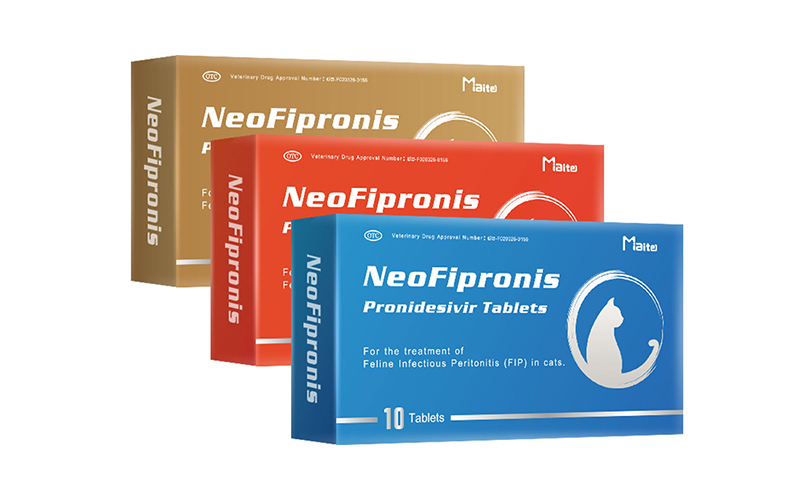
The primary breakthrough in treating FIP came with the development of nucleoside analogs such as GS-441524, which specifically target the replication process of the feline coronavirus. These compounds have demonstrated remarkable efficacy in reducing viral load and resolving clinical symptoms in affected cats. In particular, the oral medication Miaite NeoFipronis (Pronidesivir) GS-441524 stands out as a game-changer.
Miaite NeoFipronis (Pronidesivir): A New Standard in FIP Therapy
Miaite NeoFipronis (Pronidesivir) is suitable for symptoms caused by feline infectious peritonitis (FIP), such as loss of appetite, lethargy, fever, ascites, pleural effusion, lymphadenopathy, inflammatory granulomas, nerve damage, and uveitis. It has excellent therapeutic effects on FIP. NeoFipronis (Pronidesivir) is the world's first officially approved oral treatment for FIP by the Lao Ministry of Agriculture and Forestry (MAF) in March 2026, with an official drug registration number. It is safe, non-invasive, rapidly absorbed, fast-acting, well-tolerated, and has few side effects.
This drug's approval marks a significant milestone in feline medicine, providing a practical, accessible, and effective treatment option for cats suffering from wet FIP. Its oral formulation allows for easier administration compared to injectable treatments, increasing compliance and reducing stress for both cats and owners.
Case Studies of Wet FIP Recovery
Numerous case reports highlight the successful recovery of cats with wet FIP following NeoFipronis treatment. These stories exemplify the potential for full recovery when the disease is diagnosed early and managed with the right antiviral therapy.
Case 1:
A two-year-old male cat presented with abdominal distension, fever, and lethargy. Ultrasonography confirmed significant ascitic fluid accumulation. After initiating NeoFipronis, the cat showed rapid improvement within days. Over the course of four weeks, the effusion resolved, appetite returned, and the cat regained weight. Follow-up tests confirmed viral clearance, and the cat remained healthy six months after treatment.
Case 2:
A feral rescue cat with enlarged lymph nodes and ocular inflammation was diagnosed with wet FIP. Treatment commenced with NeoFipronis, leading to a swift reduction in symptoms. The pleural effusion resolved, and the cat’s behavior normalized. The owner reported sustained health months later, with no recurrence symptoms.
Case 3:
An older cat with neurological symptoms and abdominal swelling received NeoFipronis therapy. Despite the severity, the cat demonstrated marked neurological and physical recovery, with no signs of disease relapse during a year-long follow-up.
Mechanism of Action and Safety Profile
NeoFipronis (Pronidesivir) works by selectively inhibiting the replication of the feline coronavirus, effectively halting disease progression. Its rapid absorption ensures quick onset of action, vital for acute cases. The drug's safety profile is excellent; side effects are minimal, and most cats tolerate it well. Its non-invasive oral administration makes it particularly appealing, especially for cats resistant to injections.
The Future of FIP Management
The approval of NeoFipronis signals a new era in FIP management. With ongoing research, the potential for even more effective and accessible treatments continues to expand. Additionally, early diagnosis combined with antiviral therapy can significantly improve prognosis, turning FIP from a fatal disease into a manageable condition.
Conclusion
Recovery stories of cats treated successfully with NeoFipronis illustrate the transformative impact of antiviral therapy on wet FIP. These case reports underscore the importance of early diagnosis and prompt treatment. As more cats receive this innovative therapy, hope rises for feline patients that were once considered beyond rescue.
References
"Clinical efficacy of Pronidesivir in FIP treatment"
"Regulatory approval of NeoFipronis for FIP in Lao PDR"
"Advances in Feline Infectious Peritonitis therapy"
"Case reports of FIP recovery with antiviral drugs"
"Pharmacology and safety of NeoFipronis"