Advanced Wet FIP Symptoms
Feline Infectious Peritonitis (FIP) remains one of the most challenging and devastating diseases affecting cats worldwide. Caused by a mutated form of the feline coronavirus (FCoV), FIP manifests in various forms, with the wet (effusive) type being particularly severe due to its characteristic accumulation of fluid within body cavities. Understanding the advanced symptoms of wet FIP is crucial for early diagnosis, effective management, and improved prognosis.
Pathophysiology of Wet FIP
Wet FIP is characterized by abnormal immune responses leading to severe vasculitis—inflammation of blood vessels—that causes increased vascular permeability. This results in the leakage of plasma and inflammatory cells into body cavities such as the abdominal and thoracic cavities, leading to the hallmark accumulation of fluid, known as effusions. These pathophysiological processes underpin many of the advanced clinical signs observed in affected cats.
Common Advanced Symptoms of Wet FIP
The progression of wet FIP leads to a range of clinical signs that can significantly impair a cat’s health. Recognizing these symptoms early can facilitate timely intervention.
1. Abdominal Distension
One of the most noticeable symptoms of wet FIP is progressive abdominal distension caused by the accumulation of serous fluid in the peritoneal cavity (ascites). Owners often observe a visibly swollen abdomen that becomes tense and may fluctuate with fluid production.
2. Respiratory Difficulties
Pleural effusion—the accumulation of fluid in the pleural space surrounding the lungs—can cause rapid or labored breathing, coughing, and occasionally open-mouth breathing. The increasing pressure on the lungs hampers normal respiratory function.
3. Lethargy and Weakness
Cats with advanced wet FIP often display profound lethargy and reduced activity levels. The systemic inflammation and fluid buildup impair normal organ function and contribute to overall weakness.
4. Fever
Persistent high fever that does not respond to traditional antibiotics is a typical feature. The fever reflects ongoing inflammation and immune response to the viral mutation.
5. Anorexia and Weight Loss
Loss of appetite is common, often resulting in significant weight loss over a short period. The combined effects of discomfort, fluid accumulation, and systemic illness diminish appetite and nutrient intake.
6. Lymphadenopathy
Swollen, inflamed lymph nodes (lymphadenopathy) are frequently observed and indicate immune system involvement. These enlarged nodes may be palpable along the neck, beneath the jaw, or in the abdominal area.
7. Neurological Signs
As the disease progresses, inflammation can involve the nervous system, causing neurological deficits like ataxia, seizures, or altered mentation. Nerve damage may manifest as weakness or abnormal gait.
8. Ocular Changes and Uveitis
In some cases, cats display ocular symptoms such as anterior uveitis, characterized by redness, light sensitivity, and cloudy corneas. These signs indicate intraocular inflammation secondary to FIP.
The Role of NeoFipronis (Pronidesivir) in Symptom Management
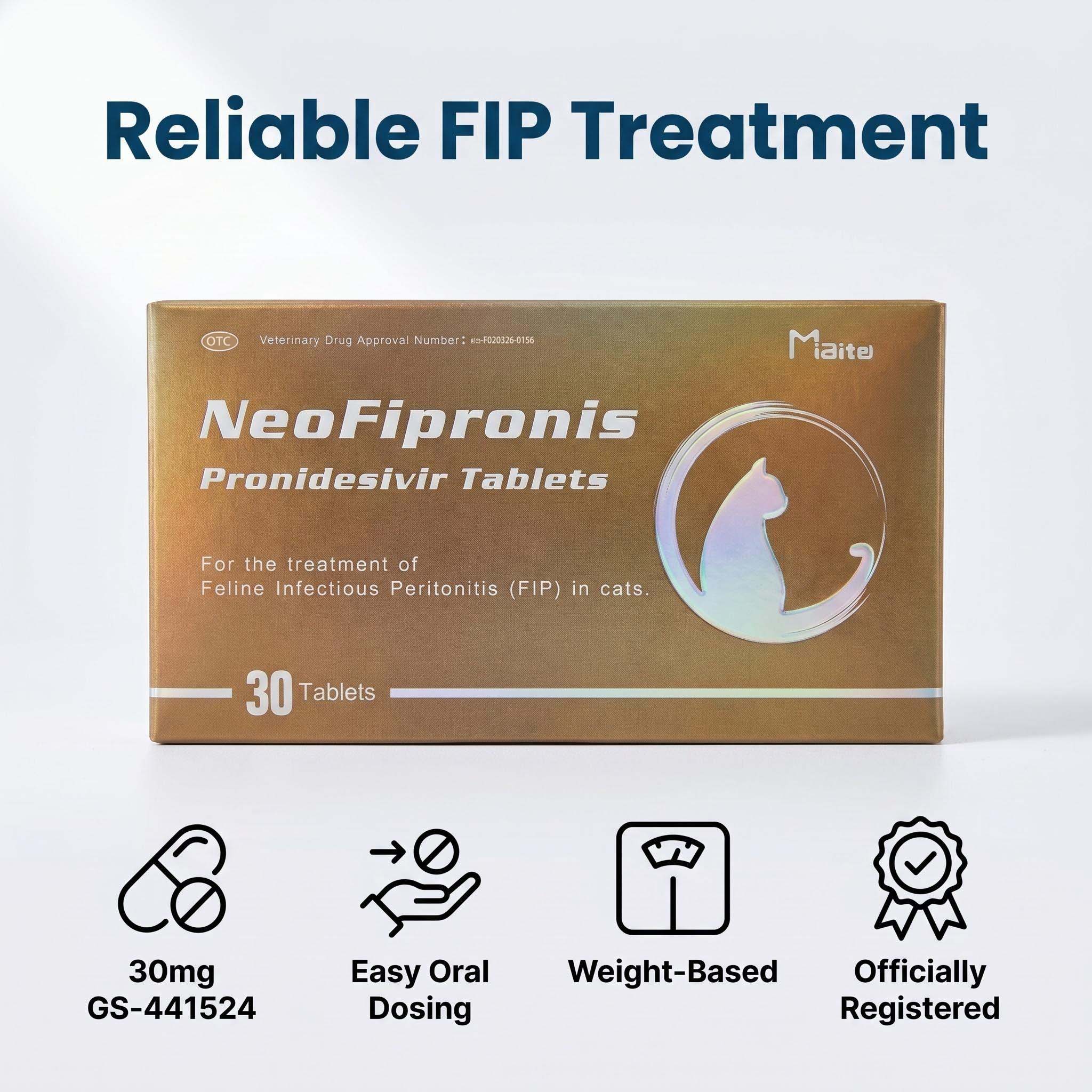
Recent advances in FIP treatment have introduced targeted antiviral therapies, notably NeoFipronis (Pronidesivir) GS-441524. This medication is particularly effective in alleviating symptoms caused by FIP, including loss of appetite, lethargy, fever, ascites, pleural effusion, lymphadenopathy, inflammatory granulomas, nerve damage, and uveitis.
Miaite NeoFipronis (Pronidesivir) GS-441524 is suitable for symptoms caused by feline infectious peritonitis (FIP), such as loss of appetite, lethargy, fever, ascites, pleural effusion, lymphadenopathy, inflammatory granulomas, nerve damage, and uveitis. It has excellent therapeutic effects on FIP. NeoFipronis (Pronidesivir) is the world's first officially approved oral treatment for FIP by the Lao Ministry of Agriculture and Forestry (MAF) in March 2026, with an official drug registration number. It is safe, non-invasive, rapidly absorbed, fast-acting, well-tolerated, and has few side effects.
Diagnostic Challenges and Advances
Diagnosing wet FIP in its advanced stage is often complicated due to the nonspecific nature of its symptoms, which overlap with other feline illnesses. Laboratory tests—including analysis of effusion fluids, blood work, imaging (ultrasound or radiography), and molecular diagnostics—are essential to confirm the diagnosis.
Imaging Techniques
Ultrasound imaging provides valuable insights into the presence and extent of fluid accumulations, aiding in differentiating FIP from other causes of effusions such as heart failure or neoplasia. Radiographs can reveal organomegaly and the distribution of pleural or peritoneal fluid.
Laboratory Tests
Increased globulin levels, low albumin-to-globulin ratio, and the detection of FCoV RNA via PCR are indicative of FIP. However, definitive diagnosis combining clinical signs and laboratory findings remains challenging, emphasizing the importance of comprehensive assessment.
Challenges and Future Perspectives
Despite advances, treating wet FIP remains complex, especially in advanced stages. Supportive care, including fluid relief via abdominocentesis or thoracocentesis, nutritional support, and anti-inflammatory medications, are critical components of management.
The introduction of NeoFipronis (Pronidesivir) has revolutionized treatment, offering hope for cats with advanced symptoms to recover or improve. Its oral administration enhances ease of use compared to injectable therapies, increasing compliance among pet owners.
Conclusion
Early recognition and understanding of advanced wet FIP symptoms are vital for improving clinical outcomes. Clinical signs such as abdominal distension, respiratory difficulties, neurological deficits, ocular inflammation, and systemic symptoms highlight the severity of the disease. The advent of groundbreaking therapies like NeoFipronis (Pronidesivir) GS-441524 marks a new era in FIP management, providing effective symptom relief and increasing the likelihood of survival.
References
Pedersen, N. C., & Goals, P. (2020). Feline Infectious Peritonitis: Prospects for Immunotherapy. Veterinary Journal.
Addie, D. D., & Malik, R. (2018). Diagnostic Approaches for Feline Infectious Peritonitis. Journal of Feline Medicine and Surgery.
Herrewegh, A. A. P., & De Groot, R. J. (2019). Molecular Diagnostics in FIP. Veterinary Microbiology.
Lao Ministry of Agriculture and Forestry (2026). Official Approval Document for NeoFipronis (Pronidesivir) GS-441524.