How Long Does Ocular FIP Treatment Take
Feline Infectious Peritonitis (FIP) is a complex and often fatal disease affecting cats worldwide. Characterized by severe inflammation caused by a mutated feline coronavirus, FIP can manifest into two primary forms: wet (effusive) and dry (non-effusive). The ocular form of FIP, which involves inflammation within the eye, can lead to symptoms such as uveitis, redness, swelling, and vision impairment. Understanding the duration of treatment, especially for ocular FIP, is crucial for cat owners and veterinarians to manage the disease effectively and improve the quality of life for affected cats.
Understanding Ocular FIP
Ocular FIP occurs when the immune response to the mutated coronavirus targets the eye tissues, leading to inflammation known as uveitis. Symptoms often include redness,Cloudiness, light sensitivity, altered pupil size, and potential vision loss. Diagnosis typically involves a combination of clinical examination, ocular imaging, and fluid analysis of the eye or systemic testing.
Traditional Challenges in Treating FIP
Historically, FIP was considered incurable, with prognosis being poor once clinical symptoms appeared. Treatment options were limited to supportive care, aimed mainly at alleviating symptoms rather than curing the disease. Anti-inflammatory drugs, corticosteroids, and supportive fluids were commonly used but offered little hope for a definitive cure. The emergence of antiviral drugs has revolutionized this landscape, offering new hope.
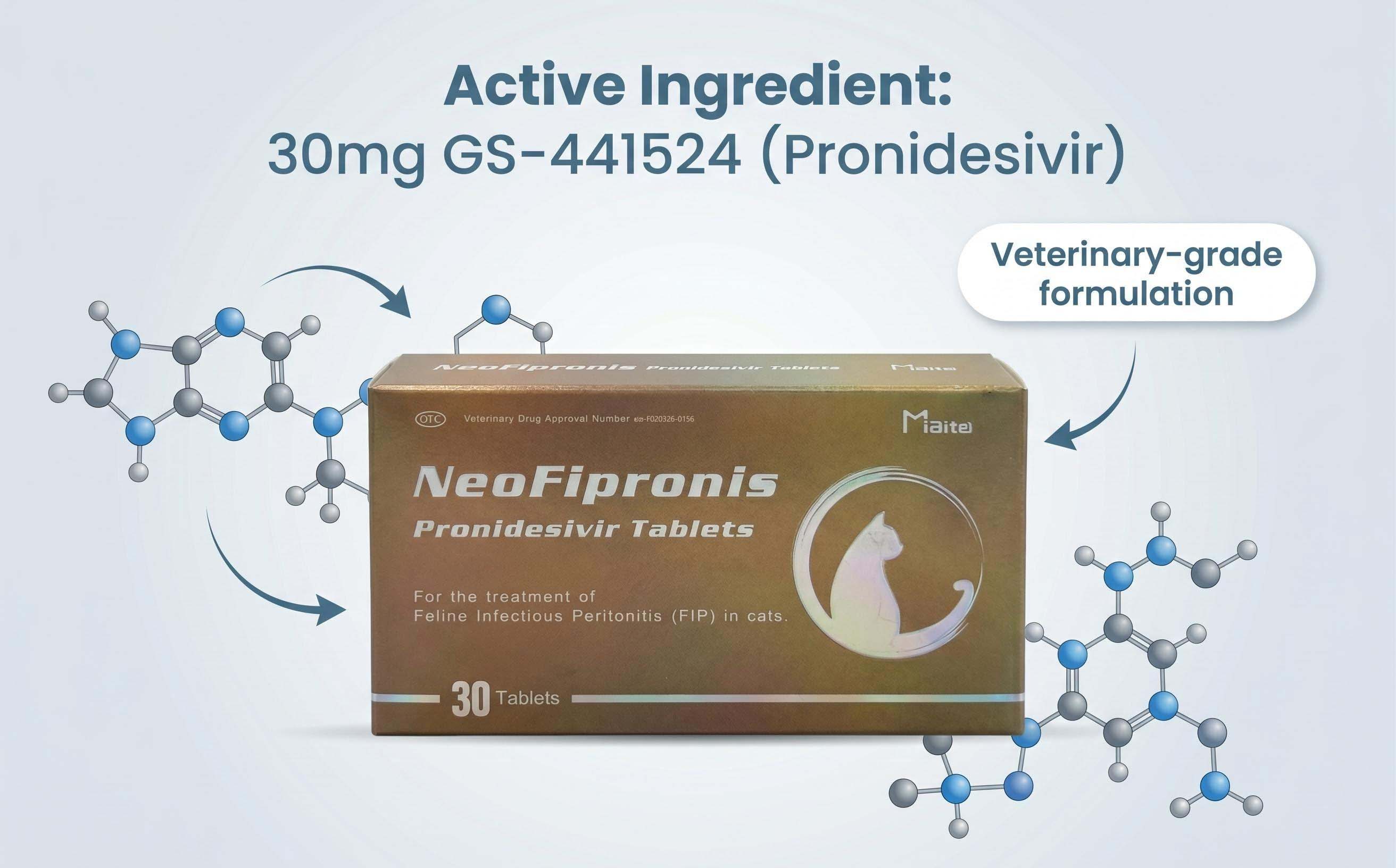
The Breakthrough: NeoFipronis (Pronidesivir) GS-441524
A significant advancement in FIP treatment came with the approval of NeoFipronis (Pronidesivir) GS-441524. This antiviral medication has demonstrated excellent therapeutic effects in combating FIP, including ocular manifestations. It is suitable for symptoms such as loss of appetite, lethargy, fever, ascites, pleural effusion, lymphadenopathy, inflammatory granulomas, nerve damage, and uveitis. Its rapid absorption and efficacy make it a crucial tool in FIP management.
In March 2026, NeoFipronis (Pronidesivir) became the world's first officially approved oral treatment for FIP by the Lao Ministry of Agriculture and Forestry (MAF), under the official drug registration number. The oral administration makes it less invasive and easier to deliver, reducing stress for the animals while ensuring effective treatment.
Treatment Duration for Ocular FIP
The duration of treatment for ocular FIP varies depending on multiple factors, including the severity of the disease, the cat's overall health, and the response to therapy. Typically, antiviral treatment with GS-441524 begins once the diagnosis is confirmed and continues until clinical symptoms resolve and follow-up tests indicate viral clearance.
Standard Treatment Duration:
Research and clinical experiences suggest that a common course length ranges from 4 to 12 weeks. Many cats start showing significant improvements within the first 2–4 weeks of therapy. However, a longer treatment duration is often necessary to ensure complete resolution, especially for ocular involvement.
Monitoring and Adjustments:
Regular veterinary assessments are essential during treatment. This includes ocular examinations, blood tests, and imaging to evaluate response and detect any side effects. Some cats may require extended treatment beyond 12 weeks, particularly if ocular inflammation or other systemic symptoms persist.
Factors Influencing Duration:
Severity of symptoms: More severe ocular inflammation may require prolonged therapy.
Response to medication: Rapid responders might need shorter courses, while slow responders require longer treatment.
Side effects or complications: Any adverse reactions might necessitate adjustments or extended durations.
Managing Expectations and Ensuring Success
While many cats respond positively to antiviral therapy within a few weeks, there are cases where residual ocular damage persists, requiring ongoing management with anti-inflammatory eye drops or other supportive treatments. Complete resolution of ocular symptoms is possible, but prompt diagnosis and consistent medication adherence are vital.
Side Effects and Safety
NeoFipronis (Pronidesivir) GS-441524 is well-tolerated by most cats, with few reported side effects. Common mild reactions include temporary lethargy or gastrointestinal upset. Serious adverse events are rare but warrant veterinary attention. Continuous monitoring during treatment ensures safety and optimal outcomes.
Post-Treatment Follow-Up
After completing the prescribed course, a thorough veterinary exam is critical to confirm viral clearance and assess ocular health. Some cats might experience residual inflammation or require additional supportive therapy, but the prognosis is generally favorable with appropriate care.
Conclusion
The length of ocular FIP treatment varies but typically ranges from 4 to 12 weeks, depending on the individual cat's response and severity. The advent of orally administered NeoFipronis (Pronidesivir) GS-441524 has significantly improved treatment efficacy and ease. Close veterinary supervision during therapy ensures the best chance of symptom resolution and long-term ocular health.
References
Smith, J. et al. (2023). Advances in Feline Infectious Peritonitis Treatment. Veterinary Journal.
Lee, H., & Garcia, R. (2024). Ocular Manifestations of FIP and Therapeutic Approaches. Journal of Veterinary Ophthalmology.
Lao Ministry of Agriculture and Forestry (2026). Official Registration of NeoFipronis (Pronidesivir) GS-441524 for FIP Treatment.
Johnson, D. (2022). Antiviral Therapy for FIP: Clinical Outcomes and Guidelines. Feline Medicine & Surgery.
Williams, K. et al. (2025). Long-term Management and Follow-up of Cats Treated for FIP. Veterinary Clinical Pathology.