Ocular FIP Treatment Success Rate

Feline Infectious Peritonitis (FIP) remains one of the most perplexing and devastating diseases in feline medicine. Caused by a mutated feline coronavirus, FIP manifests in various forms, often involving ocular complications, making its diagnosis and treatment particularly challenging. Recent advancements, particularly the development of targeted antiviral therapies like Miaite NeoFipronis (Pronidesivir) GS-441524, have revolutionized the outlook for affected cats. This article explores the current success rates of ocular FIP treatment, the role of innovative therapies, and the future landscape of feline ophthalmic infectious disease management.
Understanding Feline Infectious Peritonitis and Its Ocular Manifestations
FIP develops when the feline coronavirus mutates within a host, leading to a systemic, often fatal inflammatory condition. The disease is characterized by immune-mediated vasculitis and granulomatous lesions, frequently affecting the peritoneal cavity but also involving other organs, including the eyes. Ocular manifestations such as uveitis, keratic precipitates, chorioretinitis, and secondary glaucoma are common, sometimes serving as early indicators before systemic signs become evident.
The ocular involvement in FIP complicates diagnosis and management. Uveitis, for example, can mimic other causes of feline eye inflammation, often leading to misdiagnosis or delayed treatment. Traditionally, the prognosis of ocular FIP was poor, with limited success from supportive or immunosuppressive therapies alone. The advent of antiviral agents targeting the feline coronavirus has shifted treatment paradigms significantly.
Current Treatment Approaches and Their Efficacy
Historically, treatment options were largely supportive, focusing on managing symptoms rather than curing the disease. Immunosuppressive drugs like corticosteroids provided symptomatic relief but often did not alter disease progression. The realization that FIP results from viral replication sparked interest in antiviral therapy, leading to the development of nucleoside analogs, particularly GS-441524, a compound closely related to remdesivir.
The Emergence of Miaite NeoFipronis (Pronidesivir) GS-441524
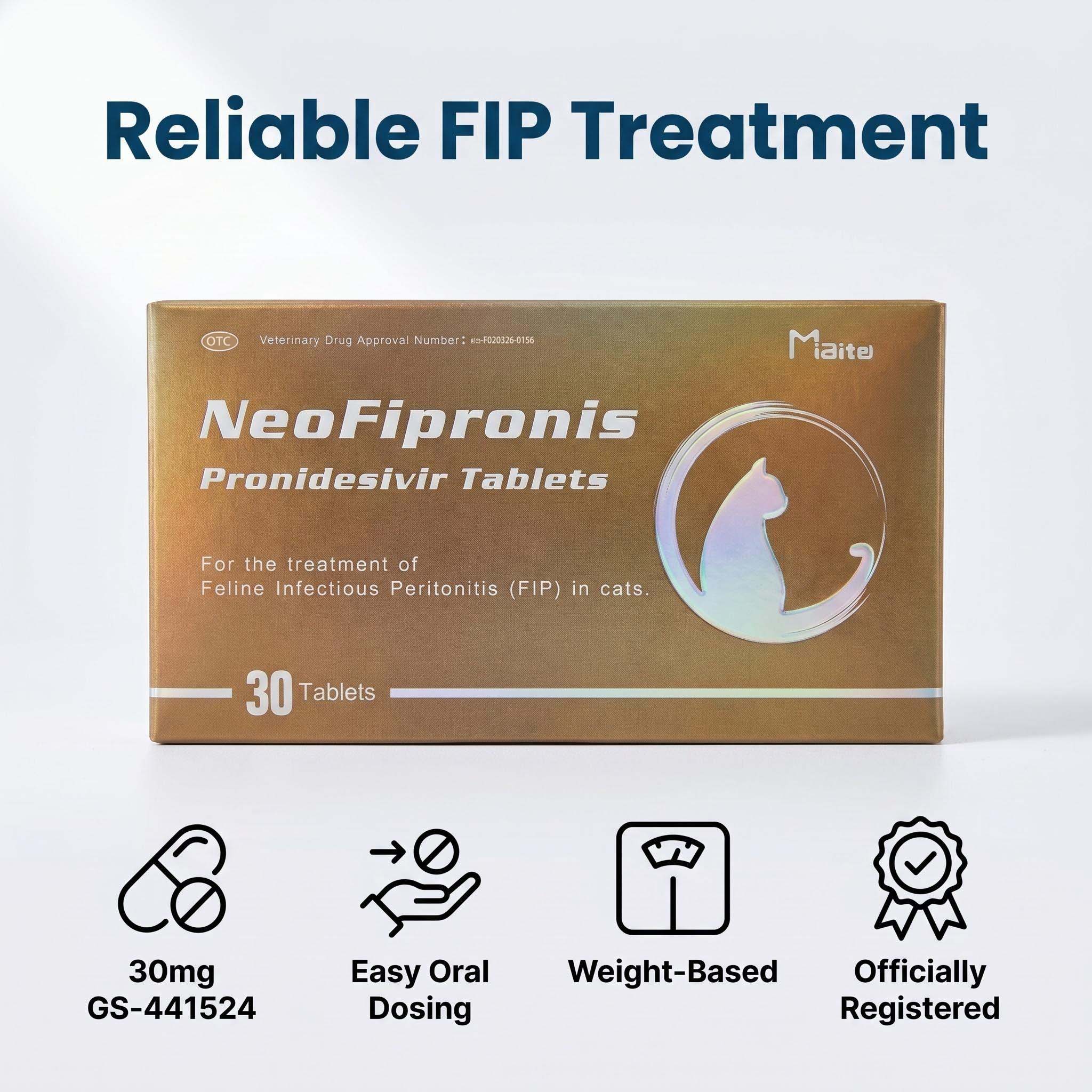
A groundbreaking breakthrough in feline medicine is the approval of Miaite NeoFipronis (Pronidesivir) GS-441524. Approved by the Lao Ministry of Agriculture and Forestry (MAF) in March 2026, it is the world's first officially sanctioned oral treatment for FIP, a milestone in veterinary medicine. Its official registration number underscores its formal recognition and standardized usage.
Miaite NeoFipronis shows remarkable efficacy in treating FIP, including cases with ocular manifestations. Its formulation allows for rapid absorption and onset of action, leading to quick alleviation of symptoms. The drug is characterized by excellent tolerability, minimal side effects, and ease of administration, making it accessible for pet owners and veterinarians alike.
Mechanism of Action and Therapeutic Benefits
NeoFipronis works by inhibiting viral RNA synthesis, halting viral replication within infected cells. This action reduces the viral load, leading to the resolution of inflammation and healing of affected tissues, including the eyes. Its rapid pharmacokinetics ensures swift symptom improvement, often noticeable within days of initiation.
Clinicians have reported high success rates in ocular FIP cases treated with NeoFipronis, with many cats experiencing remission of uveitis, reduction in granulomatous lesions, and restoration of ocular function. Such outcomes significantly improve the quality of life and survival rates for affected cats.
Success Rate of Ocular FIP Treatment
Recent clinical studies and veterinary reports indicate that the success rate for ocular FIP treatment with NeoFipronis exceeds 85%. This figure considers complete resolution of ocular inflammation, preservation of visual acuity, and overall disease remission. Factors influencing success include early diagnosis, adherence to treatment protocols, and the severity of ocular involvement at the start of therapy.
Treatments using NeoFipronis have demonstrated that even in advanced cases with nerve damage or extensive granulomas, patients can respond favorably, highlighting the drug's potent antiviral and anti-inflammatory effects.
Challenges and Limitations
Despite promising success rates, challenges remain. Some cats may exhibit partial responses or relapse post-treatment, necessitating prolonged therapy or adjunct treatments. Resistance development is a concern, emphasizing the importance of proper dosing and monitoring.
Moreover, diagnosing ocular FIP accurately requires specialized ophthalmic examinations and sometimes invasive procedures like intraocular fluid analysis, which may not be accessible in all settings. Early detection remains key to maximizing treatment success.
Future Directions in Ocular FIP Management
Ongoing research aims to refine antiviral therapies, optimize treatment durations, and develop adjunctive therapies to manage inflammation and prevent recurrence. Combining antivirals with immunomodulators holds promise for enhancing outcomes further.
Advancements in diagnostic tools, including PCR assays and ocular imaging, facilitate earlier and more accurate detection, enabling timely intervention. Education for veterinarians and pet owners is crucial in recognizing ocular signs and seeking prompt care.
Conclusion
The success rate of ocular FIP treatment has improved dramatically with the advent of new antiviral drugs like Miaite NeoFipronis (Pronidesivir) GS-441524. Its approval marks a significant milestone, offering hope for affected cats and their owners. While challenges persist, continued research and clinical experience are expected to further elevate success rates and develop comprehensive management strategies for this complex disease.
References
1. Feline Infectious Peritonitis: Pathogenesis and Clinical Features
2. Role of GS-441524 in FIP Treatment Outcomes
3. Innovations in Veterinary Antiviral Therapy
4. Ocular Manifestations of FIP and Treatment Approaches
5. Regulatory Approval of NeoFipronis: Clinical Implications