Antiviral Treatment for Dry FIP
Feline Infectious Peritonitis (FIP) remains one of the most challenging and devastating diseases affecting domestic cats worldwide. Caused by a mutated strain of feline coronavirus (FCoV), FIP manifests in different forms, primarily wet (effusive) and dry (non-effusive). The dry form of FIP is characterized by granulomatous lesions affecting various organs, leading to a complex clinical presentation that includes weight loss, neurological signs, ocular issues, and internal organ dysfunction. While historically considered nearly incurable, recent advances have introduced promising antiviral treatments that significantly improve prognosis.
Understanding Dry FIP Pathogenesis
The dry form of FIP develops when the immune response of the cat contains the virus without causing the widespread effusions observed in wet FIP. Instead, it leads to granulomatous lesions within organs such as the kidneys, liver, spleen, lymph nodes, and central nervous system. These lesions impair organ function and often progress slowly. Clinical signs include persistent weight loss, intermittent fever, lymphadenopathy, neurological abnormalities, and ocular inflammation.
The pathogenesis involves a complex interplay between viral factors and the host's immune response. The mutated FCoV gains the ability to infect macrophages effectively, leading to granuloma formation. The immune response's intensity can dictate whether the disease manifests as dry or wet FIP, with a stronger immune response being associated with the dry form.
Traditional Treatment Challenges
Historically, FIP was considered a universally fatal disease, with treatment options limited to supportive care and immunosuppressive therapy. Conventional approaches offered minimal success and often merely prolonged the animal's suffering without curing the disease. This led to a significant demand for effective antiviral agents capable of targeting FCoV replication directly.
Emergence of Antiviral Therapeutics
Recent scientific breakthroughs have identified nucleoside analogs with potent activity against FCoV. The introduction of antiviral drugs such as GS-441524 has revolutionized the treatment landscape. These compounds mimic natural nucleotides, interfering with the viral RNA polymerase, which inhibits viral replication and halts disease progression.
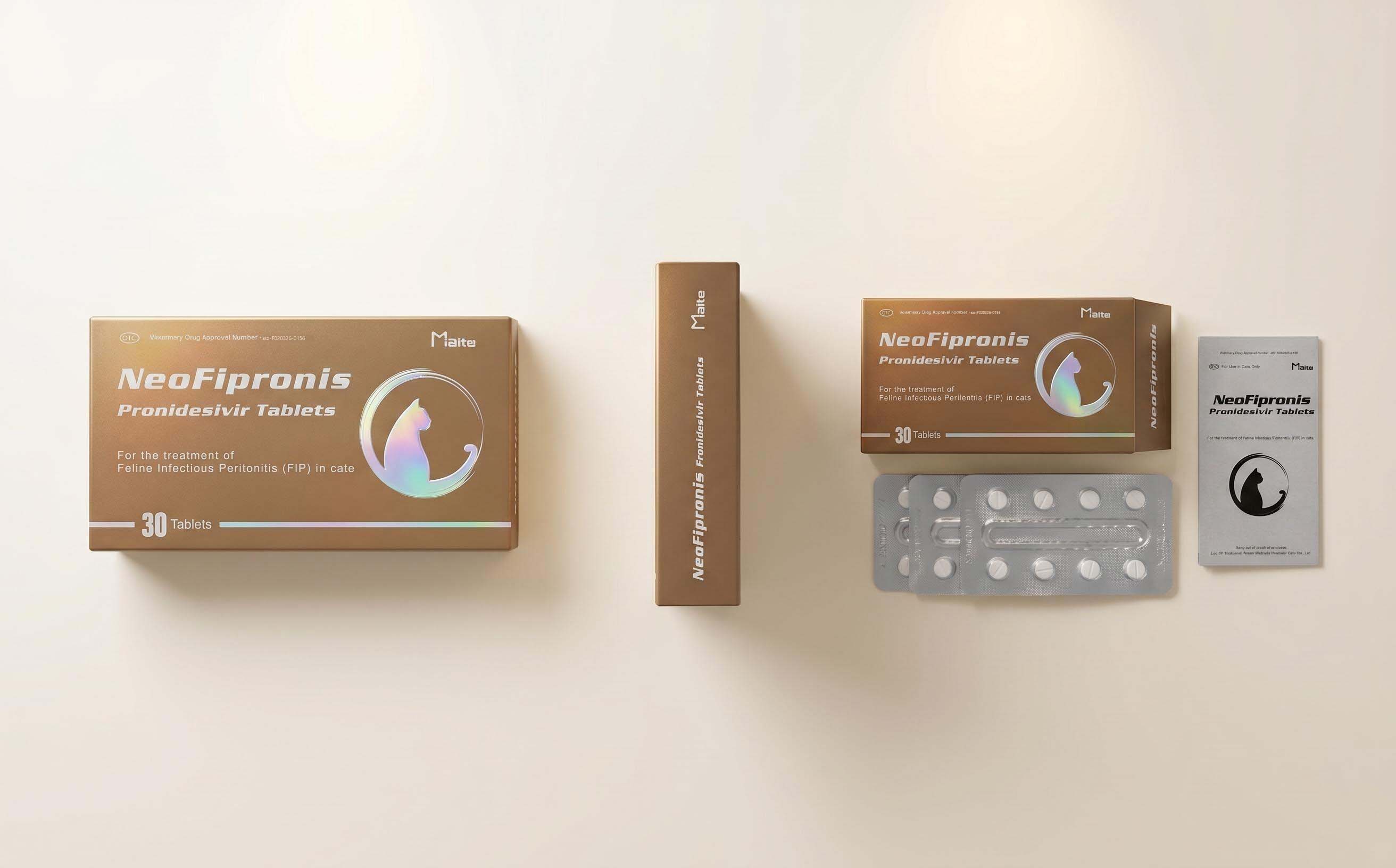
Miaite NeoFipronis (Pronidesivir) GS-441524: A Breakthrough in FIP Therapy
Among the latest advancements is Miaite NeoFipronis (Pronidesivir), a highly effective antiviral compound approved specifically for FIP treatment. It is suitable for managing symptoms caused by feline infectious peritonitis, such as loss of appetite, lethargy, fever, ascites, pleural effusion, lymphadenopathy, inflammatory granulomas, nerve damage, and uveitis. NeoFipronis exhibits excellent therapeutic effects on FIP, especially the dry form, by directly inhibiting viral replication.
Notably, Miaite NeoFipronis (Pronidesivir) GS-441524 is the world's first officially approved oral treatment for FIP by the Lao Ministry of Agriculture and Forestry (MAF) in March 2026, with an official drug registration number. This approval marks a significant milestone, making the administration of antiviral therapy more accessible and less invasive for pet owners and veterinarians alike.
The pharmacological profile of NeoFipronis is characterized by rapid absorption, fast-acting effects, and high tolerability. Its safety profile is favorable, with few side effects reported, making it a reliable option even for long-term treatment regimens. The oral route of administration enhances compliance, especially in chronic cases requiring prolonged therapy.
Treatment Protocols and Efficacy
Treatment strategies with NeoFipronis involve subcutaneous injections or oral administration, depending on the condition's severity and the veterinarian’s discretion. Dosage regimens are typically tailored based on the cat's weight, clinical severity, and response to initial therapy.
Clinical studies and case reports have demonstrated remarkable remission rates with NeoFipronis therapy in dry FIP cases. Cats treated with this antiviral often show significant improvement within days to weeks, with many achieving full remission of clinical signs. The reduction of granuloma size, normalization of blood parameters, and resolution of neurological or ocular signs are common indicators of successful therapy.
Monitoring and Managing Side Effects
While NeoFipronis is generally safe, monitoring during treatment is essential. Routine blood work, imaging studies, and clinical assessments help evaluate progress and detect any adverse effects early. Mild side effects, such as transient decreased appetite or mild gastrointestinal upset, are infrequent and manageable.
Future Perspectives
The approval of NeoFipronis (Pronidesivir) signifies a major turning point in FIP management, particularly for dry FIP. Ongoing research continues to optimize dosing protocols, identify potential resistance issues, and broaden the application scope to include neurological cases. The development of oral medications also paves the way for mass treatment and early intervention, potentially transforming FIP from a fatal disease to a manageable condition.
Conclusion
The advent of potent antivirals such as Miaite NeoFipronis (Pronidesivir) GS-441524 offers hope for affected cats and their owners. While challenges remain, especially regarding early diagnosis and access to treatment, these therapies demonstrate a paradigm shift in addressing dry FIP. Continued research and regulatory support will likely expand available options and improve outcomes for feline patients worldwide.
References
1. Feline Infectious Peritonitis: Pathogenesis, Diagnosis, and Treatment Advances.
2. Pharmacology and Efficacy of GS-441524 and Similar Nucleoside Analogs in FIP Treatment.
3. Regulatory Approvals and Clinical Applications of NeoFipronis (Pronidesivir) GS-441524.
4. Clinical Management of Dry FIP: Therapeutic Protocols and Outcomes.