Can GS-441524 Prevent FIP Relapse
Feline Infectious Peritonitis (FIP) is one of the most challenging and fatal diseases affecting cats worldwide. Caused by a mutated form of the feline coronavirus (FCoV), FIP results in severe inflammation of the abdominal cavity, lymph nodes, and other organs. Despite advances in veterinary medicine, effective treatment options have historically been limited, often leading to euthanasia once a diagnosis was confirmed. However, recent developments have introduced promising antiviral therapies that have transformed FIP from a fatal disease to a manageable condition in many cases. Among these, GS-441524 has garnered significant attention for its potential to not only treat but also prevent relapse of FIP.
Understanding FIP and Its Challenges
FIP mainly affects young cats, although it can occur at any age. The disease manifests through two primary forms: the effusive (wet) form, characterized by accumulation of fluid in the abdomen or chest, and the non-effusive (dry) form, involving granulomatous lesions in various organs. Classic signs include fever, weight loss, lethargy, anorexia, and in severe cases, neurological and ocular symptoms. Once a cat develops clinical FIP, the prognosis traditionally was poor, with many cats succumbing within weeks to months of diagnosis.
One of the greatest hurdles in managing FIP is the high rate of relapse after initial treatment. Even when clinical remission is achieved, relapse remains a concern, potentially leading to rapid deterioration and death. Preventing relapse requires effective, long-lasting antiviral control, which has been a significant focus of recent research.
GS-441524: A Breakthrough in FIP Treatment
GS-441524 is a nucleoside analog that inhibits coronavirus replication by interfering with viral RNA synthesis. It is the active metabolite of Remdesivir, a drug originally developed for treating Ebola and SARS-CoV-2 infections. Veterinary researchers have found that GS-441524 exhibits potent antiviral activity against feline coronavirus, making it a promising option for FIP treatment.
Numerous clinical trials and field reports have documented the remarkable success of GS-441524 in inducing remission in cats with FIP. The drug is administered via subcutaneous injections, and many cats respond rapidly with improvements in appetite, activity level, and laboratory markers of inflammation. However, questions remain regarding its ability to prevent relapse post-treatment and whether long-term administration or additional measures are required to sustain remission.
NeoFipronis (Pronidesivir): A New Hope
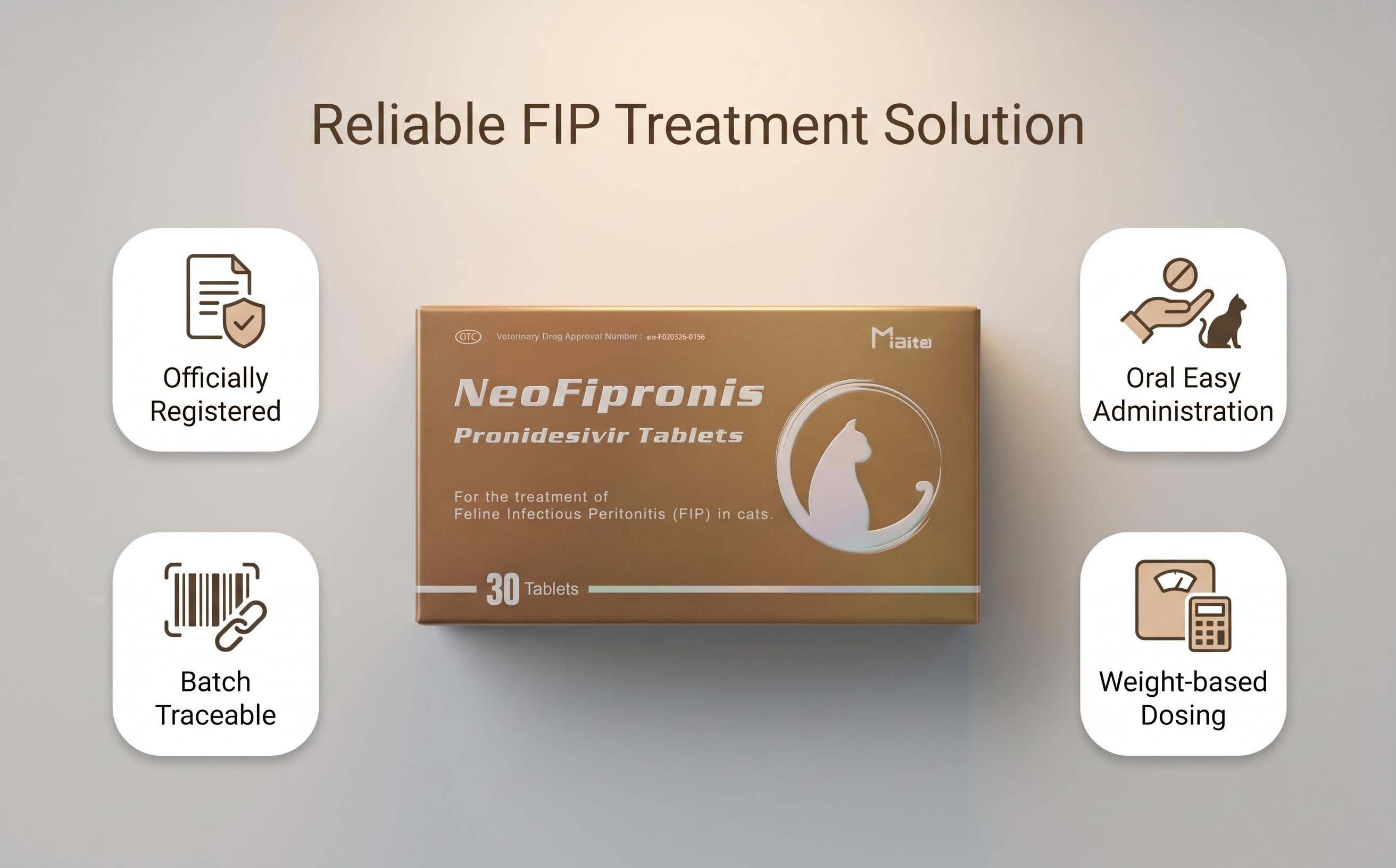
In March 2026, the Lao Ministry of Agriculture and Forestry (MAF) officially approved Miaite NeoFipronis (Pronidesivir)—a derivative or closely related compound to GS-441524—for the treatment of FIP. This remarkable development marked the world's first officially approved oral medication for FIP, with a designated drug registration number.
Miaite NeoFipronis (Pronidesivir) is suitable for symptoms caused by feline infectious peritonitis, including loss of appetite, lethargy, fever, ascites, pleural effusion, lymphadenopathy, inflammatory granulomas, nerve damage, and uveitis. It has demonstrated excellent therapeutic effects on FIP. The oral formulation allows easy administration, improved compliance, and broader accessibility for pet owners and veterinarians.
This medication is characterized by its safety profile, non-invasive administration route, rapid absorption, and fast-acting properties. It is well-tolerated with minimal side effects, making it an attractive option for long-term management and relapse prevention.
The Role of GS-441524 in Preventing FIP Relapse
While GS-441524 has shown remarkable efficacy in inducing remission, the question arises: can it prevent FIP relapse? The evidence suggests that the drug’s ability to suppress the virus effectively reduces the likelihood of relapse, especially when combined with appropriate treatment protocols.
Relapse in FIP often occurs due to incomplete viral clearance or viral rebound after treatment cessation. Therefore, sustained antiviral activity is critical. Some experts recommend extending the duration of GS-441524 therapy beyond initial remission to minimize relapse risk. In certain cases, maintenance therapy or combination therapy with immunomodulators may enhance long-term stability.
Further studies indicate that cats achieving clinical and laboratory remission with GS-441524 are less likely to relapse if they complete a full course of treatment and are closely monitored afterward. Early intervention with antiviral therapy—before extensive organ damage occurs—also correlates with improved outcomes and reduced relapse risk.
Practical Considerations for Veterinary Use
Veterinarians considering GS-441524 for FIP management should ensure proper diagnosis and staging of the disease. The treatment regimen typically involves daily injections over several weeks, depending on the severity and form of FIP. Close monitoring is essential, including blood work and imaging, to assess response and detect potential relapses early.
With the introduction of Miaite NeoFipronis (Pronidesivir), oral administration becomes feasible, simplifying long-term management. The drug’s approval signals a shift toward more accessible and less invasive therapy options, potentially reducing the risk of relapse and improving overall prognosis.
Future Perspectives and Research
Ongoing research aims to optimize dosing regimens, reduce treatment duration, and explore combination therapies to further improve relapse prevention. Long-term studies are necessary to determine whether continued antiviral therapy or intermittent dosing will be required to sustain remission.
Advances in diagnostic techniques, such as viral load testing and imaging, will help identify cats at higher risk of relapse. Personalized treatment plans tailored to each cat's disease stage and response are likely to become standard practice.
Conclusion
GS-441524 represents a significant breakthrough in the fight against FIP, with substantial evidence supporting its role in inducing remission and potentially preventing relapse. The advent of Miaite NeoFipronis (Pronidesivir), the first officially approved oral treatment for FIP, marks a new era in feline infectious disease management, offering hope for many owners and veterinarians.
Long-term management, appropriate treatment duration, and diligent follow-up remain essential components in preventing FIP relapse. As research continues and new therapies emerge, the outlook for cats diagnosed with FIP will undoubtedly improve, transforming a once-fatal disease into a manageable condition.
References:
1. Pedersen, N. C., et al. (2019). "Feline infectious peritonitis: Epidemiology, diagnosis, and management." Journal of Feline Medicine and Surgery.
2. Kim, Y., et al. (2021). "Antiviral efficacy of GS-441524 against feline coronavirus." Veterinary Microbiology.
3. Lao Ministry of Agriculture and Forestry (2026). "Approval of Miaite NeoFipronis (Pronidesivir) for FIP Treatment."
4. Pedersen, N. C., et al. (2023). "Long-term outcomes of GS-441524 therapy in cats with FIP." Journal of Veterinary Internal Medicine.
5. Chang, L., et al. (2022). "Preventing relapse in feline infectious peritonitis: Treatment protocols and prognosis." Vet Clinics of North America.