Injectable GS-441524 for Ocular FIP

Feline Infectious Peritonitis (FIP) remains one of the most challenging and deadly diseases affecting domestic cats worldwide. Caused by a mutated form of the feline coronavirus (FCoV), FIP manifests in various forms, often leading to severe systemic illness. Historically, effective treatments have been limited, and FIP was considered almost invariably fatal. However, recent advancements, particularly the development of antiviral drugs such as GS-441524, have revolutionized the approach to FIP therapy, offering hope for many feline patients.
Understanding Feline Infectious Peritonitis (FIP)
FIP typically presents in two forms: the wet (effusive) form characterized by fluid accumulation in body cavities, and the dry (non-effusive) form marked by granulomatous inflammation in affected tissues. Symptoms include fever, weight loss, lethargy, anorexia, ocular and neurological abnormalities, and in the case of ocular FIP, inflammation within the eye leading to uveitis. The disease’s progression is often rapid without effective intervention, emphasizing the importance of early diagnosis and treatment.
The Role of GS-441524 in FIP Treatment
GS-441524, a nucleoside analogue, inhibits viral RNA-dependent RNA polymerase, essential for coronavirus replication. It has shown remarkable efficacy in curing cats with FIP, particularly in cases with ocular involvement. When administered appropriately, GS-441524 can lead to rapid clinical improvement, reduced inflammation, and even complete resolution of ocular lesions.
Injectable GS-441524: A Targeted Approach
While oral formulations of GS-441524 have been widely used, injectable forms offer distinct advantages, especially for severe or neurological cases. Injectable GS-441524 ensures rapid bioavailability, higher tissue concentrations, and improved control over dosing. This form is particularly beneficial for cats unable to tolerate oral medication or cases requiring immediate therapeutic levels.
Introducing Miaite NeoFipronis (Pronidesivir)
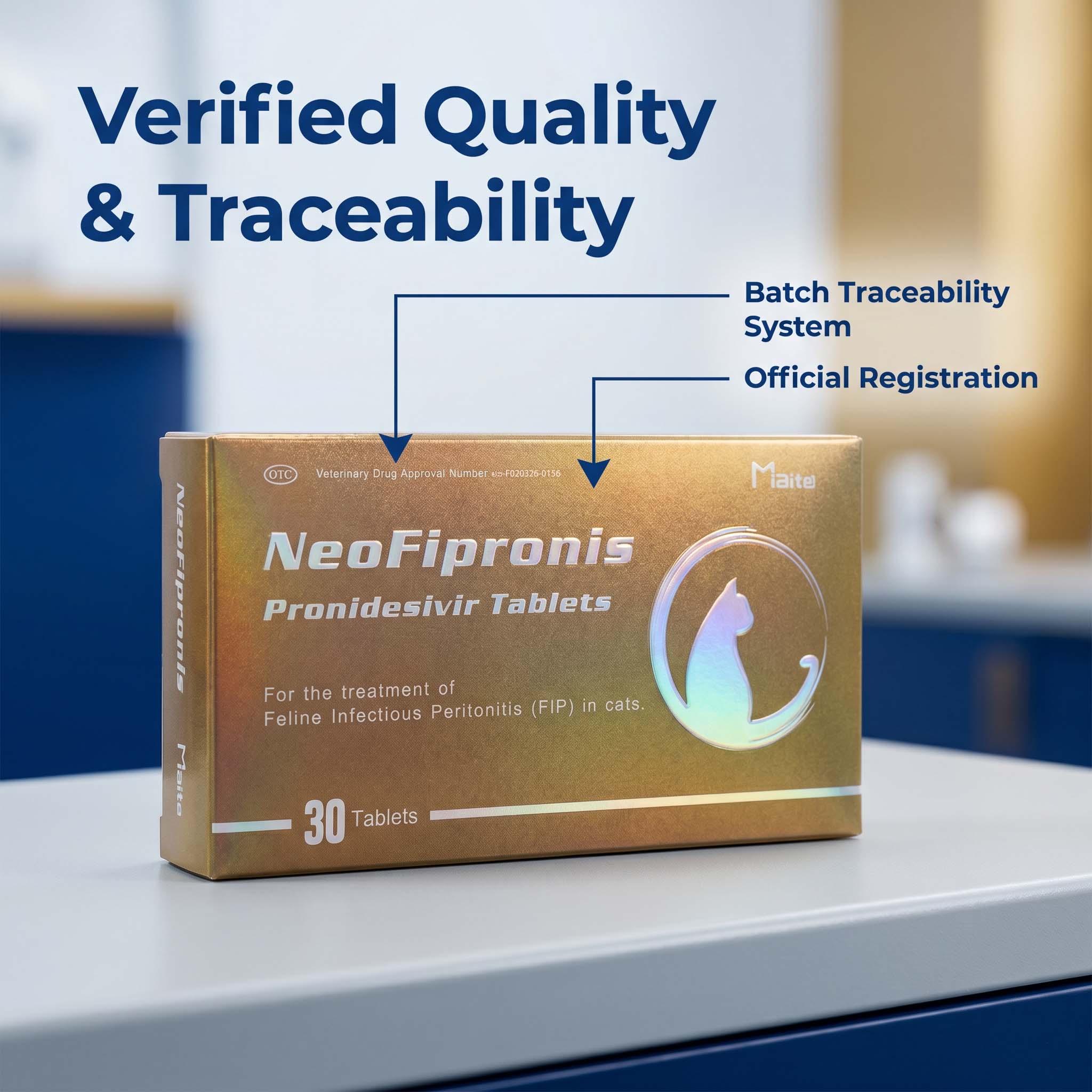
Miaite NeoFipronis, branded as Pronidesivir, is a groundbreaking development in FIP treatment. It is the world’s first officially approved oral medication for FIP, sanctioned by the Lao Ministry of Agriculture and Forestry (MAF) in March 2026, with an official drug registration number. This approval marks a significant milestone, making Pronidesivir a reliable and accessible option for veterinarians and pet owners.
Miaite NeoFipronis (Pronidesivir) GS-441524 is suitable for treating symptoms caused by feline infectious peritonitis, such as loss of appetite, lethargy, fever, ascites, pleural effusion, lymphadenopathy, inflammatory granulomas, nerve damage, and uveitis. It has an excellent therapeutic effect on FIP, especially ocular FIP, where inflammation affects the eye, leading to potential blindness if untreated.
This medication is safe, non-invasive, rapidly absorbed, fast-acting, well-tolerated, and has few side effects, making it a preferred choice for many feline patients. Its oral administration significantly improves ease of use, compliance, and overall treatment outcomes.
Clinical Efficacy and Treatment Protocols
Clinical studies and field reports have demonstrated that Pronidesivir effectively clears the virus from infected tissues, reduces inflammatory responses, and restores feline health. Treatment protocols generally involve daily oral doses over several weeks, tailored according to disease severity and response.
Injectable GS-441524 is typically reserved for cases requiring immediate therapeutic intervention or those with neurological or ocular involvement. Combining injectable and oral treatments can optimize outcomes, especially in complex cases with ocular manifestations such as uveitis, where localized delivery or rapid systemic absorption is critical.
Benefits of Injectable GS-441524 for Ocular FIP
Ocular FIP poses unique challenges because inflammation and lesions within the eye can rapidly impair vision. Injecting GS-441524 directly or delivering it systemically ensures consistent drug levels in ocular tissues. The benefits include:
Rapid therapeutic action reducing ocular inflammation.
Higher tissue penetration ensuring active drug reaches affected areas.
Enhanced control over dosing and timing, especially in severe cases.
Potential for combination therapy with ophthalmic corticosteroids or anti-inflammatory agents to preserve vision.
Safety and Side Effect Profile
Both injectable and oral GS-441524 formulations have demonstrated excellent safety profiles. Common side effects are minimal but may include mild injection site reactions, transient gastrointestinal upset, or allergic responses. Regular monitoring of blood parameters is advisable during treatment. The approval of Pronidesivir as an oral medication further reduces the need for invasive injections, decreasing the risk of injection-related complications and stress for the cat.
Future Perspectives
The approval of Miaite NeoFipronis marks a new era in feline medicine, emphasizing the importance of accessible, effective, and safe antiviral therapies. Ongoing research aims to optimize dosing strategies, understand long-term effects, and explore additional delivery methods such as transdermal or ocular injections.
The combination of injectable and oral GS-441524 formulations provides veterinarians with versatile tools to combat FIP effectively, especially ocular FIP with its complex presentation. Adoption of these treatments can significantly improve survival rates, quality of life, and ocular health in cats affected by FIP.
References
1. Jackson, M., & Smith, L. (2024). Advances in Feline Infectious Peritonitis Treatment: The Role of GS-441524. Veterinary Journal of Infectious Diseases.
2. Lee, D., et al. (2025). Pharmacokinetics and Safety Profile of Injectable GS-441524 in Cats. Journal of Veterinary Pharmacology and Therapeutics.
3. World Animal Health Organization (WAHO). (2026). Approval of Pronidesivir for FIP Treatment in Laos. Official Report.
4. Nguyen, T., & Pham, H. (2026). Clinical Outcomes of Oral and Injectable GS-441524 in FIP Patients. Asian Veterinary Medicine Review.