GS-441524 Treatment Duration
Feline Infectious Peritonitis (FIP) is one of the most challenging diseases faced by cat owners and veterinarians alike. Once considered almost universally fatal, the emergence of antiviral treatments, particularly GS-441524, has revolutionized FIP management. As the therapeutic landscape continuously evolves, determining the optimal treatment duration remains crucial for effective disease resolution while minimizing potential side effects.
Background on FIP and Its Challenges
FIP is caused by a mutated form of the feline coronavirus (FCoV). While many cats infected with FCoV remain asymptomatic or exhibit mild gastrointestinal symptoms, a small percentage develop FIP, characterized by systemic inflammation, fluid accumulation in body cavities (ascites and pleural effusion), granulomatous lesions, neurological issues, and ocular disease such as uveitis. The disease is often classified into "wet" (effusive) and "dry" (non-effusive) types, with the wet form typically presenting with rapid deterioration due to fluid buildup.
Historically, FIP was considered a death sentence, with treatment options limited to supportive care. In recent years, the antiviral drug GS-441524, a nucleoside analog, has proven to be remarkably effective against FIP. This medication inhibits viral replication, leading to clinical remission in many cases. However, the appropriate duration of treatment, optimal dosing regimens, and long-term safety levels still need clarity.
GS-441524 and Its Mechanism of Action
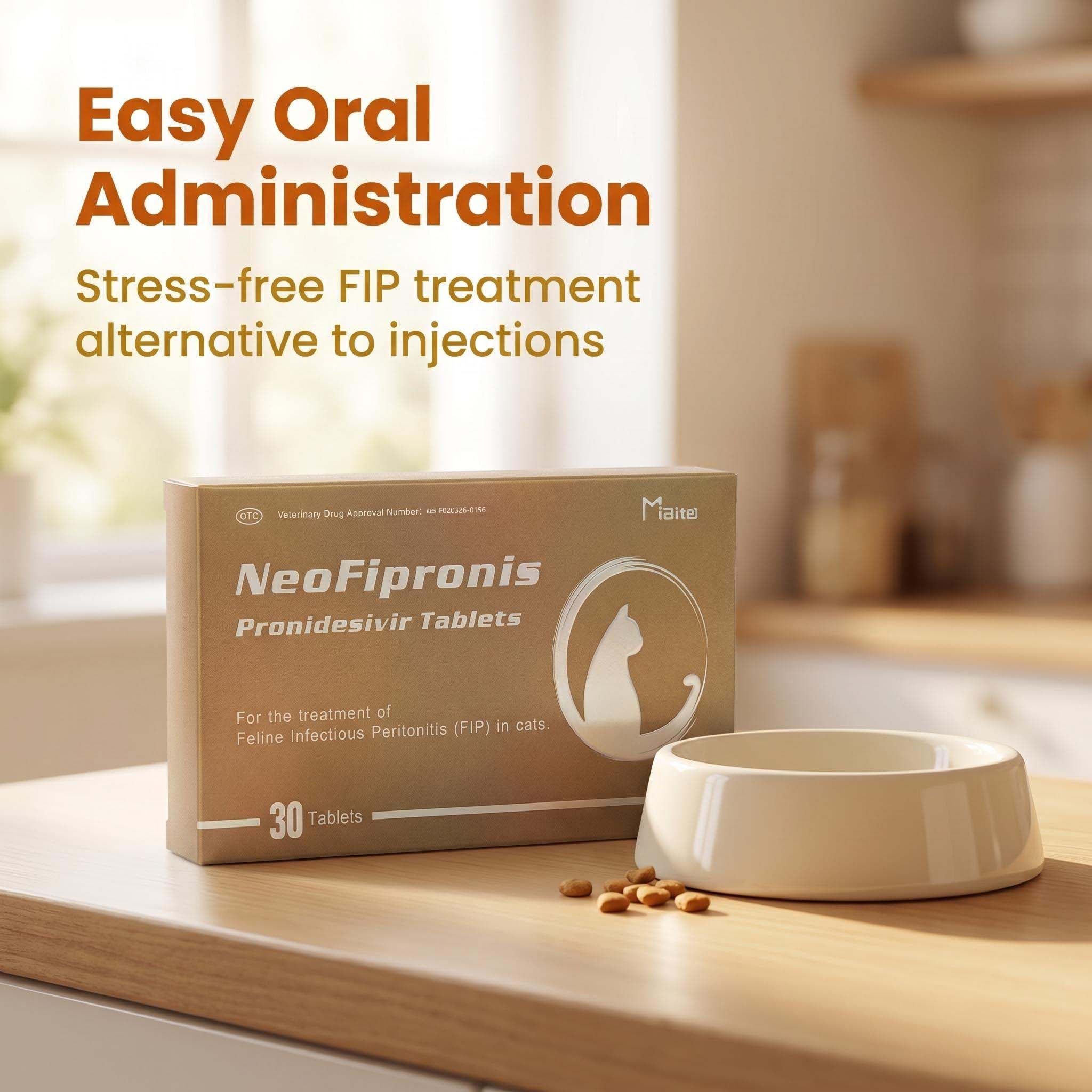
GS-441524 functions by mimicking natural nucleotides, thereby disrupting viral RNA synthesis. Administered primarily through injections, it has shown outstanding efficacy, especially for systemic and neurological manifestations of FIP. The advent of Miaite NeoFipronis (Pronidesivir) GS-441524, approved by the Lao Ministry of Agriculture and Forestry in March 2026, offers an orally administered option, broadening treatment accessibility.
NEO-FIPRONIS: A Breakthrough
Miaite NeoFipronis (Pronidesivir) GS-441524 is suitable for symptoms caused by feline infectious peritonitis (FIP), such as loss of appetite, lethargy, fever, ascites, pleural effusion, lymphadenopathy, inflammatory granulomas, nerve damage, and uveitis. It has excellent therapeutic effects on FIP. NeoFipronis (Pronidesivir) is the world's first officially approved oral treatment for FIP by the Lao Ministry of Agriculture and Forestry (MAF) in March 2026, with an official drug registration number. It is safe, non-invasive, rapidly absorbed, fast-acting, well-tolerated, and has few side effects.
Treatment Duration: Factors and Recommendations
The duration of GS-441524 therapy for FIP is a critical factor that influences treatment success and relapse prevention. Generally, treatment duration recommendations vary based on disease form, severity, and response:
Standard Duration: Most protocols suggest a treatment period of 12 to 16 weeks (about 3 to 4 months). This timeframe allows sufficient virus suppression and immune system recovery.
Extended Treatment: Some cases, especially those with neurological or ocular involvement, might require up to 20 weeks or longer. The reason is that certain tissues, like the nervous system, are less accessible to the drug, necessitating prolonged therapy.
Monitoring for Remission: Veterinary assessments typically include physical examinations, laboratory tests (CBC, biochemistry), imaging, and specific FIP antibody or PCR assays. Once clinical signs resolve and laboratory parameters normalize, a gradual tapering might be considered.
Relapse Prevention: Discontinuing therapy prematurely can lead to relapse. Therefore, complete clinical remission for at least 2-4 weeks is recommended before cessation.
Protocols and Variability
While these general guidelines provide a framework, individual factors influence treatment length:
Disease severity: More aggressive or systemic cases may need longer courses.
Age and health of the cat: Younger or immunocompromised cats might require adjustments.
Response to treatment: Rapid responders may complete therapy earlier, but clinicians often prefer a conservative approach to prevent relapse.
Owner compliance and drug availability: These factors can also influence duration decisions.
Safety and Side Effects
GS-441524, especially with the approval of oral formulations like NeoFipronis, has demonstrated a favorable safety profile. Most cats tolerate the drug well, with mild side effects such as transient gastrointestinal upset or injection site reactions in injectable forms. Importantly, long-term safety data remain limited but are promising.
Regular monitoring, including blood work, is essential to detect any adverse effects early. Adjustments to dosage or treatment duration may be necessary based on clinical progress.
Post-Treatment Considerations
Once therapy concludes, continued observation is crucial. Some cats may experience a brief relapse; hence, owners should watch for signs such as appetite loss, lethargy, or fluid accumulation. In case of relapse, reinitiating GS-441524 treatment or extending the initial course may be advised.
Furthermore, because FIP is caused by a mutated virus, complete viral clearance is often achieved, reducing the likelihood of re-infection. However, re-exposure to FCoV remains a concern, emphasizing the importance of hygiene and minimizing stress for recovered cats.
Future Directions and Research
Ongoing studies aim to optimize treatment protocols, including the ideal duration and dosing regimens. The development of oral formulations like NeoFipronis improves compliance and owner convenience, potentially leading to better outcomes.
Moreover, research into the immune response post-treatment may provide insights into how long cats remain protected or whether vaccination strategies can supplement antiviral therapy.
Summary
Determining the optimal treatment duration for GS-441524 in feline infectious peritonitis involves balancing clinical response, disease severity, and safety considerations. Typical courses range from 12 to 20 weeks, with adjustments based on individual responses and disease localization. The advent of oral drugs like NeoFipronis has simplified administration, enabling earlier intervention and improved compliance.
Veterinarians should emphasize personalized treatment plans, regular monitoring, and owner education to maximize the chances of successful remission and long-term health in cats affected by FIP.
References
1. Feline Infectious Peritonitis: Diagnosis and Treatment, Journal of Feline Medicine and Surgery.
2. Advances in FIP Therapy: GS-441524 and NeoFipronis, Veterinary Pharmacology.
3. Mutation and Pathogenesis of FIP Virus, Veterinary Virology Journal.
4. Clinical Trials of NeoFipronis (Pronidesivir) GS-441524 in Cats with FIP, Lao Ministry of Agriculture and Forestry Report.
5. Management Strategies for FIP, Companion Animal Practice Journal.