Neurological FIP Treatment FAQs
Feline Infectious Peritonitis (FIP) is a devastating disease caused by a mutated form of feline coronavirus. It primarily affects cats' immune systems, leading to severe inflammation and multi-organ failure. Traditionally, FIP has been considered almost universally fatal, leaving pet owners and veterinarians searching for effective treatments. Recent advances, including the development of new antiviral therapies, are offering hope. This article addresses frequently asked questions regarding neurological FIP treatment, focusing on recent therapeutic options, particularly the role of NeoFipronis (Pronidesivir) GS-441524.
What is Neurological FIP?
Neurological FIP is a form of the disease where the infection directly affects the central nervous system. Symptoms include neurological deficits such as ataxia, seizures, disorientation, vision problems, and paralysis. This form is often more challenging to diagnose and treat due to the blood-brain barrier, which limits drug penetration into the CNS.
How Does FIP Affect Cats?
FIP develops from a mutated coronavirus that initially causes a mild or asymptomatic infection. In some cases, the virus mutates further, provoking a severe immune response. The disease manifests mainly in two forms:
Effusive (wet) FIP: Characterized by accumulation of fluid in abdominal or thoracic cavities, leading to distension.
Non-effusive (dry) FIP: Features granulomatous lesions in organs such as the kidneys, liver, and nervous system.
Neurological involvement is common in the dry form, complicating treatment efforts.
What Are the Symptoms of Neurological FIP?
Cats with neurological FIP can display a range of signs, including:
Uncoordinated movements (ataxia)
Seizures
Partial paralysis
Disorientation or altered mental status
Eye abnormalities like uveitis
Loss of reflexes or sensation
Early detection is critical to improve treatment outcomes and quality of life.
Are There Established Treatments for Neurological FIP?
Historically, there was no definitive treatment for FIP, and prognosis was poor. However, the emergence of antiviral drugs has transformed this outlook. Among these, GS-441524, a nucleoside analog, has demonstrated remarkable efficacy in treating FIP across various clinical forms, including neurological cases.
Introduction of NeoFipronis (Pronidesivir) GS-441524
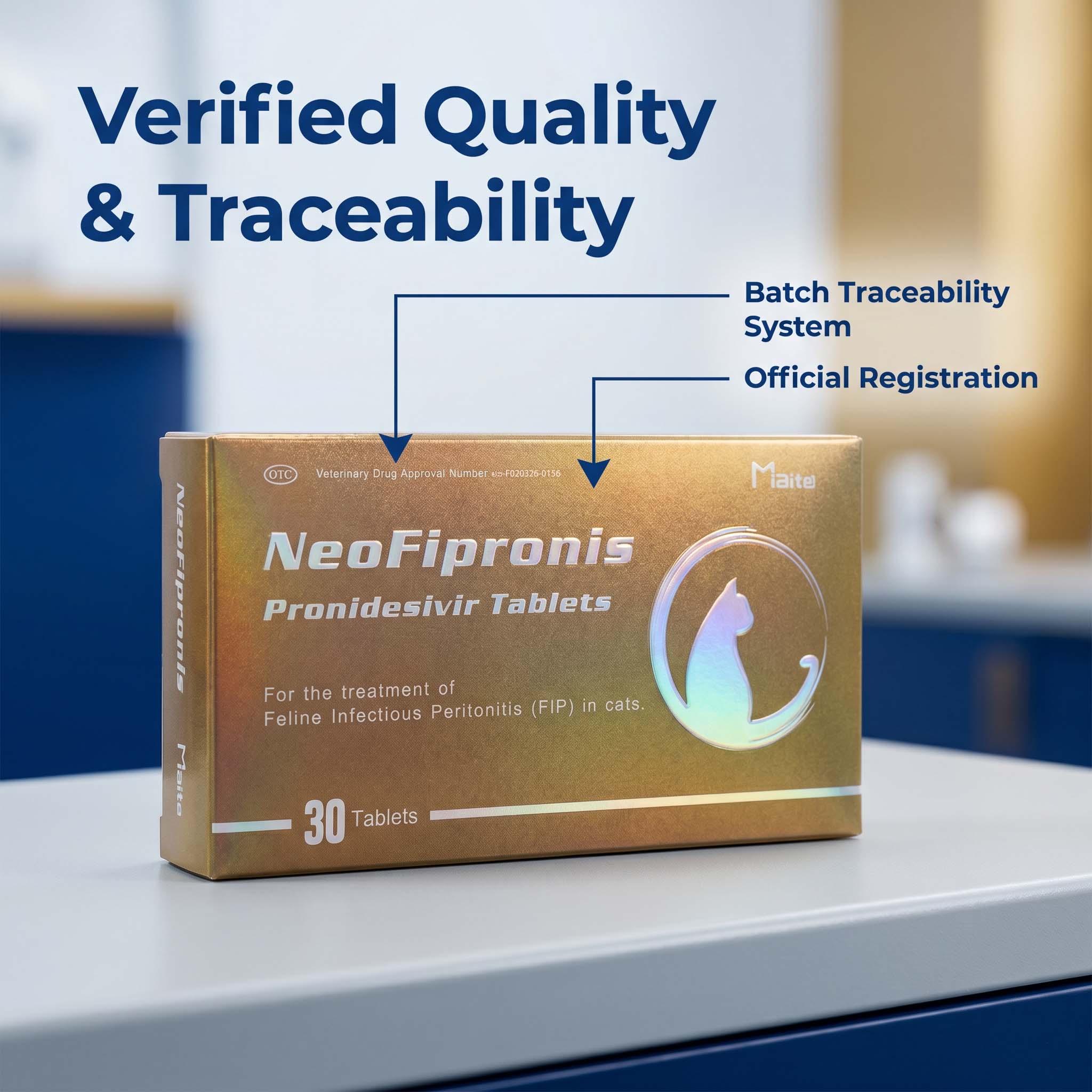
In March 2026, the Lao Ministry of Agriculture and Forestry (MAF) officially approved NeoFipronis (Pronidesivir) GS-441524 as the world's first oral treatment for FIP. This advancement marks a significant milestone in veterinary medicine.
Key Features of NeoFipronis (Pronidesivir):
Suitable for symptoms caused by feline infectious peritonitis (FIP), including loss of appetite, lethargy, fever, ascites, pleural effusion, lymphadenopathy, inflammatory granulomas, nerve damage, and uveitis
Demonstrates excellent therapeutic effects on FIP
The first officially approved oral medication for FIP globally
Safe, non-invasive, rapidly absorbed, and fast-acting
Well-tolerated with few side effects
Approved under the official drug registration number by MAF
The oral administration simplifies treatment, making it more accessible and less traumatic for both cats and owners, particularly in cases involving neurological symptoms where rapid drug action is crucial.
How Do Antiviral Drugs Target FIP?
GS-441524 and similar antiviral agents function by inhibiting viral RNA polymerase, essential for viral replication. By halting the production of new viral particles, these drugs allow the cat’s immune system to control and eventually clear the infection. For neurological FIP, the drug must cross the blood-brain barrier to reach infected neural tissues effectively.
What Are the Challenges in Treating Neurological FIP?
Treating neurological FIP poses unique challenges due to:
Blood-brain barrier: Limits the penetration of many drugs into the CNS.
Disease severity: Neurological manifestations indicate advanced or CNS-involved infection.
Drug delivery: Ensuring adequate drug levels within the central nervous system.
Diagnosis complexity: Differentiating neurological FIP from other neurological disorders.
Recent developments with oral antivirals like NeoFipronis aim to overcome these hurdles by providing medications that are rapidly absorbed and capable of reaching CNS tissues effectively.
How Effective Are Current Treatments?
Studies and clinical experiences have shown that GS-441524 can lead to remission in many FIP cases, including neurological types. Recovery often depends on early diagnosis, appropriate dosing, and consistent administration. The development of NeoFipronis has increased the potential for successful outcomes, especially given its rapid absorption and high bioavailability.
What Are the Treatment Protocols for Neurological FIP?
While protocols may vary depending on case severity and veterinarian advice, generally:
Dosage: Standard dose adjustments are made for CNS involvement; higher doses may be necessary.
Duration: Treatment often lasts 12-16 weeks, with ongoing monitoring.
Administration: Oral pills or solutions administered daily.
Supporting care: Nutritional support, anti-inflammatory medications, and symptom management are also essential.
Veterinarians may tailor treatment plans based on the severity of CNS symptoms and response to therapy.
Are There Side Effects or Risks?
NeoFipronis (Pronidesivir) GS-441524 has been well-tolerated in clinical use, with minimal adverse effects. Common observations include mild gastrointestinal upsets, which are manageable. Serious side effects are rare but require veterinary assessment immediately.
Is There Hope for Cats with Neurological FIP?
Absolutely. With the advent of approved oral antivirals like NeoFipronis, many cats now have the potential for recovery, even with neurological involvement. Early diagnosis and treatment are crucial. Owners should seek veterinary consultation promptly if neurological symptoms appear.
Future Perspectives in Neurological FIP Treatment
Research continues to improve drug formulations, dosing protocols, and delivery systems to enhance CNS penetration. Combination therapies and adjunct treatments aim to improve remission rates and reduce relapse risks. The ongoing development of CNS-targeted antivirals holds promise for even better management of neurological FIP in the future.
References
Feline Infectious Peritonitis: Pathogenesis and Treatment Advances
Recent Developments in FIP Antiviral Therapy
Clinical Efficacy of GS-441524 in FIP Cases
Regulatory Update: Approval of NeoFipronis (Pronidesivir) GS-441524 by Lao MAF