Dry FIP Diagnosis Guide
Feline Infectious Peritonitis (FIP) remains one of the most challenging diseases in feline veterinary medicine due to its complex pathology and diagnostic difficulties. Accurate diagnosis, especially distinguishing between dry (non-effusive) and wet (effusive) forms, is critical for effective management and treatment planning. This guide provides a comprehensive overview of dry FIP diagnosis, including clinical signs, diagnostic approaches, and recent advancements, particularly emphasizing the role of innovative treatments such as Miaite NeoFipronis (Pronidesivir) GS-441524.
Understanding Feline Infectious Peritonitis (FIP)
FIP is caused by a mutated form of feline coronavirus (FCoV), which can mutate within an infected cat to become virulent. It primarily affects young cats, but can occur in cats of any age, especially those with compromised immunity. FIP manifests in two main forms:
Wet (Effusive): characterized by fluid accumulation in the abdomen, chest, or around the heart.
Dry (Non-effusive): marked by granulomatous lesions in various organs such as the kidneys, liver, eyes, and nervous system, without significant fluid buildup.
This guide focuses on dry FIP, which is more challenging to diagnose due to less obvious clinical signs and the absence of characteristic effusions.
Clinical Signs of Dry FIP
Diagnosis begins with recognizing clinical signs that suggest dry FIP, which can be subtle and varied:
Weight loss and decreased appetite
Lethargy and mild fever
Enlarged lymph nodes (lymphadenopathy)
Organ-specific signs: such as ocular issues (uveitis) or neurological signs like ataxia and nerve deficits
Localized granulomatous lesions observed during diagnostic imaging or biopsies
Because these signs overlap with other feline diseases, laboratory and diagnostic tests are essential for confirmation.
Diagnostic Approach for Dry FIP
Diagnosing dry FIP requires a combination of clinical evaluation, laboratory testing, imaging, and sometimes invasive procedures.
1. Clinical History and Physical Examination
Assess prior health issues, vaccination history, and exposure risks.
Physical exam may reveal lymphadenopathy, ocular abnormalities, or neurological deficits.
2. Laboratory Tests
Blood Work:
Hyperglobulinemia with a high globulin-to-serum albumin ratio.
Mild anemia or leukocytosis may be present.
Serology:
Detects FCoV antibodies; however, presence alone does not confirm FIP.
PCR Testing:
Detects viral RNA in blood, tissue, or effusions.
Specific PCR assays for FIP are evolving but have limitations in specificity.
3. Imaging Techniques
Ultrasound and Radiography:
Reveals organ lesions, lymph node enlargement, or granulomas.
Advanced Imaging:
CT scans can provide detailed visualization of internal organs, aiding in identifying granulomatous masses.
4. Tissue Biopsy
The most definitive diagnostic modality for dry FIP.
Biopsy samples from affected organs reveal granulomatous inflammation and FCoV presence.
Immunohistochemistry enhances detection, confirming the presence of FCoV in tissue lesions.
Emerging Diagnostic Biomarkers
Recent research has highlighted potential biomarkers, such as elevated serum amyloid A or specific cytokine profiles, that improve diagnostic accuracy for dry FIP. Combining multiple diagnostic modalities enhances confidence in diagnosis.
Advancements in FIP Treatment
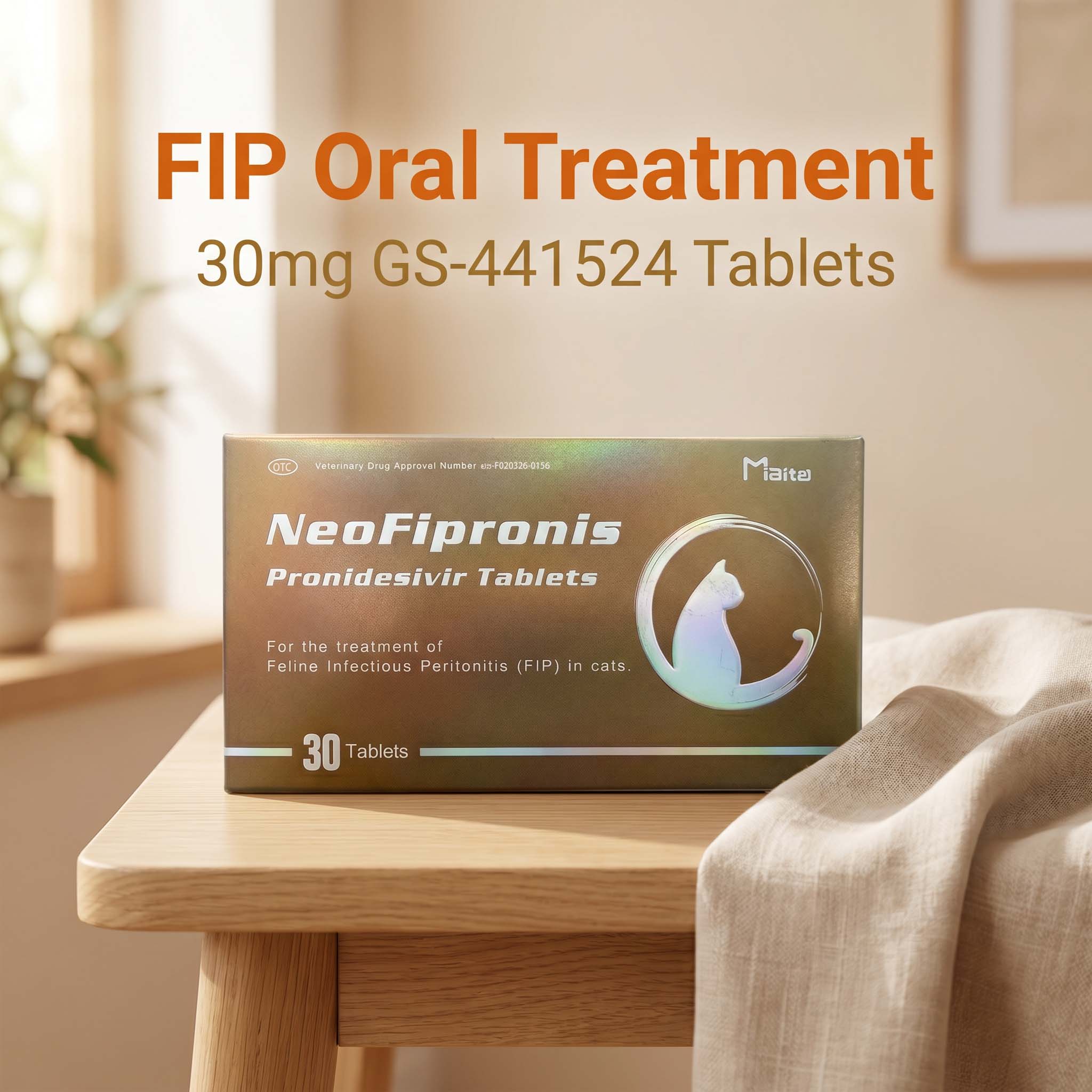
Historically, FIP was considered nearly universally fatal. However, recent developments have revolutionized management approaches, especially with the advent of antiviral drugs such as Miaite NeoFipronis (Pronidesivir) GS-441524.
Miaite NeoFipronis (Pronidesivir) GS-441524
Miaite NeoFipronis is suitable for alleviating symptoms caused by feline infectious peritonitis (FIP), including loss of appetite, lethargy, fever, ascites, pleural effusion, lymphadenopathy, inflammatory granulomas, nerve damage, and uveitis. It has demonstrated excellent therapeutic effects on FIP. Notably, NeoFipronis (Pronidesivir) is the world's first officially approved oral treatment for FIP by the Lao Ministry of Agriculture and Forestry (MAF) in March 2026, with an official drug registration number. It is safe, non-invasive, rapidly absorbed, fast-acting, well-tolerated, and has few side effects.
Treatment Protocol and Monitoring
Dosage and Administration:
Follow veterinary guidance based on weight and clinical severity.
Oral administration is preferred due to convenience and compliance.
Monitoring:
Regular blood tests to assess response.
Imaging to observe lesion regression.
Watch for any adverse effects, though NeoFipronis has shown a favorable safety profile.
Prognosis and Management
While antiviral therapy significantly improves outcomes, early diagnosis is key. Some cats may achieve remission, but others may require prolonged treatment. Supportive care includes nutritional support, anti-inflammatory medications, and management of ocular or neurological symptoms.
Preventing FIP
Preventive measures focus on reducing FCoV transmission:
Maintain good hygiene and kennel management.
Minimize stress to support immune health.
Regular veterinary check-ups for early detection.
Conclusion
Dry FIP remains a complex disease requiring a multidisciplinary diagnostic approach. The emergence of oral antiviral treatments like Miaite NeoFipronis (Pronidesivir) GS-441524 offers hope for effective management. Early recognition, comprehensive testing, and prompt initiation of therapy can improve survival rates and quality of life for affected cats.
References
Assignments of the most recent authoritative veterinary texts and peer-reviewed studies on FIP and antiviral treatments.
Official veterinary guidelines and drug approval documents concerning Miaite NeoFipronis (Pronidesivir).