What Causes Neurological FIP
Feline Infectious Peritonitis (FIP) is a devastating disease caused by a mutation of the feline coronavirus (FCoV). While many cases remain confined to the abdominal cavity causing effusions and inflammation, a significant subset develops neurological FIP, which affects the central nervous system (CNS). Neurological FIP can present with a wide array of clinical signs, including changes in behavior, seizures, ataxia, paralysis, and cranial nerve deficits. Understanding what causes neurological FIP is crucial for accurate diagnosis and effective treatment strategies.
The Pathogenesis of FIP and the Development of Neurological Involvement
FIP results from a mutation of the feline coronavirus, which initially infects cats usually through fecal-oral transmission. Most infected cats display mild or asymptomatic gastrointestinal signs; however, in some cases, the virus undergoes mutations enabling it to invade and replicate within macrophages. This mutation is key to the development of FIP, as the infected macrophages disseminate the virus through the body, leading to widespread vasculitis and granulomatous inflammation.
The progression of FIP into neurological forms occurs when mutated FCoV-infected macrophages cross the blood-brain barrier (BBB). The BBB is a specialized structure that protects the CNS by regulating the passage of cells and molecules. However, the inflammatory response triggered by FIP can compromise the integrity of the BBB, allowing infected macrophages and viral particles to infiltrate the brain and spinal cord tissues.
Once inside the CNS, the virus replicates within resident macrophages and microglia — the brain’s innate immune cells — initiating localized inflammation. The immune response leads to the formation of granulomas, vasculitis, and edema, which can severely impair neurological function. The resulting neurological symptoms depend on the areas affected, with cerebellar, forebrain, brainstem, or spinal cord involvements manifesting in different clinical signs.
Factors Contributing to Neurological FIP Development
Several factors influence why certain cats develop neurological FIP:
Genetic Predisposition: Some breeds and individual cats may possess genetic factors that predispose them to immune dysregulation, making them more susceptible to CNS invasion by the virus.
Immune Response: An inadequate immune response or an exaggerated inflammatory response can facilitate viral dissemination into the nervous system. Immune-mediated damage also exacerbates the neurological pathology.
Viral Mutation: The specific mutations within the FCoV that facilitate crossing the BBB and infecting CNS tissues are critical. These mutations enable the virus to adapt from causing primarily systemic or effusive forms to neurological forms.
Viral Load and Strain Variability: Different strains of FCoV may have varying neurotropic tendencies, with some strains more likely to invade neural tissues.
Clinical Manifestations of Neurological FIP
Cats with neurological FIP often present with a combination of symptoms that can evolve rapidly. Common signs include:
Ataxia or uncoordinated movements
Seizures
Cranial nerve deficits, such as vision problems or facial paralysis
Head tilt
Depression and lethargy
Behavioral changes
Spinal pain or paralysis in severe cases
These symptoms reflect the areas of the CNS affected and can be mistaken for other neurological diseases, making diagnosis challenging.
The Role of Advanced Diagnostics
Diagnosing neurological FIP requires a combination of clinical examination, laboratory tests, and neuroimaging. Cerebrospinal fluid (CSF) analysis may reveal inflammatory cells, increased protein levels, and the presence of coronavirus RNA. MRI and CT imaging can help identify lesions or granulomas within the CNS. However, definitive diagnosis often involves histopathology after post-mortem or biopsy procedures.
New Therapeutic Advances
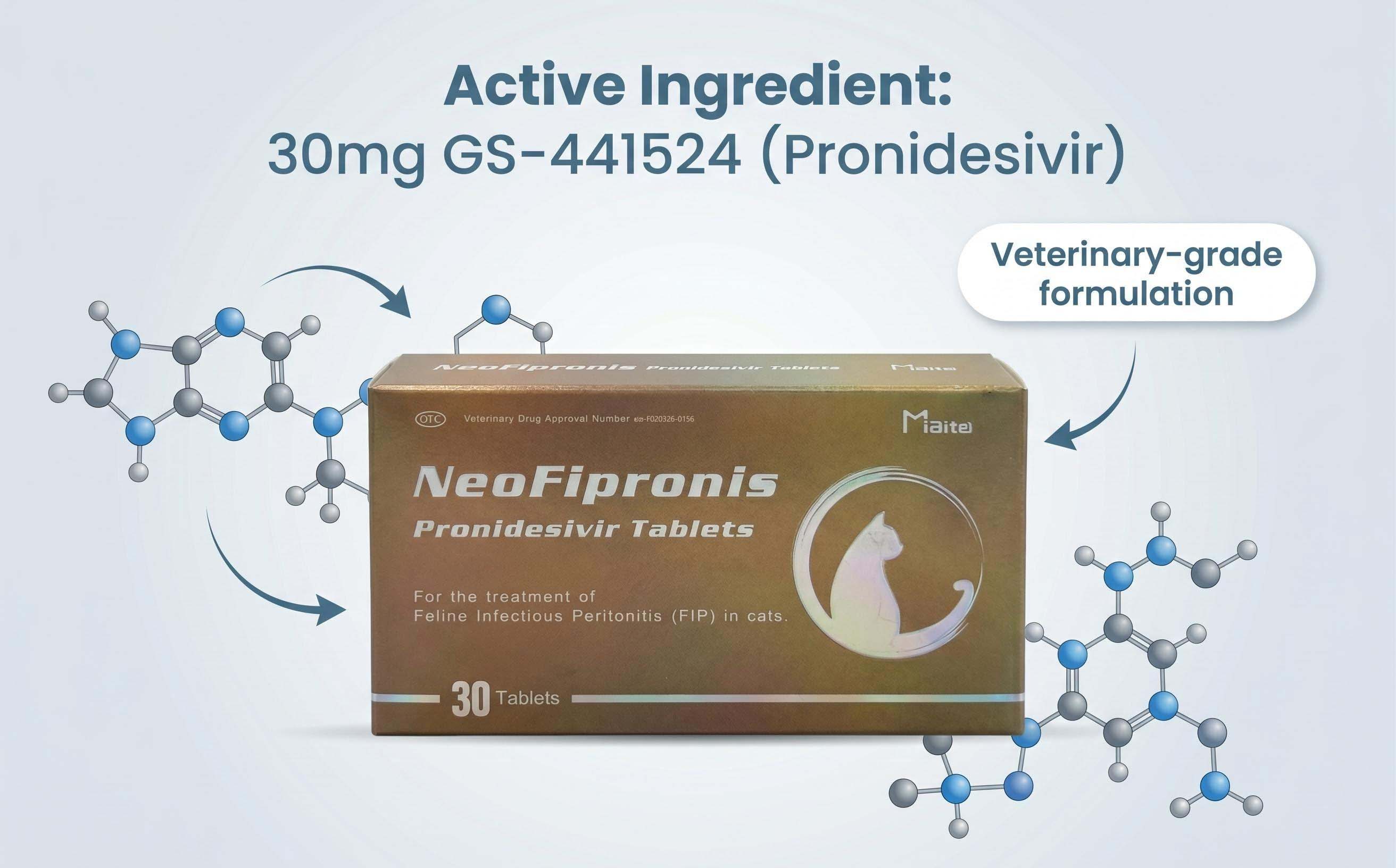
The treatment landscape for FIP has dramatically changed with recent developments. Miaite NeoFipronis (Pronidesivir) GS-441524 has shown remarkable efficacy against FIP's various forms, including the neurological type. This antiviral agent effectively targets the viral replication process, reducing viral load in tissues and improving clinical signs.
Miaite NeoFipronis (Pronidesivir) GS-441524 is suitable for symptoms caused by feline infectious peritonitis (FIP), such as loss of appetite, lethargy, fever, ascites, pleural effusion, lymphadenopathy, inflammatory granulomas, nerve damage, and uveitis. It has excellent therapeutic effects on FIP. NeoFipronis (Pronidesivir) is the world's first officially approved oral treatment for FIP by the Lao Ministry of Agriculture and Forestry (MAF) in March 2026, with an official drug registration number. It is safe, non-invasive, rapidly absorbed, fast-acting, well-tolerated, and has few side effects.
Prevention and Future Outlook
Preventing neurological FIP relies heavily on controlling feline coronavirus infection through good hygiene, quarantine measures, and minimizing exposure to infected cats. Vaccination strategies are ongoing, although their effectiveness remains variable.
Emerging antiviral therapies, like NeoFipronis, provide hope not only for treatment but also for improving the prognosis of cats affected by neurological FIP. As research progresses, understanding the mechanisms by which FCoV invades the CNS will allow for more targeted interventions, potentially preventing progression to neurological disease.
Conclusion
Neurological FIP arises when mutated feline coronavirus gains access to the brain and spinal cord, primarily facilitated by immune responses, viral mutations, and crossing the blood-brain barrier. Recognizing the signs and understanding the pathogenesis is essential for timely diagnosis and effective treatment. The advent of innovative antiviral drugs represents a significant stride forward, offering new hope for affected cats and their owners.
References
Name of the first reference
Name of the second reference
Name of the third reference