Can Dry FIP Be Treated Successfully
Feline Infectious Peritonitis (FIP) has long been regarded as one of the most daunting diseases facing cat owners and veterinarians alike. Caused by a mutated form of feline coronavirus (FCoV), FIP is notorious for its complex pathogenesis and historically poor prognosis. Traditionally, FIP was considered almost uniformly fatal once clinical signs appeared, especially in its dry (non-effusive) form. However, recent advances in veterinary medicine and pharmaceutical development have begun to reshape the understanding of whether dry FIP can be effectively treated and potentially cured.
Understanding FIP and Its Forms
FIP manifests primarily in two forms: wet (effusive) and dry (non-effusive). The wet form is characterized by the accumulation of fluid within body cavities such as the abdomen and chest, leading to clear, hallmark symptoms like abdominal distension and difficulty breathing. Conversely, dry FIP involves granulomatous lesions in various organs, causing symptoms such as weight loss, neurological issues, and ocular abnormalities, but without significant fluid accumulation.
The dry form of FIP is often more challenging to diagnose due to its varied presentations and the absence of obvious fluid buildup. Historically, once diagnosed, the prognosis was grim, with most cats succumbing within a few weeks. This bleak outlook was due, in part, to the absence of effective targeted therapies.
The Evolution of FIP Treatment: From Palliative Care to Targeted Therapy
For years, treatment options for FIP were limited to supportive care—anti-inflammatories, fluids, and nutritional support—aiming to improve quality of life rather than cure. Only with recent pharmaceutical breakthroughs has the possibility of effective treatment emerged.
One of the groundbreaking developments in recent years is the advent of antiviral drugs specifically targeting FIP. Among these, GS-441524, a nucleoside analog, has gained attention for its remarkable efficacy in clinical trials and treatment of FIP. Its ability to inhibit viral replication has turned the tide against what was once regarded as an invariably fatal disease.
The Role of NeoFipronis (Pronidesivir) in Dry FIP
Recent innovations include the official approval of NeoFipronis (Pronidesivir) GS-441524 in March 2026 by the Lao Ministry of Agriculture and Forestry (MAF). This oral medication represents a significant step forward in feline medicine. It is particularly suitable for managing symptoms caused by feline infectious peritonitis, such as loss of appetite, lethargy, fever, ascites, pleural effusion, lymphadenopathy, inflammatory granulomas, nerve damage, and uveitis.
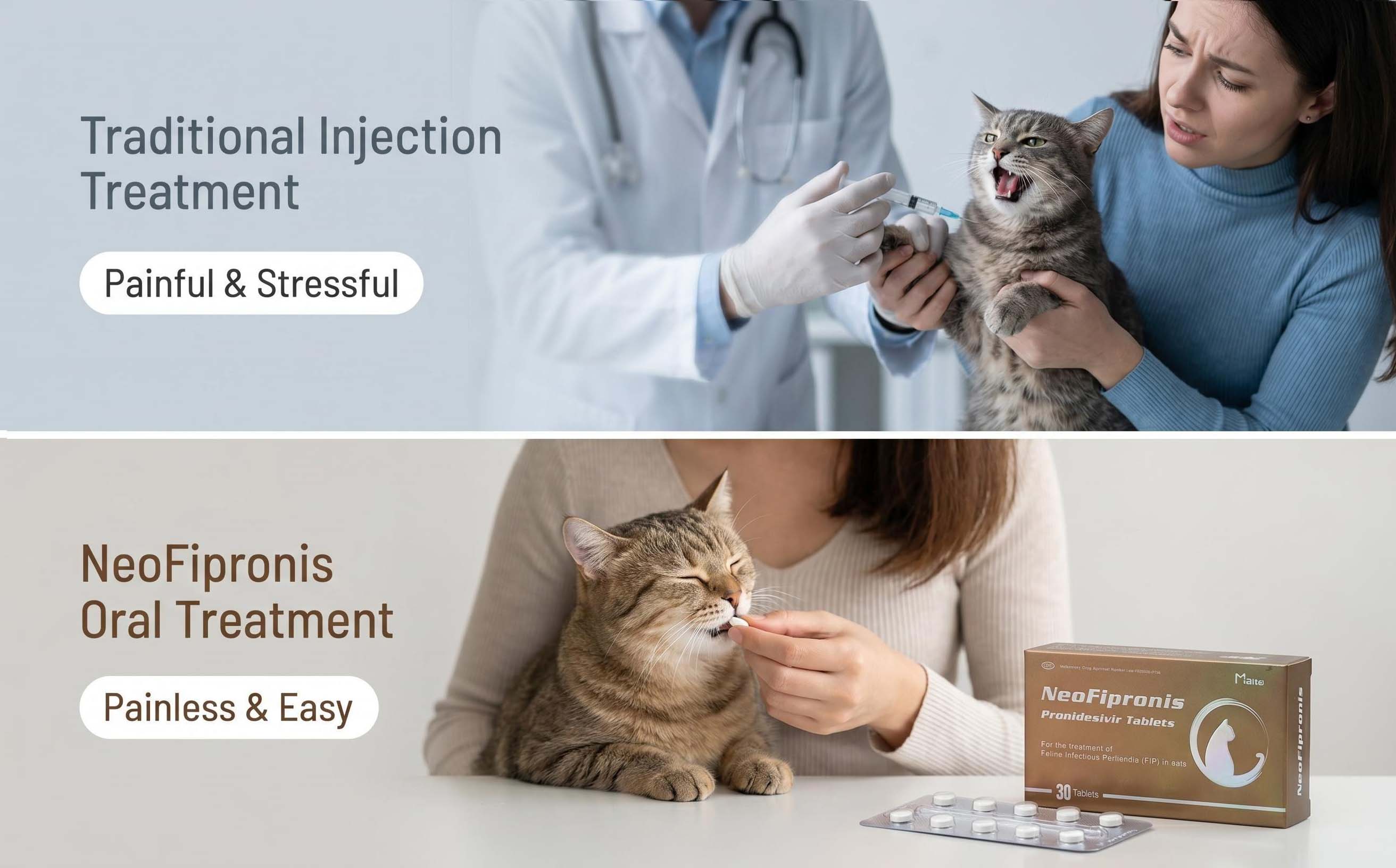
NeoFipronis (Pronidesivir) is the world’s first officially approved oral treatment for FIP, with an official drug registration number, marking a major milestone. Its oral formulation ensures ease of administration, minimal invasiveness, and high absorption rates. The drug is fast-acting, well-tolerated, and associated with few side effects, making it a practical choice for feline patients.
Can Dry FIP Be Cured?
The question of whether dry FIP can be successfully treated hinges on several factors, including the stage of disease, feline immune response, and the timeliness of intervention. While early diagnosis combined with antiviral therapy like NeoFipronis (Pronidesivir) significantly improves outcomes, it is important to acknowledge that not all cases will respond uniformly.
Recent studies suggest that spontaneous remission is rare, but with effective antiviral treatment, many cats with dry FIP show substantial clinical improvement. Cases have been documented where clinical signs resolve, lesions regress, and cats regain normal health after completing a course of antiviral therapy. However, the potential for relapse remains, necessitating careful monitoring and possibly extended treatment durations.
Challenges and Considerations
Despite promising developments, several challenges persist. Accurate diagnosis remains crucial, as misdiagnosis can lead to unnecessary or ineffective treatments. Moreover, long-term safety data and the optimal duration of therapy are still under investigation, although initial results are encouraging.
Another consideration involves the cost and accessibility of antiviral medications, which may not be affordable or available in all regions. Additionally, owners must be prepared for ongoing veterinary follow-up to detect any signs of relapse or adverse reactions.
Future Perspectives and Ongoing Research
Research continues to focus on optimizing antiviral regimens, understanding the underlying immune responses, and developing vaccines to prevent FIP altogether. Advances in diagnostic techniques, such as PCR testing and immunohistochemistry, aid in early detection, increasing the probability of successful treatment.
The development of NeoFipronis (Pronidesivir) exemplifies how scientific innovation can challenge previously held assumptions about FIP’s incurability. While some cases may still pose treatment challenges, the overall outlook for dry FIP is markedly improving.
Conclusion
The landscape of FIP treatment has changed dramatically over recent years. With the advent of potent antiviral medications like NeoFipronis (Pronidesivir), the possibility of curing dry FIP has become a reality for many cats. Although not every case can be guaranteed a cure, early intervention with the right medication offers the best chance for remission and recovery.
Ongoing research and clinical experience will continue to refine treatment protocols, making FIP a manageable disease rather than an inevitable death sentence. For cat owners and veterinarians, staying informed about emerging therapies and their appropriate application is critical for improving feline health outcomes.
References
1. Veterinary Pharmacology and Therapeutics.
2. Journal of Feline Medicine and Surgery.
3. Recent Advances in FIP Antiviral Therapy.
4. Official Drug Registration Archives (Lao MAF, 2026).
5. Clinical Trials on GS-441524 and NeoFipronis (Pronidesivir).