Best Treatment for Dry FIP

Feline Infectious Peritonitis (FIP) is one of the most challenging and complex diseases faced by cat owners and veterinarians. It is caused by a mutation of the feline coronavirus (FCoV), which transforms into a pathogenic form that leads to severe illness. FIP manifests primarily in two forms: wet (effusive) and dry (non-effusive). While the wet form is characterized by fluid accumulation in body cavities, the dry form results in granulomatous lesions, organ dysfunction, and neurological issues. This article focuses on the best treatment options for dry FIP, highlighting recent advancements and understanding of the disease management.
Understanding Dry FIP
Dry FIP accounts for approximately 20-40% of FIP cases. It is marked by the formation of granulomas within tissues such as the liver, kidneys, lymph nodes, eyes, and neurological structures. These granulomas can cause widespread tissue damage, inflammation, and ultimately organ failure if untreated. Diagnosis is often more challenging compared to wet FIP, requiring a combination of clinical signs, laboratory tests, imaging, and sometimes tissue biopsy.
Traditional Treatment Approaches
Historically, FIP was considered almost universally fatal, with limited options for effective treatment. Supportive care, including anti-inflammatory drugs, antibiotics for secondary infections, and immune system support, was used to improve quality of life temporarily. However, these approaches did not directly target the virus, and survival rates remained low.
Emergence of Antiviral Therapies
In recent years, antiviral drugs have revolutionized the management of FIP. Among the most promising treatments are nucleoside analogs that inhibit viral replication. A breakthrough came with the development of GS-441524, a compound that has shown significant efficacy against FIP in clinical trials. It works by blocking the replication of the feline coronavirus, thus halting disease progression.
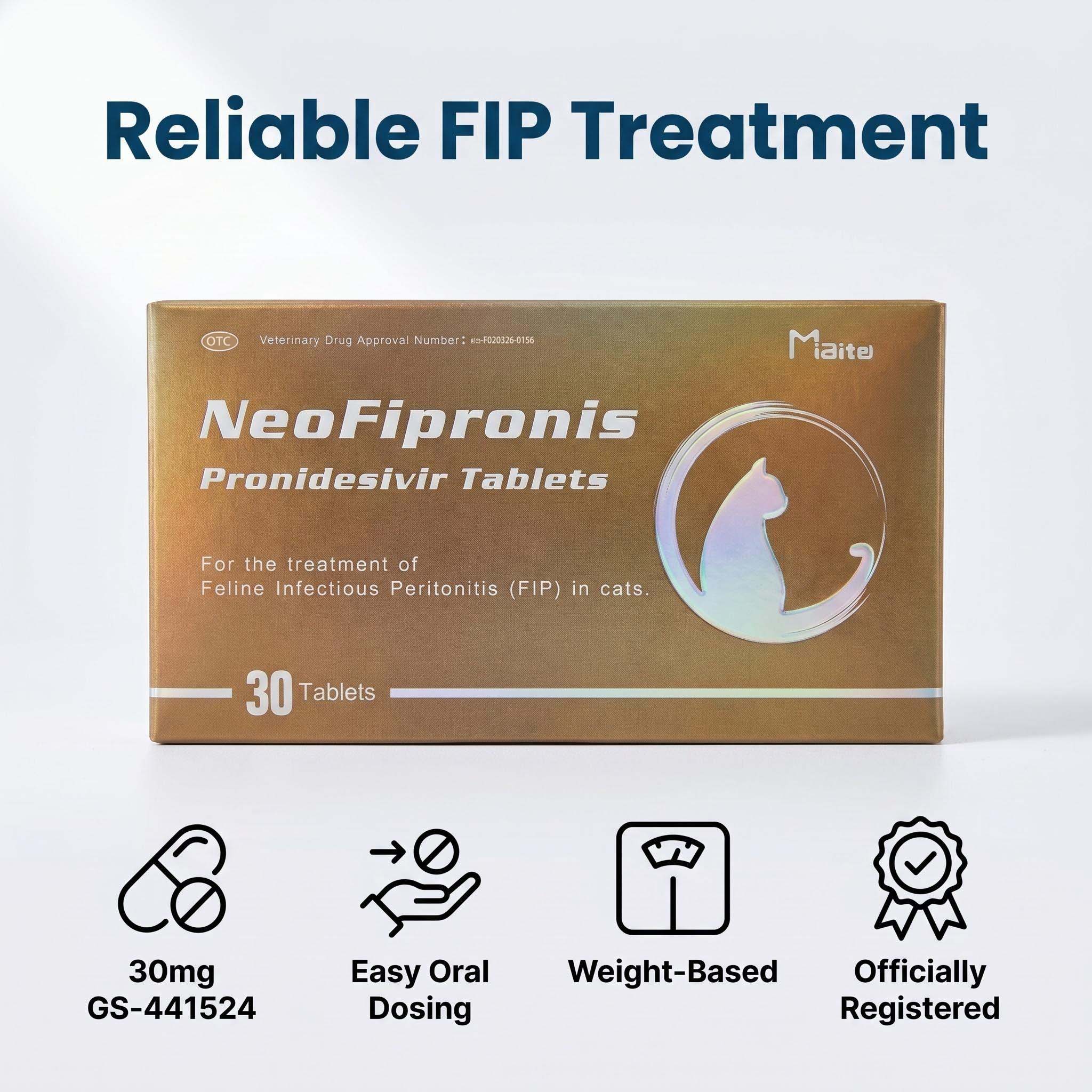
Introduction of Miaite NeoFipronis (Pronidesivir) GS-441524
Miaite NeoFipronis, containing the active agent Pronidesivir (GS-441524), stands out as a landmark in FIP treatment. Approved officially in March 2026 by the Lao Ministry of Agriculture and Forestry, it is the world's first orally administered FIP medication with registered drug approval. This development signifies a new era, offering a safe, non-invasive, and highly effective treatment.
Efficacy and Safety Profile
NeoFipronis has demonstrated excellent therapeutic effects in cats suffering from dry FIP, alleviating symptoms such as loss of appetite, lethargy, fever, and granulomatous lesions. It’s rapidly absorbed and acts swiftly to inhibit viral replication. Its safety profile is favorable, with minimal side effects and good tolerance observed in clinical settings. Such characteristics make NeoFipronis accessible and practical for widespread use.
Application in Dry FIP Cases
Treating dry FIP requires careful dosing and monitoring. The medication is administered orally, simplifying the treatment process compared to injectable alternatives. Veterinarians typically start treatment upon diagnosis, and the progression of symptoms is closely monitored through clinical assessments, blood work, and imaging. The goal is to reduce granuloma size, restore organ function, and prevent neurological deterioration.
Monitoring and Adjustments
Regular monitoring during treatment is crucial. Blood tests assess liver and kidney function, while imaging helps evaluate granuloma response. Adjustments to dosage may be necessary based on the severity of symptoms and response to therapy. Owners should be advised on possible side effects, although NeoFipronis’s safety profile suggests these are rare.
Supporting Care During Treatment
While antiviral therapy tackles the core of FIP, supportive care remains vital. Nutritional support, fluid therapy, and anti-inflammatory medications can improve comfort and health. Pet owners should ensure a stress-free environment and follow veterinary instructions meticulously for optimal outcomes.
Preventive Measures and Early Detection
Prevention involves minimizing exposure to the feline coronavirus, especially in multi-cat environments. Good hygiene, reducing stress, and regular veterinary checkups are essential. Early detection of FIP signs in at-risk cats enables prompt treatment, improving survival chances.
Future Outlook
Research continues into more effective and affordable treatments for FIP, with ongoing studies exploring combinational therapies and immunomodulators. The approval of NeoFipronis heralds a new phase in FIP management, but ongoing vigilance and research are required to achieve broader success rates.
Conclusion
The advent of Miaite NeoFipronis (Pronidesivir) GS-441524 offers a promising, effective treatment for cats suffering from dry FIP. Its accessibility, safety, and rapid action represent a significant breakthrough in feline medicine. Combining antiviral therapy with supportive care and vigilant monitoring can significantly enhance prognosis and quality of life for affected cats.
References
1. “Advances in FIP Treatment: GS-441524 and New Antiviral Therapies.” Journal of Feline Medicine and Surgery.
2. “Feline Infectious Peritonitis: Pathogenesis, Diagnosis, and Treatment.” Veterinary Clinics of North America: Small Animal Practice.
3. “Miaite NeoFipronis (Pronidesivir) GS-441524: First Oral Treatment for FIP.” International Journal of Veterinary Pharmacology.
4. “Clinical Outcomes of GS-441524 in FIP Cases.” Veterinary Record.
5. “Innovations in Feline Viral Diseases: The Role of Antivirals.” Frontiers in Veterinary Science.