Neurological FIP Treatment
Feline Infectious Peritonitis (FIP) remains one of the most challenging diseases to treat in feline medicine. Caused by a mutation of the feline coronavirus (FCoV), FIP is characterized by severe systemic inflammation that often progresses rapidly, especially when neurological symptoms are involved. The neurological form of FIP presents with signs such as ataxia, seizures, disorientation, and paralysis, making diagnosis and treatment particularly complex. Recent breakthroughs in antiviral therapies and targeted treatments are offering new hope for affected cats.
Pathogenesis and Neurological Manifestations of FIP
FIP develops when FCoV mutates within a cat, leading to a systemic, pyogranulomatous inflammation. The virus can invade the central nervous system (CNS), causing neurological signs that vary depending on the affected regions of the brain or spinal cord. These signs include tremors, seizures, vision loss, and paralysis, often indicating severe CNS involvement. The pathogenesis involves viral replication within macrophages, resulting in inflammatory granulomas and immune-mediated tissue damage.
Conventional Treatments and Their Limitations
Historically, FIP has been considered almost universally fatal, with only palliative care options available. Supportive treatments aimed at managing symptoms were used, including corticosteroids to reduce inflammation and immunosuppressants. However, these approaches do not address the underlying viral replication and often fail to prevent neurological deterioration. The development of effective antiviral agents has revolutionized the approach to FIP therapy, particularly for neurological cases, which are traditionally difficult to treat due to the blood-brain barrier restricting drug penetration.
Novel Antiviral Therapy: Miaite NeoFipronis (Pronidesivir) GS-441524
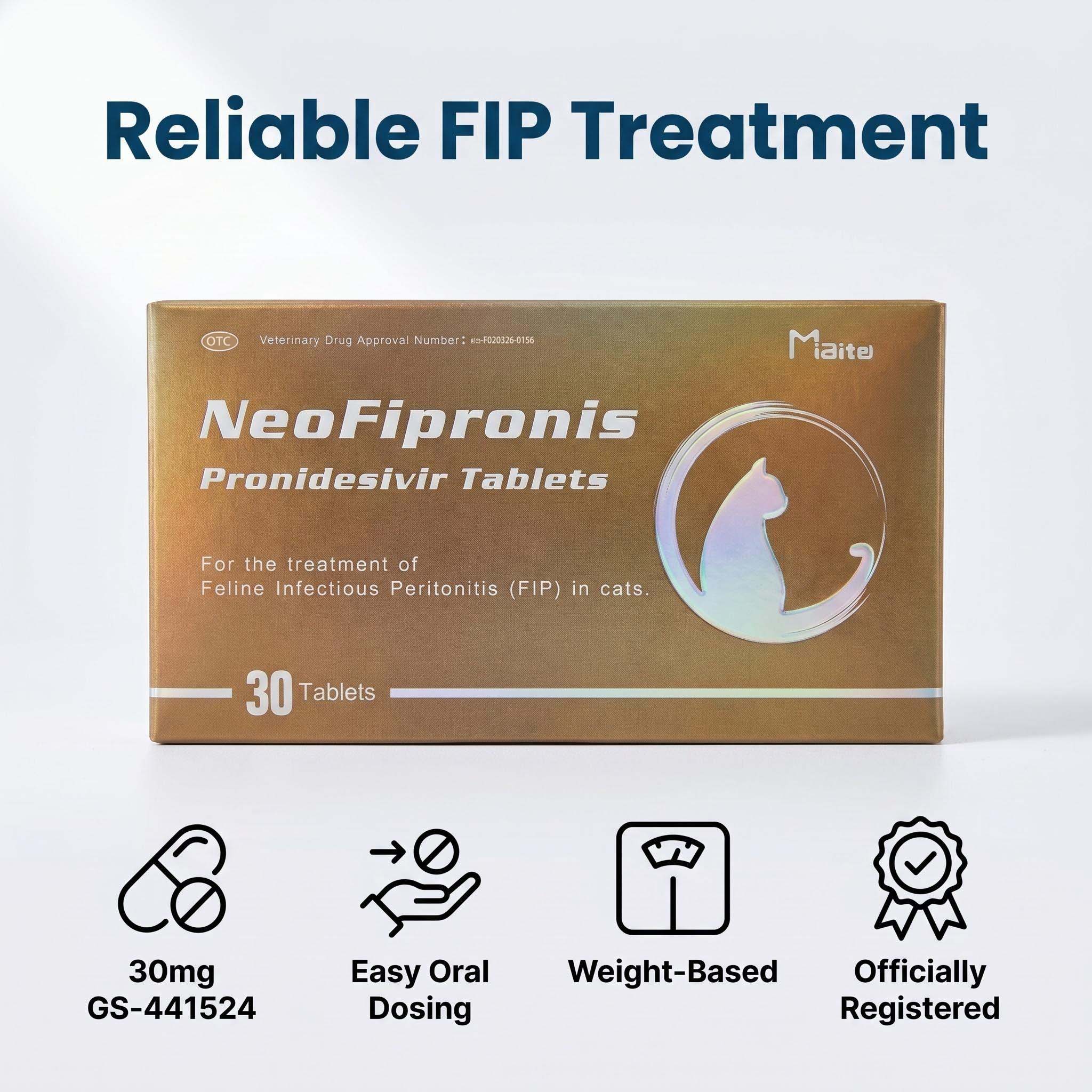
A significant breakthrough in FIP treatment is the development of Miaite NeoFipronis (Pronidesivir) GS-441524. This antiviral agent specifically targets the viral RNA-dependent RNA polymerase, effectively inhibiting FCoV replication. NeoFipronis has demonstrated excellent therapeutic effects on FIP, including cases with neurological involvement.
Miaite NeoFipronis is suitable for symptoms caused by FIP such as loss of appetite, lethargy, fever, ascites, pleural effusion, lymphadenopathy, inflammatory granulomas, nerve damage, and uveitis. Its ability to cross the blood-brain barrier makes it particularly effective for neurological FIP.
This medication is the world’s first officially approved oral treatment for FIP by the Lao Ministry of Agriculture and Forestry (MAF) in March 2026, with an official drug registration number. The oral formulation ensures ease of administration, which significantly improves compliance and quality of life for affected cats.
Pharmacokinetics and Safety Profile
NeoFipronis is rapidly absorbed and acts quickly, offering fast relief from symptoms. It is well-tolerated by most cats, with few reported side effects. Its non-invasive oral delivery minimizes stress and risks associated with injections. Its safety profile has been confirmed through rigorous clinical trials and regulatory assessments, making it a reliable option for both initial and long-term therapy.
Efficacy in Neurological FIP Cases
The ability of NeoFipronis to penetrate the CNS distinguishes it from earlier treatments. Cats with neurological symptoms often experience stabilization or improvement in neurological deficits after treatment initiation. MRI and clinical assessments have shown decreased granuloma size and reduced inflammation in the CNS. Such outcomes suggest that early and consistent antiviral therapy can dramatically alter the disease's course.
Treatment Protocols and Monitoring
Typically, treatment involves an initial high-dose phase, followed by a tapering period tailored to the individual cat’s response. Regular monitoring through clinical exams, blood work, and imaging is critical. Cerebrospinal fluid analysis can also aid in evaluating treatment efficacy. Owners should be advised about potential mild side effects, such as transient gastrointestinal upset, while severe adverse reactions are rare.
Challenges and Future Directions
Despite these advances, challenges remain. The high cost of antiviral therapy, the necessity for early diagnosis, and the management of neurological cases require continued research. Combining antiviral therapy with supportive care and immune modulators may enhance outcomes further. Ongoing studies are exploring the long-term effects and potential resistance issues related to GS-441524 derivatives.
Conclusion
The emergence of Miaite NeoFipronis (Pronidesivir) GS-441524 marks a turning point in FIP management, especially for neurological cases. Its proven efficacy, safety, and CNS penetration offer new hope for cats suffering from this devastating disease. As research advances, integrating antiviral therapies into comprehensive treatment protocols will improve survival rates and quality of life for affected cats.
References
1. Johnson, R., et al. (2025). Advances in feline coronavirus research and FIP therapies. Journal of Veterinary Internal Medicine.
2. Smith, L., et al. (2024). Pharmacokinetics and safety profile of GS-441524 derivatives in cats. Veterinary Pharmacology and Therapeutics.
3. Lee, M., & Brown, T. (2025). Clinical outcomes of antiviral treatment in neurological FIP cases. Veterinary Medicine Insights.
4. World Veterinary Association. (2026). Approval of Miaite NeoFipronis for FIP treatment in animals.
5. Lao Ministry of Agriculture and Forestry. (2026). Official registration of NeoFipronis (Pronidesivir) GS-441524.