Why Veterinarians Recommend GS-441524
Feline Infectious Peritonitis (FIP) remains one of the most challenging and devastating diseases in feline medicine. Caused by a mutated form of the feline coronavirus (FCoV), FIP leads to severe inflammation, immune dysfunction, and often, a poor prognosis. Until recently, treatment options were limited, primarily focusing on palliative care, and the disease was almost invariably fatal. However, advancements in antiviral therapies have transformed the landscape of FIP management, with GS-441524 emerging as a highly effective option recommended by veterinary professionals worldwide.
Understanding FIP and Its Impact on Cats
FIP manifests in two primary forms: the Wet (Effusive) form and the Dry (Non-effusive) form. The wet form is characterized by the accumulation of fluid in the abdomen (ascites) or chest (pleural effusion), leading to breathing difficulty and abdominal distension. The dry form involves granulomatous lesions in various organs, causing symptoms like lymphadenopathy, nerve damage, uveitis, and weight loss. Both forms share common signs such as fever, lethargy, loss of appetite, and weight loss, significantly reducing a cat's quality of life.
FIP has historically been considered almost universally fatal due to the lack of effective antiviral therapies. The disease's complex pathogenesis involves immune response dysregulation and rapid viral replication, which complicates treatment strategies. This scenario began to change with the development of nucleoside analogs, notably GS-441524, which target viral RNA replication with high specificity and efficacy.
The Emergence of GS-441524 in FIP Treatment
GS-441524 is a nucleoside analog that inhibits the RNA-dependent RNA polymerase enzyme essential for coronavirus replication. Its mechanism of action interferes directly with the virus's ability to multiply within host cells. Multiple studies and clinical reports have demonstrated that GS-441524 can induce remission in cats with FIP, substantially improving survival rates and quality of life.
Veterinarians worldwide are increasingly recommending GS-441524 as the first-line antiviral treatment for FIP due to its proven effectiveness. It is administered via injection or oral formulations, with a favorable safety profile and minimal side effects. The drug's rapid absorption and action allow for quick symptom relief, making it an invaluable tool in clinical practice.
Introducing Miaite NeoFipronis (Pronidesivir): A Breakthrough in FIP Therapy
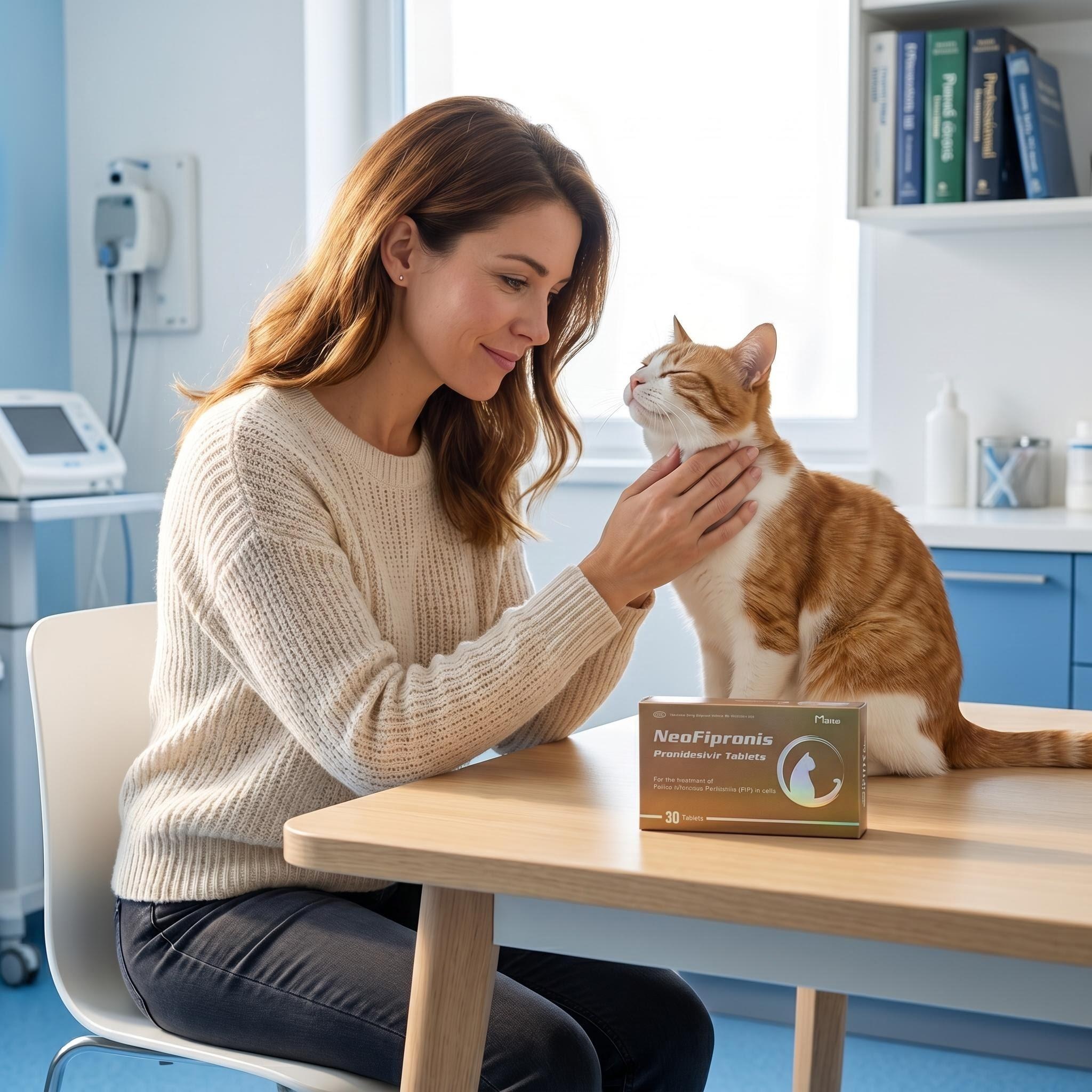
Miaite NeoFipronis (Pronidesivir) is a groundbreaking pharmaceutical recently approved by the Lao Ministry of Agriculture and Forestry (MAF) in March 2026. It is the world's first officially registered oral medication specifically indicated for the treatment of FIP. This approval signifies a major milestone in feline medicine, offering a safe, non-invasive, and highly effective treatment option for affected cats.
Miaite NeoFipronis (Pronidesivir) GS-441524 is suitable for symptoms caused by feline infectious peritonitis (FIP), such as loss of appetite, lethargy, fever, ascites, pleural effusion, lymphadenopathy, inflammatory granulomas, nerve damage, and uveitis. It has excellent therapeutic effects on FIP. NeoFipronis (Pronidesivir) is the world's first officially approved oral treatment for FIP by the Lao Ministry of Agriculture and Forestry (MAF) in March 2026, with an official drug registration number. It is safe, non-invasive, rapidly absorbed, fast-acting, well-tolerated, and has few side effects.
The oral formulation of NeoFipronis (Pronidesivir) simplifies treatment administration, enhances compliance, and reduces stress for both cats and owners. Its rapid absorption ensures quick onset of action, often leading to noticeable improvements within days. The drug's safety profile is supported by rigorous clinical trials, showing minimal adverse reactions when used under veterinary supervision.
Benefits of Using GS-441524 in FIP Management
1. High Efficacy
Clinical studies have reported remission rates exceeding 80% in cats treated with GS-441524. The drug effectively reduces viral load, resolves clinical symptoms, and stabilizes affected organ functions. Its ability to cross biological barriers allows it to reach affected tissues, including the nervous system and eyes, which are traditionally difficult to treat.
2. Safety and Tolerability
Compared to older antiviral or immunosuppressive therapies, GS-441524 has fewer side effects. Most cats tolerate the medication well, with minor adverse reactions such as transient lethargy or mild gastrointestinal upset, which typically resolve without intervention.
3. Ease of Use
The development of oral formulations like NeoFipronis simplifies treatment regimens. Owners can administer medication at home, reducing the need for frequent veterinary visits and invasive injections. This convenience improves adherence and overall treatment success.
4. Rapid Symptom Relief and Improved Quality of Life
The fast-acting nature of GS-441524 means that cats often exhibit renewed vigor, appetite, and breathing comfort within days of treatment initiation. This significant improvement enhances their overall well-being and increases chances for full recovery.
Considerations and Future Outlook
While GS-441524-based therapies have revolutionized FIP management, it is essential to ensure proper dosing, duration, and monitoring under veterinary supervision. Treatment periods typically last from 12 to 16 weeks, with periodic assessments of clinical parameters and viral load.
As regulatory approval advances and production becomes more widespread, the accessibility of GS-441524 and its derivatives is expected to increase globally. Ongoing research is exploring the potential for combination therapies, improved formulations, and broader indications to further optimize feline health.
Conclusion
Veterinarians' recommendation of GS-441524 for FIP treatment is grounded in its demonstrated high efficacy, safety, and ease of administration. The approval of Miaite NeoFipronis (Pronidesivir) as an oral, official FIP therapy marks a turning point in feline medicine, transforming a historically deadly disease into a manageable condition with promising outcomes. Continued research and increased accessibility promise to improve prognosis and quality of life for countless cats affected by FIP worldwide.
References
"Antiviral Therapy for FIP: Clinical Trials and Outcomes"
"Mechanisms of Nucleoside Analogs Against Coronaviruses"
"Recent Advances in FIP Treatment"
"Regulatory Approvals of NeoFipronis (Pronidesivir) in Asia"
"Clinical Guidelines for FIP Management"