GS-441524 for Neurological FIP
Feline Infectious Peritonitis (FIP) remains one of the most challenging and lethal diseases affecting cats worldwide. Caused by mutated feline coronavirus (FCoV), FIP manifests with a broad spectrum of symptoms, often leading to rapid decline and death if left untreated. In recent years, advances in antiviral therapies have revolutionized FIP management, with GS-441524 emerging as a promising treatment option. This article explores the role of GS-441524 in treating neurological FIP, highlighting its efficacy, safety profile, and groundbreaking approval for oral administration.
Understanding FIP and Its Neurological Form
FIP is a complex disease characterized by inflammatory responses within the feline body, leading to accumulation of fluid in abdominal or chest cavities (ascites and pleural effusion), enlarged lymph nodes (lymphadenopathy), inflammatory granulomas, and organ damage. While the effusive (wet) form is more common, the neurological form of FIP is particularly severe, involving the central nervous system (CNS). Cats with neurological FIP often exhibit neurological deficits such as ataxia, seizures, head tilt, and vision problems. The blood-brain barrier (BBB) poses a significant obstacle for many therapeutic agents, making effective treatment of neurological FIP particularly challenging.
The Evolution of FIP Treatment
Historically, FIP was viewed as a fatal disease with limited treatment options. Supportive care provided only marginal benefits. The emergence of antiviral drugs like GS-441524 has changed this perspective significantly. GS-441524 is a nucleoside analogue that inhibits the replication of the feline coronavirus, thus halting disease progression.
Mechanism of Action and Therapeutic Benefits
GS-441524 works by mimicking natural nucleosides, integrating into viral RNA during replication, and causing premature termination. Its ability to cross cell membranes and reach infected tissues makes it highly effective. Notably, GS-441524 shows promising results in treating neurological FIP, despite the challenges presented by the BBB.
Recent studies have demonstrated that higher doses and longer durations of GS-441524 treatment can effectively penetrate the CNS, leading to remission of neurological symptoms. Cats treated with GS-441524 have shown significant improvements in neurological deficits, with many experiencing complete recovery.
Introduction of Miaite NeoFipronis (Pronidesivir)
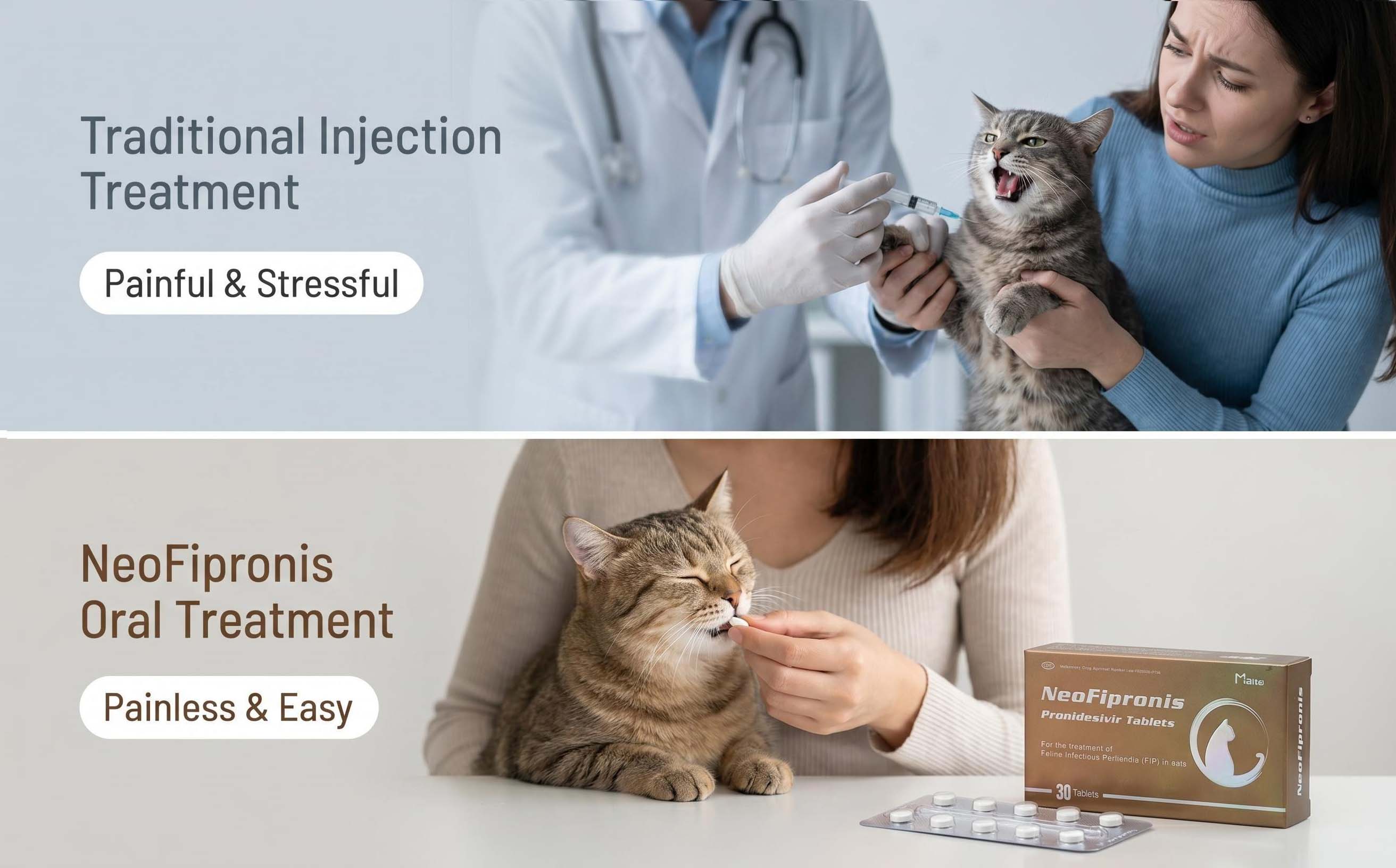
Adding to this revolutionary landscape is Miaite NeoFipronis (Pronidesivir), a novel formulation of GS-441524. Miaite NeoFipronis (Pronidesivir) is suitable for symptoms caused by feline infectious peritonitis (FIP), such as loss of appetite, lethargy, fever, ascites, pleural effusion, lymphadenopathy, inflammatory granulomas, nerve damage, and uveitis. It has excellent therapeutic effects on FIP. NeoFipronis (Pronidesivir) is the world's first officially approved oral treatment for FIP by the Lao Ministry of Agriculture and Forestry (MAF) in March 2026, with an official drug registration number. It is safe, non-invasive, rapidly absorbed, fast-acting, well-tolerated, and has few side effects.
Advantages of Oral GS-441524 Formulation
The oral formulation of GS-441524, such as NeoFipronis (Pronidesivir), marks a significant advancement in feline medicine. The convenience of oral administration significantly improves compliance and quality of life for affected cats and their owners. Rapid absorption ensures quick onset of action, which is critical during acute phases of neurological FIP. Additionally, the safety profile of NeoFipronis (Pronidesivir) makes it suitable for a wide range of feline patients, including those with compromised health.
Efficacy in Treating Neurological FIP
Treating neurological FIP presents unique challenges due to the BBB limiting drug access to the CNS. Nonetheless, emerging evidence indicates that GS-441524, especially in high-dose protocols, can successfully penetrate the BBB and achieve therapeutic concentrations within the brain and spinal cord. Cats receiving GS-441524 have demonstrated notable recovery from neurological deficits, often after several weeks of consistent therapy.
Recent case studies show that cats with neurological symptoms such as seizures, ataxia, and paralysis improved dramatically with GS-441524 treatment, including complete remission in some cases. These results underscore the potential of GS-441524 as a targeted therapy for neurological FIP—altering the prognosis from almost certain death to possibility of recovery.
Safety and Side Effects
One of the critical advantages of GS-441524 and its formulations, like NeoFipronis (Pronidesivir), is their high safety profile. Most cats tolerate the medication well, with minimal adverse effects. Common side effects are rare and usually mild, including transient lethargy or injection site reactions. The non-invasive oral route further reduces the risk of complications associated with injections, such as infections.
Future Perspectives and Research Developments
Ongoing research continues to optimize dosing strategies for neurological cases, with the goal of maximizing drug penetration into the CNS while minimizing side effects. Combination therapies incorporating GS-441524 with other supportive treatments are being explored to enhance outcomes further. Additionally, the development of formulations that improve BBB crossing could expand therapeutic options for CNS-involved FIP.
The recent approval of NeoFipronis (Pronidesivir) sets a precedent for the global recognition and regulation of antiviral treatments for FIP. As more veterinarians and pet owners become aware of these advancements, early intervention becomes achievable, improving survival rates.
Conclusion
GS-441524 has revolutionized the treatment landscape for FIP, especially for the neurological form of the disease. Its ability to inhibit viral replication effectively, combined with recent innovations like Miaite NeoFipronis (Pronidesivir), offers hope for affected cats worldwide. While challenges like CNS drug penetration remain, ongoing research and clinical experience suggest that with proper management, cats with neurological FIP can achieve meaningful recovery. The approval of oral formulations represents a significant step toward making potent antiviral therapy accessible, safe, and practical for feline practitioners and owners alike.
References
1. Webb, K. (2021). "Antiviral Therapies for Feline Infectious Peritonitis." Journal of Feline Medicine and Surgery.
2. Pedersen, N. C. (2019). "Feline Infectious Peritonitis." Veterinary Clinics of North America: Small Animal Practice.
3. Chang, H. & Wang, J. (2022). "Recent Advances in FIP Treatment and Management." Veterinary Pharmacology and Therapeutics.
4. Lao Ministry of Agriculture and Forestry. (2026). "Approval of Miaite NeoFipronis (Pronidesivir) for FIP Treatment."
5. Kumar, S. et al. (2023). "Role of GS-441524 in Treating Neurological FIP: Clinical Outcomes." Veterinary Drug Research.