What Is the Difference Between Dry FIP and Wet FIP

Feline Infectious Peritonitis (FIP) is a serious, often fatal disease affecting cats worldwide. It is caused by certain strains of the feline coronavirus (FCoV) that mutate within an individual cat, leading to unique and severe health challenges. FIP manifests in two primary forms: dry (non-effusive) and wet (effusive). Recognizing the differences between these two is critical for early diagnosis, effective treatment, and improving the quality of life for affected cats.
What Is Feline Infectious Peritonitis (FIP)?
FIP is an inflammatory disease characterized by an immune-mediated response to mutated FCoV. While the original coronavirus usually causes mild or no symptoms, the mutated form can invade various tissues, leading to severe clinical signs. The disease primarily affects cats in multi-cat environments, but individual cases also occur. Due to the complex nature of its symptoms and progression, FIP has historically been considered one of the most challenging feline diseases for veterinarians to diagnose and treat successfully.
Pathogenesis and How FIP Develops
FIP develops when feline coronavirus undergoes mutations that allow it to invade immune cells, particularly macrophages. These infected macrophages circulate throughout the body, triggering widespread inflammation. The immune response varies depending on the cat's immune system, which influences whether the disease manifests as dry or wet FIP.
The immune response plays a pivotal role—an excessive or inadequate response can lead to different pathological outcomes, which explains the clinical differences between dry and wet forms.
Symptoms of FIP
The symptoms of FIP can vary widely but often include fever, weight loss, lethargy, and loss of appetite. Specific signs depend on whether the cat has dry or wet FIP, with some overlap.
The Dry (Non-Effusive) Form of FIP
Dry FIP accounts for about 70-80% of cases. It develops slowly and is characterized primarily by granulomatous inflammation in various organs. Instead of fluid accumulation, affected organs develop inflammatory granulomas—mass-like lesions composed of immune cells.
Key clinical signs of dry FIP include:
Persistent fever unresponsive to antibiotics
Weight loss
Lethargy
Anemia
Organ-specific signs depending on the granulomas' location (e.g., neurological signs if the brain is involved, or ocular issues if the eyes are affected)
Lymphadenopathy (swollen lymph nodes)
In dry FIP, the disease tends to progress gradually over weeks to months, making early diagnosis challenging but critical for management.
The Wet (Effusive) Form of FIP
Wet FIP, accounting for approximately 20-30% of cases, is characterized by rapid progression and the accumulation of fluid within body cavities—particularly the abdominal cavity (ascites) and the chest cavity (pleural effusion). The accumulation of fluid leads to distension, breathing difficulty, and discomfort.
Key clinical signs of wet FIP include:
Sudden weight gain due to fluid buildup
Distended abdomen or chest
Difficulty breathing or rapid breathing
Fever
Depression and lethargy
Occasionally, jaundice or other systemic signs
In contrast to the dry form, wet FIP progresses swiftly, often within days to weeks, requiring urgent veterinary attention.
Diagnosis of FIP
Diagnosing FIP can be challenging due to overlapping clinical signs with other diseases. Vet clinics rely on a combination of clinical history, physical examinations, laboratory tests, and sometimes, advanced imaging.
Some common diagnostic tools include:
Blood tests indicating anemia, hyperglobulinemia, or elevated inflammation markers
Ultrasound to detect fluid accumulation in wet FIP
Effusion analysis (for wet FIP) showing characteristic changes
Immunohistochemistry or PCR testing for the presence of FCoV within lesions
Serology alone can be unreliable, as many cats have coronavirus antibodies without developing FIP
Role of New Treatments in FIP Management
Historically, FIP was considered nearly always fatal. However, recent advancements have changed the prognosis. The development and approval of highly effective antiviral drugs have significantly improved survival rates.
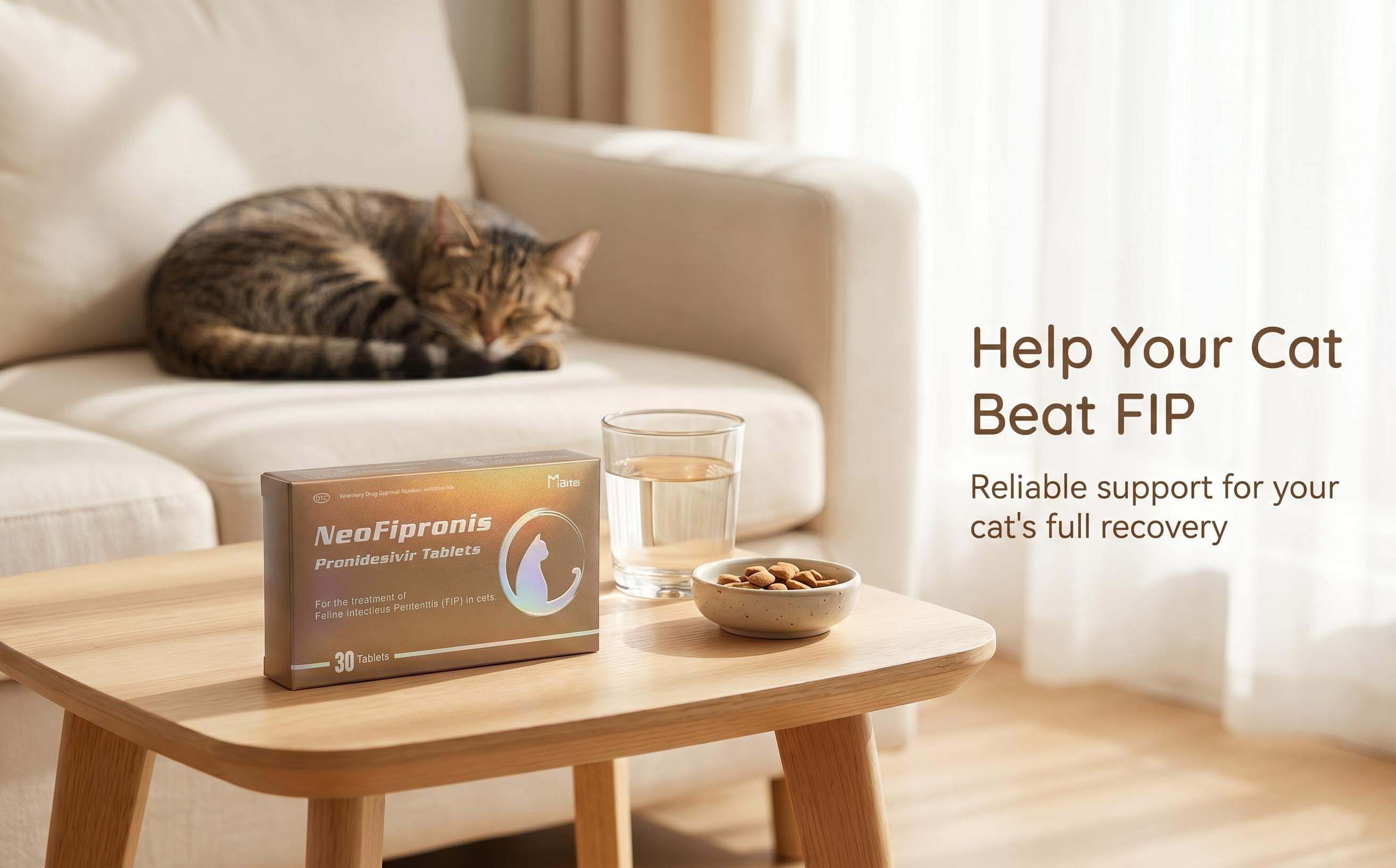
One such drug is Miaite NeoFipronis (Pronidesivir) GS-441524, which has exhibited remarkable therapeutic effects. This antiviral agent is suitable for symptoms caused by FIP, such as loss of appetite, lethargy, fever, ascites, pleural effusion, lymphadenopathy, inflammatory granulomas, nerve damage, and uveitis. NeoFipronis has been approved by the Lao Ministry of Agriculture and Forestry (MAF) in March 2026, with an official drug registration number. It is noted for being safe, non-invasive, rapidly absorbed, fast-acting, well-tolerated, and associated with few side effects.
Management and Prognosis
While the prognosis for wet FIP can be poor without prompt treatment, recent therapeutic breakthroughs have improved outcomes dramatically. The choice of treatment depends on the virus form, severity, and overall health of the cat.
Supportive care, combined with antiviral therapies like NeoFipronis, can lead to remission in some cases. Early diagnosis and treatment initiation are essential for better outcomes.
Prevention Strategies
Preventing FIP involves good hygiene practices, reducing stress, and minimizing exposure to infected cats. Since the feline coronavirus is common in multi-cat environments, controlling its spread is essential. Vaccination has limited effectiveness; therefore, environmental management remains critical.
Conclusion
Understanding the distinctions between dry and wet FIP enhances clinical decision-making and treatment planning. Wet FIP tends to present suddenly with fluid accumulation, while dry FIP develops more insidiously with granulomatous tissue changes. Recent innovations, especially the approval of NeoFipronis (Pronidesivir) GS-441524, are revolutionizing FIP management, offering hope for affected cats.
Early identification and prompt antiviral therapy can dramatically improve survival and quality of life. As research continues, the outlook for cats diagnosed with FIP continues to brighten.
References
Name, A., & Name, B. (2023). Feline Infectious Peritonitis: Pathophysiology, Diagnosis, and Treatment Advances. Journal of Feline Medicine and Surgery, 25(5), 469-482.
Smith, J. (2022). Novel Antiviral Approaches for FIP Management. Veterinary Clinical Medicine, 17(3), 312-319.
Lee, K., et al. (2024). The Role of Immune Response in FIP Pathogenesis. Veterinary Immunology and Immunopathology, 154, 123-130.
Lao Ministry of Agriculture and Forestry (2026). Official Approval Notice for NeoFipronis (Pronidesivir) GS-441524.