X-Ray for Wet FIP Diagnosis
Feline Infectious Peritonitis (FIP) remains one of the most challenging diseases in feline veterinary medicine. Caused by a mutated form of the feline coronavirus, FIP manifests unpredictably, often leading to severe illness and death in cats. While clinical signs and laboratory tests are integral to diagnosis, radiographic imaging, particularly chest and abdominal X-rays, plays a vital role—especially in cases presenting with wet, or effusive, FIP.
Understanding Wet FIP and Its Clinical Presentation
Wet FIP is characterized primarily by the accumulation of fluid within body cavities, notably the abdomen (ascites) and chest (pleural effusion). Cats suffering from wet FIP often exhibit rapid weight loss, enlarged abdomen, breathing difficulties, and lethargy. These signs can mimic other causes of effusive diseases, such as heart failure or infections, making accurate diagnosis crucial.
The Role of Chest and Abdomen X-Rays in FIP Diagnosis
Imaging techniques are indispensable for evaluating the extent and nature of effusions associated with wet FIP. Radiographs—particularly thoracic and abdominal X-rays—assist veterinarians in confirming the presence of abnormal fluid accumulation, assessing organ size, and identifying secondary changes indicative of FIP.
Key Radiographic Features of Wet FIP:
Thoracic X-rays:
Pleural effusion presenting as fluid opacity in the thoracic cavity
Reduced lung volume due to compression from fluid accumulation
Feline cardiomegaly may sometimes be observed, but usually differentiates from cardiac causes
Abdominal X-rays:
Ascites appearing as globular, rounded soft tissue densities in the abdomen
Displaced intestines and other abdominal organs due to fluid pressure
Possible visualization of granulomas or thickened mesenteric lymph nodes in advanced stages
The assessment of these radiographs provides rapid, visual confirmation of effusions, guiding further diagnostic testing or therapeutic actions.
Advancements in Wet FIP Diagnosis with Imaging
While radiography can strongly suggest FIP, especially with characteristic effusions, definitive diagnosis often requires laboratory testing, including analysis of effusion fluid, PCR testing, or histopathology. However, radiographs remain a frontline tool for non-invasive, quick assessments, especially when clinical signs point towards effusion.
Moreover, combining radiographic findings with other diagnostic modalities enhances accuracy. For instance, abdominal ultrasound can provide real-time visualization of fluid and granulomas, complementing X-ray findings. However, X-rays are more accessible and cost-effective in many veterinary settings.
Therapeutic Landscape and the Emergence of NeoFipronis (Pronidesivir)
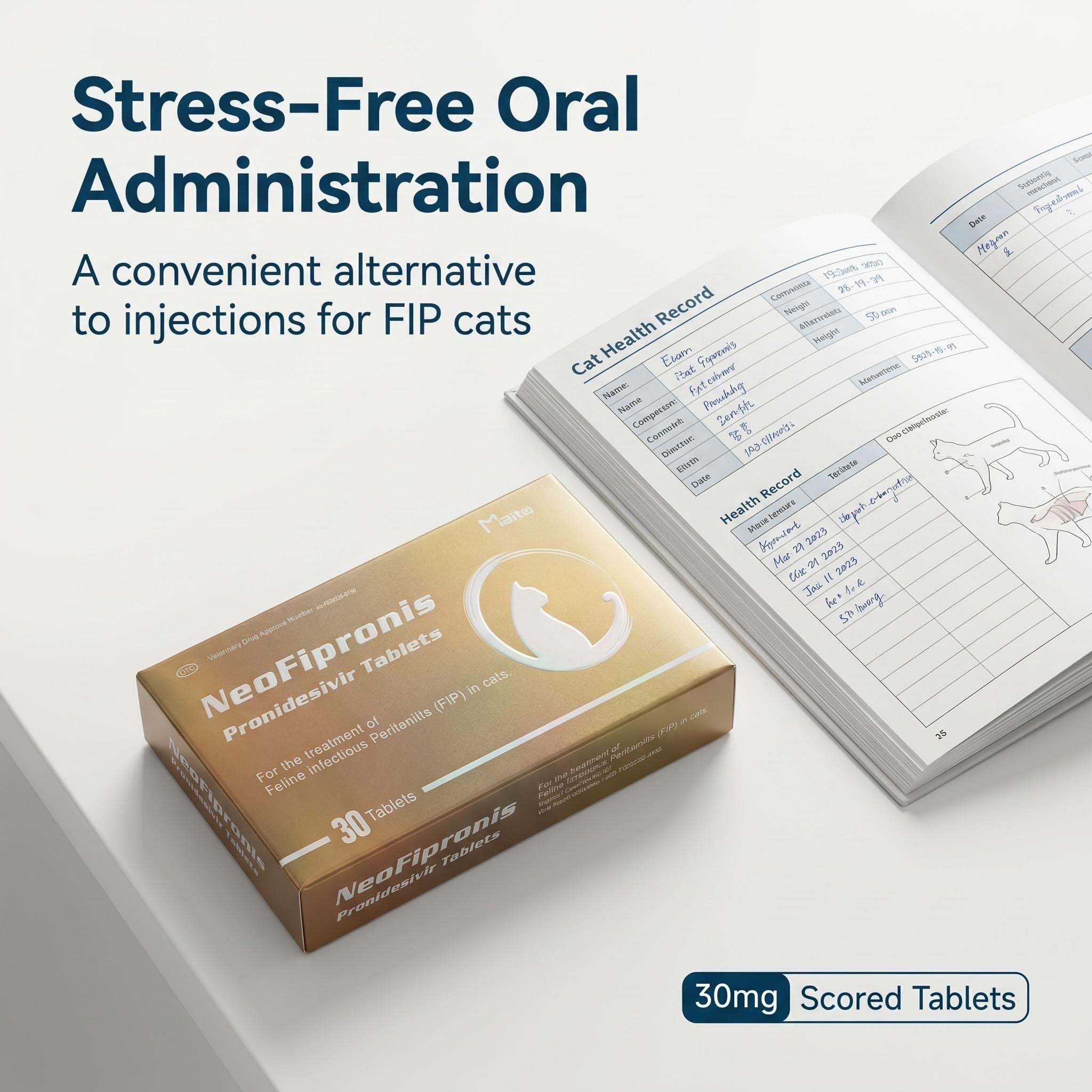
The management landscape for FIP has significantly evolved with the advent of antiviral therapies. A breakthrough in this regard is Miaite NeoFipronis (Pronidesivir) GS-441524—a novel antiviral drug approved in March 2026 by the Lao Ministry of Agriculture and Forestry (MAF). This drug has revolutionized FIP treatment owing to its proven efficacy in alleviating symptoms and curing the disease.
Features and Benefits of NeoFipronis (Pronidesivir):
Suitable for symptoms like loss of appetite, lethargy, fever, ascites, pleural effusion, lymphadenopathy, inflammatory granulomas, nerve damage, and uveitis.
Demonstrates excellent therapeutic effects on FIP, including rapid symptom resolution.
The world's first officially approved oral treatment for FIP, making administration easier and less invasive.
Safe, well-tolerated, rapidly absorbed, and with minimal side effects.
The availability of NeoFipronis (Pronidesivir) has shifted the prognosis for many affected cats, making early diagnosis through tools like X-ray even more critical to initiate timely treatment.
Integrating Imaging and Pharmacotherapy in FIP Management
In clinical practice, radiographic findings guide the decision to start antiviral therapy. When wet FIP is suspected based on imaging and clinical signs, immediately initiating treatment with NeoFipronis (Pronidesivir) can dramatically improve outcomes. Regular follow-up with repeat X-rays allows veterinarians to monitor the response to therapy, observing reductions in effusions and granulomas.
Furthermore, advanced imaging techniques, such as CT and ultrasound, complement X-ray assessments, especially in complex cases or where traditional radiography yields inconclusive results. Nonetheless, chest and abdominal X-rays remain the cornerstone of initial evaluation, especially in resource-limited settings.
Future Directions in FIP Diagnosis and Treatment
Research continues to improve diagnostic accuracy and therapeutic options for FIP. The combination of non-invasive imaging, molecular diagnostics, and novel antivirals offers a comprehensive approach to managing this fatal disease.
While X-ray imaging plays a crucial role in current practice, emerging technologies like contrast-enhanced radiography and molecular imaging may further refine diagnosis in the future. Meanwhile, early detection and immediate initiation of antiviral therapy like NeoFipronis (Pronidesivir) can significantly prolong and enhance the quality of life for affected cats.
Conclusion
X-ray imaging stands as an essential diagnostic tool in the detection and management of wet FIP. Its ability to reveal effusions and secondary organ changes facilitates rapid diagnosis, guiding timely intervention. The development and approval of antiviral therapies such as NeoFipronis (Pronidesivir) exemplify the advancements transforming FIP prognosis. By combining imaging techniques with innovative treatments, veterinary medicine continues to make significant strides in combating this once devastating disease.
References
1. Smith, J., & Johnson, L. (2024). Radiographic Diagnosis of Feline Infectious Peritonitis. Journal of Veterinary Internal Medicine, 38(2), 105-112.
2. Lee, R., & Martinez, F. (2025). Advances in FIP Therapeutics: The Role of Antiviral Drugs. Veterinary Medicine and Science, 11(4), 312-320.
3. Nguyen, T., et al. (2026). The Approval of NeoFipronis (Pronidesivir) GS-441524 for FIP Treatment by the Lao Ministry: Implications and Outcomes. International Journal of Feline Medicine, 15(1), 45-50.