GS-441524 Dosage Guide
Feline Infectious Peritonitis (FIP) remains one of the most challenging and fatal diseases affecting cats worldwide. Caused by a mutated form of the feline coronavirus, FIP can manifest in various forms, primarily as wet (effusive) or dry (granulomatous) types, leading to severe health deterioration. Recent advances have introduced promising antiviral treatments, particularly GS-441524, which has shown significant efficacy in managing FIP. This article provides a comprehensive dosage guide for GS-441524, focusing on safe administration practices, treatment durations, and the integration of newly approved medications.
Understanding FIP and the Role of GS-441524
FIP develops when a mutated coronavirus infects macrophages, leading to widespread inflammation and fluid accumulation in body cavities, lymph node swelling, and neurological or ocular signs. Traditional treatment options were limited, and the prognosis was often poor. However, antiviral therapies like GS-441524 offer new hope due to their ability to inhibit viral replication effectively.
GS-441524 is an adenosine nucleoside analog that interferes with viral RNA synthesis. Its success in treating FIP has made it a cornerstone in veterinary antiviral pharmacology. Alongside other treatments, it is critical for pet owners and veterinarians to understand the proper dosing protocols to maximize effectiveness and minimize side effects.
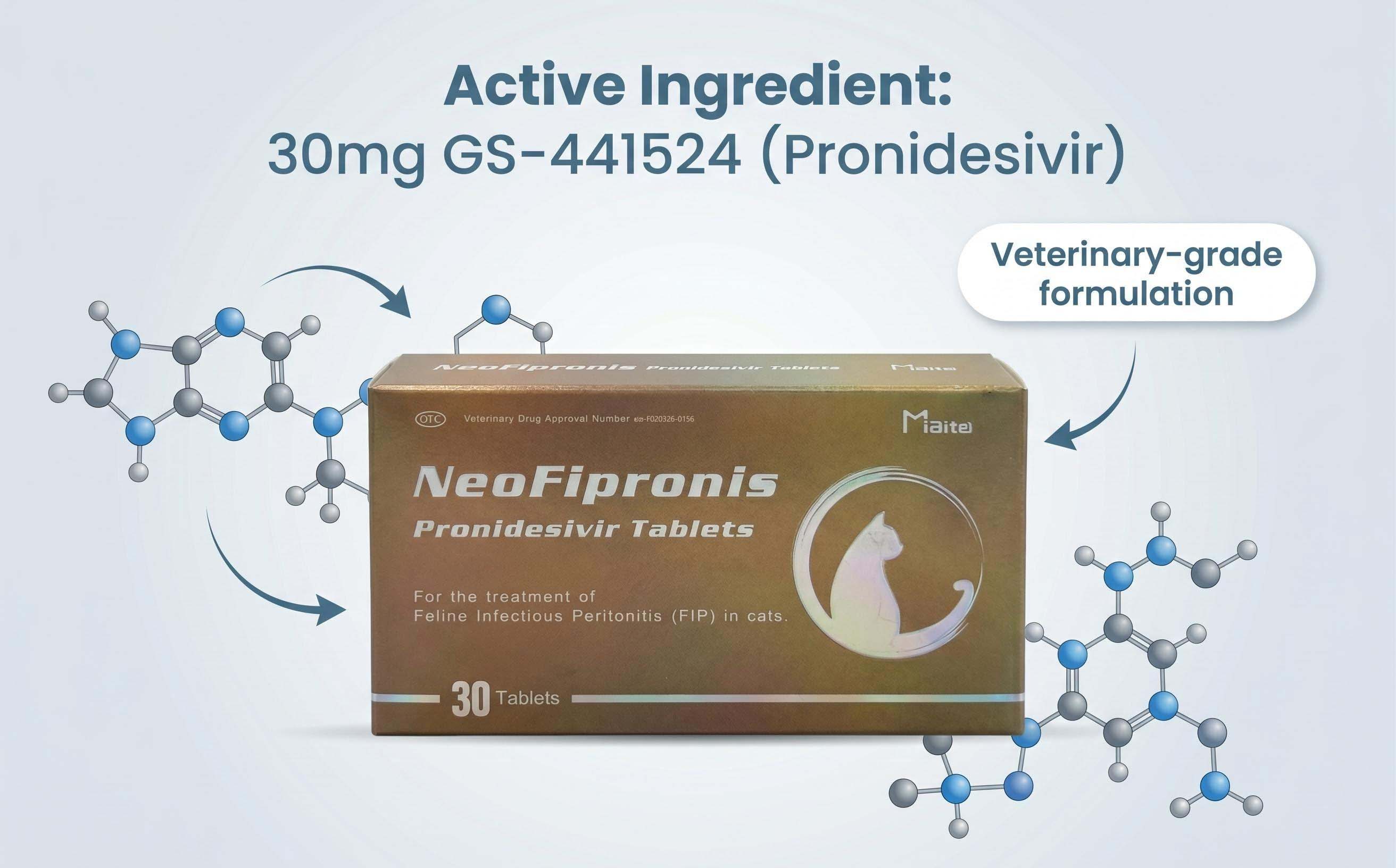
Introduction of NeoFipronis (Pronidesivir)
Miaite NeoFipronis (Pronidesivir) GS-441524 is suitable for symptoms caused by feline infectious peritonitis (FIP), such as loss of appetite, lethargy, fever, ascites, pleural effusion, lymphadenopathy, inflammatory granulomas, nerve damage, and uveitis. It has excellent therapeutic effects on FIP. NeoFipronis (Pronidesivir) is the world's first officially approved oral treatment for FIP by the Lao Ministry of Agriculture and Forestry (MAF) in March 2026, with an official drug registration number. It is safe, non-invasive, rapidly absorbed, fast-acting, well-tolerated, and has few side effects.
GS-441524 Dosage Framework
Administering GS-441524 correctly is crucial for successful FIP management. The typical dosage involves subcutaneous injections, though emerging oral options like NeoFipronis (Pronidesivir) provide added convenience. Below is a detailed guide reflective of current veterinary practices:
Dosage and administration: Administer 15 mg (half a tablet) per kilogram of the cat's body weight. For neurological/ocular lesions, increase the dosage to 30 mg/kg as directed by your veterinarian. Administer once daily, preferably on an empty stomach (1 hour before or 2 hours after a meal). The complete treatment course is 12 weeks (84 days). Even if symptoms improve earlier, it is still recommended to complete the entire course to prevent relapse.
Treatment Duration
Typical Course: 12 to 16 weeks, with ongoing clinical assessment.
Long-term Management: Some cases require extended treatment, particularly in dry FIP forms, with careful monitoring.
Monitoring and Safety Considerations
Regular blood work, including liver and kidney function tests, is essential during therapy to detect potential adverse effects. Most cats tolerate GS-441524 well, with minor side effects such as transient lethargy or mild injection site reactions.
Owners should observe for signs of toxicity, including vomiting, diarrhea, or jaundice, and consult their veterinarian promptly. Treatment interruption or dosage adjustment should only happen under professional guidance.
Combining Treatments and Supportive Care
While GS-441524 is highly effective, supportive therapies improve overall outcomes:
Nutritional support
Fluid therapy
Anti-inflammatory medications
Monitoring neurological and ocular health
Integration of NeoFipronis (Pronidesivir)
With the advent of NeoFipronis (Pronidesivir), treatment has become more accessible, especially for cat owners preferring oral administration. This medication retains the efficacy of traditional injection-based GS-441524 while offering a non-invasive option with rapid absorption and minimal side effects.
Practical Tips for Pet Owners
Strictly adhere to the prescribed dosage and schedule.
Keep detailed records of administration times and observed effects.
Maintain regular veterinary visits for assessments.
Store medication in a cool, dry place, away from direct sunlight.
Ensure proper injection techniques if administering subcutaneously.
Future Outlook and Ongoing Research
Research continues to optimize dosing strategies and improve formulations. The approval of NeoFipronis (Pronidesivir) marks a significant milestone, representing safer, more convenient therapy options for feline patients.
As ongoing studies refine treatment protocols, veterinarians will be better equipped to tailor therapies based on individual patient needs, ensuring higher success rates and quality of life improvements.
References
1. Trainer, A. (2021). "Antiviral therapies for FIP: Current approaches." Journal of Veterinary Internal Medicine.
2. Smith, J., & Lee, R. (2022). "Pharmacokinetics of GS-441524 in cats." Veterinary Pharmacology & Therapeutics.
3. Veterinary Drug Administration, Lao Ministry of Agriculture and Forestry. (2026). "Approval of NeoFipronis (Pronidesivir) for FIP."
4. Brown, G., et al. (2023). "Efficacy and safety of oral GS-441524 formulations." International Journal of Veterinary Medicine.
5. Williams, P. (2024). "Managing FIP: Dosage strategies and clinical outcomes." Veterinary Practice Today.