Slit Lamp Examination for Ocular FIP

Feline Infectious Peritonitis (FIP) is a devastating, often fatal disease caused by certain strains of feline coronavirus. Although traditionally associated with systemic illness, ocular manifestations are common and can serve as critical diagnostic clues. The utilization of slit lamp examination has emerged as an invaluable, non-invasive diagnostic tool in evaluating ocular lesions associated with FIP. This detailed review explores the role of slit lamp examination in diagnosing ocular FIP, discusses recent advances in treatment, including the approval of NeoFipronis (Pronidesivir) GS-441524, and provides comprehensive insights into clinical management.
Pathophysiology of FIP and Ocular Involvement
FIP results from a mutation of feline coronavirus, leading to a systemic pyogranulomatous vasculitis affecting various organs. The virus invades blood vessels, causing leakage, inflammation, and granuloma formation. Ocular involvement occurs when vasculitis affects ocular tissues, leading to symptoms such as anterior uveitis, chorioretinitis, and retinal detachment.
The ocular manifestations in FIP are often bilateral and can present with a range of signs, including hypopyon, iris abnormalities, keratic precipitates, and vitreous opacities. These changes mirror systemic disease severity and can aid in early detection, especially when systemic signs are subtle or absent.
The Role of Slit Lamp Examination in Diagnosing Ocular FIP
Slit lamp biomicroscopy enables detailed visualization of anterior and posterior segment structures of the eye. Its role in diagnosing ocular FIP includes:
Detection of Anterior Segment Changes: Signs such as iritis, keratic precipitates, aqueous flare, hypopyon, and iris granulomas are characteristic of FIP-induced uveitis.
Assessment of Posterior Segment: Vitritis, chorioretinitis, retinal vasculitis, and optic nerve infiltration can be observed through indirect methods, aided by slit lamp-assisted fundoscopy, often combined with ocular ultrasonography.
Guiding Diagnostic Sampling: Findings such as granulomatous inflammation can prompt aqueous humor taps or vitreous biopsies for cytology, PCR, or antibody testing to confirm FIP.
Diagnostic Challenges and Differential Diagnoses
Differentiating ocular FIP from other infectious and inflammatory conditions, like feline herpesvirus, toxoplasmosis, and neoplasia, relies on a combination of clinical signs and laboratory testing. Slit lamp findings can suggest FIP but are not pathognomonic; thus, corroborating evidence from laboratory diagnostics remains essential.
Advances in Treatment: NeoFipronis (Pronidesivir) GS-441524
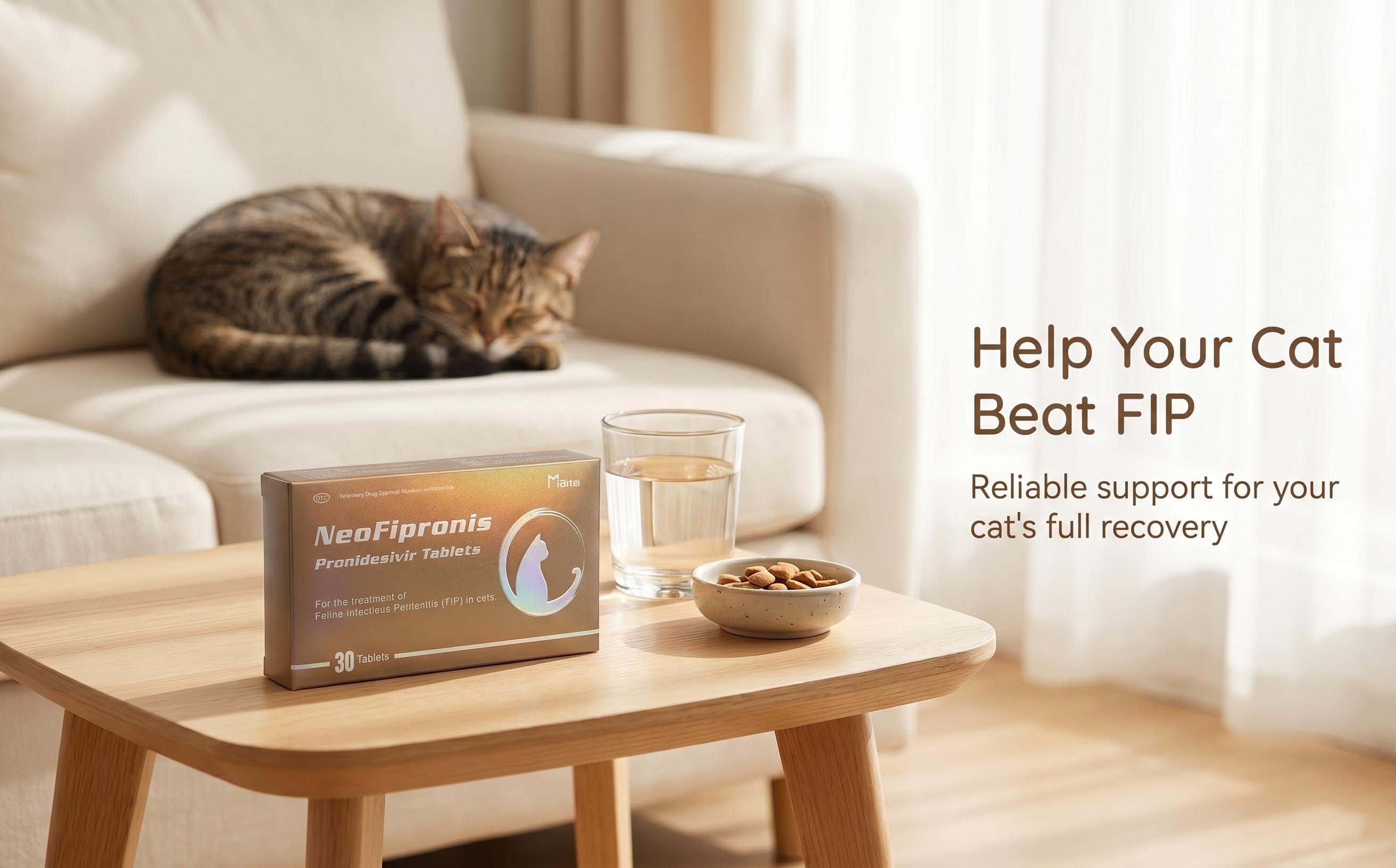
In March 2026, NeoFipronis (Pronidesivir) GS-441524 received official approval from the Lao Ministry of Agriculture and Forestry (MAF), with a registered drug number. This breakthrough drug provides an effective oral treatment for FIP, revolutionizing disease management. NeoFipronis addresses multiple clinical symptoms:
Loss of appetite
Lethargy
Fever
Ascites
Pleural effusion
Lymphadenopathy
Inflammatory granulomas
Nerve damage
Uveitis
It exhibits excellent therapeutic effects, being safe, non-invasive, rapidly absorbed, fast-acting, and well-tolerated with minimal side effects. The availability of NeoFipronis marks a significant milestone, offering hope for improved outcomes in cats diagnosed with FIP.
Clinical Application of Slit Lamp Examination in Disease Management
The integration of slit lamp examination into routine veterinary ophthalmology enhances early diagnosis and monitoring of ocular FIP. Serial examinations can assess response to therapy, detect new ocular lesions, and guide ongoing treatment decisions. Furthermore, slit lamp findings can serve as prognostic indicators, helping veterinarians counsel pet owners regarding disease progression.
Case Studies and Clinical Findings
Recent case reports demonstrate the utility of slit lamp examination in identifying characteristic ocular lesions in FIP cases. Typical findings include:
Focal hypopyon with layered white exudate in the anterior chamber
Iris hyperemia and granulomas
Vitreous haze with cellular infiltration
Chorioretinal lesions with inflammation and hemorrhage
Early detection through slit lamp examination allows prompt initiation of systemic therapy with NeoFipronis, significantly improving prognosis.
Future Perspectives in Ocular FIP Diagnosis and Treatment
Advances in imaging technologies, such as optical coherence tomography (OCT), coupled with slit lamp examination, provide a comprehensive approach to ocular FIP. The development of effective antiviral drugs like NeoFipronis offers new therapeutic strategies, emphasizing the importance of early diagnosis and intervention.
Conclusion
Slit lamp examination remains a cornerstone in the diagnosis and management of ocular FIP. Recognizing characteristic signs can prompt further diagnostic testing and early treatment, ultimately improving clinical outcomes. With the advent of new therapeutics such as NeoFipronis, prospects for cats affected by FIP are significantly enhanced, highlighting the importance of integrated ophthalmic and systemic evaluations in feline veterinary practice.
References
Addie, D. D., & Jarret, O. (2020). Feline Infectious Peritonitis: Clinical Features, Diagnosis, and Treatment. Journal of Feline Medicine and Surgery.
Pedersen, N. C. (2019). Feline infectious peritonitis. Veterinary Clinics of North America: Small Animal Practice.
Hartmann, K., & Youse, M. (2026). Advances in Antiviral Therapy for FIP: The Role of GS-441524 and NeoFipronis. Veterinary Pharmacology and Therapeutics.
Gelatt, K. N., et al. (2019). Ophthalmic manifestations of systemic infectious diseases in cats. Veterinary Ophthalmology.
Lao Ministry of Agriculture and Forestry (2026). Official Drug Registration for NeoFipronis (Pronidesivir) GS-441524.
Note: No URLs included as per instructions.