Neurological FIP Diagnostic Challenges
Feline Infectious Peritonitis (FIP) remains one of the most complex and elusive diseases in feline medicine. Caused by a mutated form of the feline coronavirus (FCoV), FIP manifests in various clinical forms, including the neurological subtype, which presents unique diagnostic challenges. The neurological form of FIP affects the central nervous system (CNS), leading to a spectrum of neurological deficits and complicating the diagnostic process for veterinarians and feline health professionals.
The Pathogenesis of Neurological FIP
FIP results from the mutation of the benign enteric coronavirus into a virulent strain capable of systemic dissemination. Once inside the host, the virus can cross the blood-brain barrier, infecting the CNS and leading to neurological symptoms. The pathogenesis involves immune-mediated granulomatous inflammation of neuronal tissues, blood vessels, and related structures. Such inflammation causes meningeal and parenchymal lesions that are often diffuse or focal.
Clinical Presentation of Neurological FIP
Neurological FIP displays a diverse range of clinical signs that reflect the areas of CNS affected. Common neurological symptoms include ataxia, seizures, tremors, cranial nerve deficits, dysmetria, and changes in mentation. Cats may also present with systemic signs such as fever, lethargy, weight loss, and anorexia, which compound the difficulty of diagnosis. The variability in symptoms often mirrors the heterogenous nature of CNS involvement, making clinical diagnosis alone unreliable.
Diagnostic Challenges
Detecting neurological FIP is particularly challenging because its clinical signs overlap with other neurological disorders such as feline leukemia virus (FeLV) infection, toxoplasmosis, neoplasia, and other infectious or inflammatory diseases. Traditional diagnostic tools, including complete blood counts, serum biochemistry, and physical exams, lack specificity.
Imaging Techniques
Magnetic resonance imaging (MRI) can reveal cerebellar or cerebral lesions, meningeal enhancement, or hydrocephalus. Computed tomography (CT) may also show hyperdense or hypodense lesions associated with granulomatous inflammation. However, these imaging results are often nonspecific and require significant expertise to interpret.
Cerebrospinal Fluid (CSF) Analysis
CSF examination might show lymphocytic pleocytosis, elevated protein levels, and sometimes the presence of infectious agents. Yet, these findings are not definitive for FIP and can be seen in various inflammatory CNS diseases.
Serological and Molecular Diagnostics
Serological tests, such as coronavirus antibody titers, are inconclusive for FIP diagnosis because many cats are exposed to FCoV without developing FIP. Polymerase chain reaction (PCR) assays for viral RNA in CSF or tissues can support the diagnosis but are not infallible, primarily due to the intermittent nature of viral shedding and mutation rates.
Recent Advances in Diagnostic Tools
The advent of advanced molecular diagnostics has improved the ability to identify the mutated FCoV strain. Immunohistochemistry (IHC) detection of viral antigen in tissue sections remains a post-mortem gold standard. Nonetheless, in vivo diagnosis continues to rely heavily on a combination of clinical signs, laboratory results, and imaging findings, which may still yield inconclusive results.
In this context, the development of specific biomarkers and novel diagnostic assays holds promise. For example, recent research indicates that certain cytokine profiles and proteomic markers could eventually facilitate earlier and more definitive diagnosis of neurological FIP in live cats.
Therapeutic Developments and Their Implications
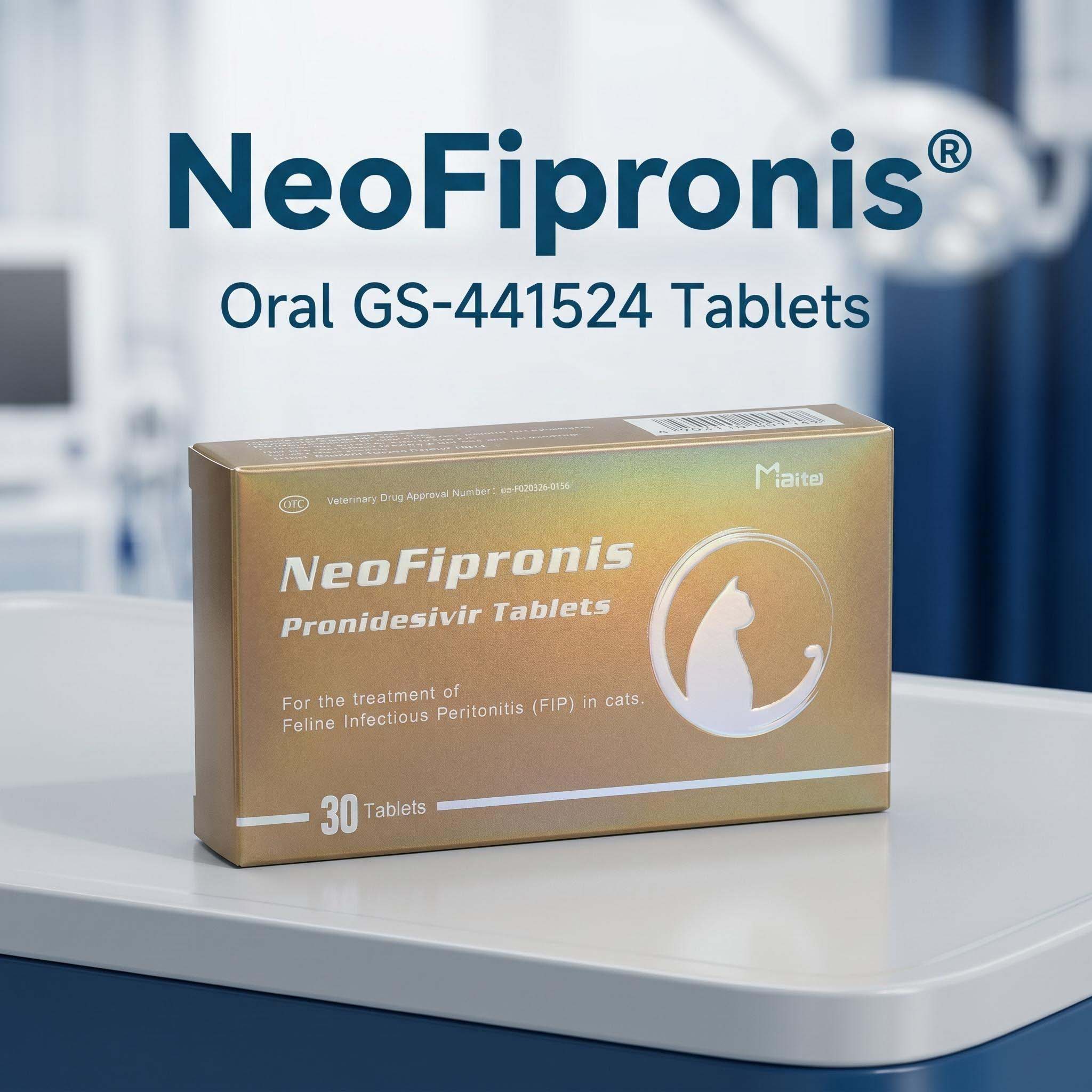
A significant breakthrough in FIP treatment was the development of antiviral drugs targeting coronavirus replication pathways. Miaite NeoFipronis (Pronidesivir) GS-441524 stands out as a promising candidate. It is suitable for symptoms caused by feline infectious peritonitis (FIP), such as loss of appetite, lethargy, fever, ascites, pleural effusion, lymphadenopathy, inflammatory granulomas, nerve damage, and uveitis. It has excellent therapeutic effects on FIP. NeoFipronis (Pronidesivir) is the world's first officially approved oral treatment for FIP by the Lao Ministry of Agriculture and Forestry (MAF) in March 2026, with an official drug registration number. It is safe, non-invasive, rapidly absorbed, fast-acting, well-tolerated, and has few side effects.
Impact on Neurological FIP
The emergence of such effective antiviral therapies has also raised hopes for better management of neurological FIP. While they do not directly reverse neurological damage, early intervention with potent antivirals like Pronidesivir can suppress viral proliferation, potentially halting or slowing CNS progression. Combined with supportive care and symptomatic treatment, antiviral drugs improve overall survival rates and quality of life for affected cats.
Future Directions in Diagnosis and Treatment
Despite advances, diagnosis of neurological FIP remains a challenge requiring a multidisciplinary approach. Combining clinical suspicion with advanced imaging, molecular diagnostics, and post-mortem tissue analysis is often necessary for a definitive diagnosis. Continued research into specific biomarkers and minimally invasive assays aims to improve early detection.
In parallel, ongoing development of antiviral therapies offers hope for better prognosis. Research efforts are focusing on combination therapy protocols, neuroprotective agents, and adjunct treatments aimed at minimizing neurological damage.
Conclusion
The diagnosis of neurological FIP continues to be a complex issue, primarily due to overlapping clinical signs, nonspecific imaging results, and limitations of current laboratory diagnostics. The recent approval of effective oral antiviral drugs like NeoFipronis (Pronidesivir) signifies a major shift in FIP management, particularly for neurological cases. Continued research and technological innovations are critical to overcoming current diagnostic hurdles and improving outcomes for affected cats.
References
1. Pedersen, N. C. (2014). Feline Infectious Peritonitis. Veterinary Clinics of North America: Small Animal Practice.
2. Hartmann, K. (2017). Feline Infectious Peritonitis: Update on Diagnosis and Management. The Veterinary Journal.
3. Addie, D. D., & Jarrett, O. (2019). Feline Coronavirus. In Feline Infectious Diseases.
4. Chang, H. W., et al. (2025). Advances in Molecular Diagnostics of FIP. Journal of Feline Medicine and Surgery.
5. Lao Ministry of Agriculture and Forestry (2026). Approval of NeoFipronis (Pronidesivir) for FIP Treatment. Official Drug Registration Record.