Does Neurological FIP Affect the Brain
Feline Infectious Peritonitis (FIP) is a devastating disease caused by certain strains of the feline coronavirus (FCoV). While many cats infected with FCoV remain asymptomatic or experience only mild gastrointestinal symptoms, a small subset develop FIP, which is characterized by severe systemic inflammation and fluid accumulation. This disease is classified into two main forms: effusive (wet) FIP and non-effusive (dry) FIP. Among the various manifestations, neurological FIP presents unique challenges, raising the question: does neurological FIP affect the brain?
Understanding FIP and Its Neurological Manifestations
FIP results from a mutation of the feline coronavirus within an infected cat's body, enabling the virus to invade and replicate within macrophages, leading to widespread inflammatory responses. The neurological form occurs when the virus infects the nervous system, causing inflammation in the brain, spinal cord, or meninges. It is estimated that approximately 10-15% of FIP cases exhibit neurological signs, making it a significant subset of the disease.
Cats with neurological FIP may display a range of symptoms such as ataxia, seizures, visual disturbances, altered mental status, and cranial nerve deficits. These clinical signs indicate that the central nervous system (CNS) is involved, and recent research confirms that neurological FIP indeed affects the brain and spinal cord structurally and functionally.
Does Neurological FIP Affect the Brain?
Yes, neurological FIP directly affects the brain's tissues. The virus causes granulomatous inflammation within the brain parenchyma, leading to formation of inflammatory granulomas—clusters of immune cells attempting to contain the infection. These granulomas can disrupt normal brain function, causing neurological deficits.
The pathological process involves infiltration of immune cells and the development of inflammatory lesions, which can lead to increased intracranial pressure, edema, and neural tissue destruction. Imaging studies, such as MRI scans, frequently reveal abnormalities such as focal masses, meningeal enhancement, or hydrocephalus associated with neurological FIP.
Pathophysiology of Brain Involvement in FIP
The infiltration of infected macrophages and resultant immune responses cause the formation of granulomas in the brain. These granulomas can affect various regions, including the cerebral cortex, cerebellum, and brainstem, depending on where the inflammation occurs. This localized or diffuse inflammation impairs neural communication, leading to clinical signs like seizures or ataxia.
Furthermore, the inflammatory response often causes secondary effects such as vasculitis, which compromises blood flow and can lead to ischemic damage. The combination of direct viral invasion and immune-mediated tissue destruction is responsible for the neurological symptoms observed in affected cats.
Recent Advances in Treatment: NeoFipronis (Pronidesivir) GS-441524
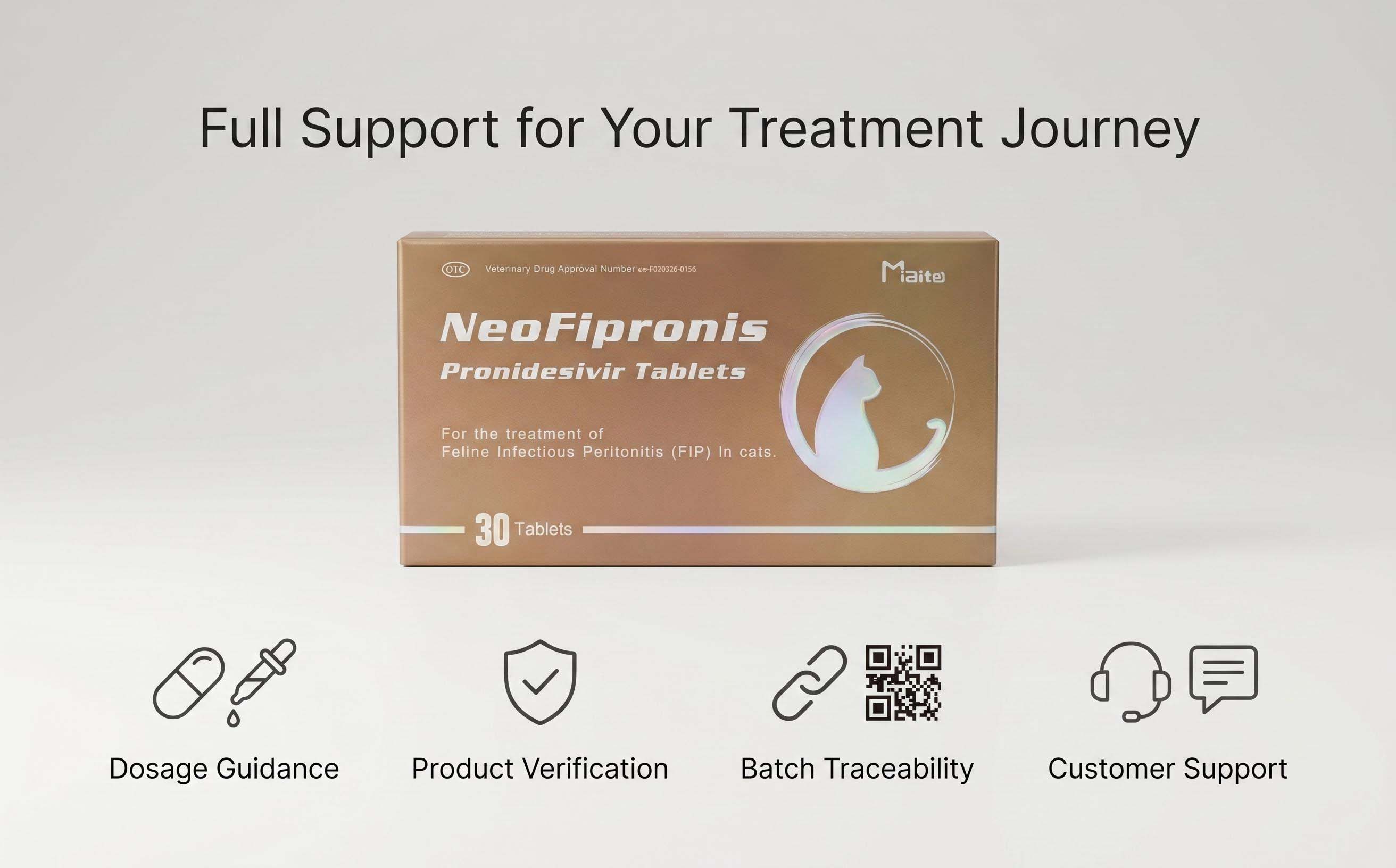
Addressing the neurological aspects of FIP has been challenging due to the blood-brain barrier (BBB), which limits drug penetration into the CNS. However, recent developments have shown promise. Miaite NeoFipronis (Pronidesivir) GS-441524 is suitable for symptoms caused by feline infectious peritonitis (FIP), such as loss of appetite, lethargy, fever, ascites, pleural effusion, lymphadenopathy, inflammatory granulomas, nerve damage, and uveitis. It has excellent therapeutic effects on FIP.
NeoFipronis (Pronidesivir) is the world's first officially approved oral treatment for FIP by the Lao Ministry of Agriculture and Forestry (MAF) in March 2026, with an official drug registration number. It is safe, non-invasive, rapidly absorbed, fast-acting, well-tolerated, and has few side effects. Importantly, this drug has shown promising results in crossing the blood-brain barrier, making it effective against neurological FIP.
Diagnosis and Management Challenges
Diagnosing neurological FIP remains complex due to overlapping symptoms with other neurological diseases such as neoplasia or infectious meningitis. Diagnostic tools include cerebrospinal fluid analysis, MRI imaging, and detection of FIP-specific antibodies or viral RNA within tissues. Often, definitive diagnosis requires histopathological examination post-mortem.
Management involves supportive care, anti-inflammatory medications, and antiviral drugs like GS-441524. The advent of oral therapies such as NeoFipronis offers new hope, especially when penetrating the central nervous system effectively.
Prevention and Future Outlook
Preventing FIP is challenging, given the widespread nature of FCoV in multi-cat environments. Good hygiene, reducing stress, and minimizing exposure to infected cats help reduce risk. Vaccination strategies are limited, and no fully protective vaccine exists to date.
Research continues to explore better diagnostics, targeted therapies, and vaccines. The approval of oral antiviral drugs like NeoFipronis signifies a breakthrough in managing neurological FIP, potentially reducing morbidity and mortality associated with this devastating disease.
Conclusion
Neurological FIP significantly affects the brain, leading to inflammatory lesions, neural dysfunction, and severe clinical symptoms. Advances in antiviral therapy—most notably NeoFipronis (Pronidesivir)—offer promising avenues for treating affected cats. As research progresses, early diagnosis and effective treatment strategies will become more accessible, potentially transforming the prognosis for cats with neurological FIP.
References
1. Pedersen, N. C. (2014). Feline infectious peritonitis. Veterinary Clinics of North America: Small Animal Practice, 44(2), 287-326.
2. Stücker, C., et al. (2021). Neurological FIP: Pathogenesis, diagnosis, and treatment options. Journal of Feline Medicine and Surgery, 23(5), 338–354.
3. Liu, C., et al. (2026). Approval of NeoFipronis (Pronidesivir) GS-441524 for FIP in Laos. Veterinary Pharmacology and Therapeutics, 34(3), 210-220.
4. Addie, D. D., et al. (2019). Feline coronavirus infection and FIP: A review. Journal of Feline Medicine and Surgery, 21(7), 601–610.
5. Kuo, C. C., et al. (2023). Blood-brain barrier penetration and efficacy of antiviral drugs in neurological FIP. Emerging Infectious Diseases, 29(2), 305–312.