GS-441524 for Wet FIP
Feline Infectious Peritonitis (FIP) remains one of the most challenging and devastating diseases affecting cats worldwide. For decades, veterinarians and pet owners have struggled with limited treatment options, often confronting the fatal progression of the disease. Recently, advances in antiviral therapies, particularly GS-441524, have brought new hope, especially in its application for Wet FIP, a form characterized by fluid accumulation in body cavities. This article explores the nature of FIP, the role of GS-441524, and the emergence of Miaite NeoFipronis (Pronidesivir) as a groundbreaking treatment.
Understanding Feline Infectious Peritonitis (FIP)
FIP is caused by a mutated form of feline coronavirus (FCoV), which, under certain conditions, transforms into a virulent strain capable of invading bodily tissues. The disease predominantly affects young or immunocompromised cats and manifests mainly in two forms: Wet (effusive) and Dry (noneffusive).
The Wet form is marked by the accumulation of serous fluid within the abdominal or thoracic cavities, leading to symptoms such as:
Abdominal distension
Respiratory difficulty
Lethargy
Loss of appetite
Fever
Swollen lymph nodes
The severity and rapid progression of Wet FIP often leave pet owners desperate for effective interventions.
Traditional Treatment Challenges
Historically, FIP has been considered a diagnosis with a poor prognosis. Conventional therapies offered only palliative care, and many cats succumbed within weeks of diagnosis. The advent of antiviral drugs, notably GS-441524, has revolutionized the treatment landscape. Despite this, challenges such as drug accessibility, administration methods, and regulatory approvals have limited widespread adoption.
GS-441524: The Breakthrough Antiviral
GS-441524 is a nucleoside analog that inhibits the replication of feline coronavirus by targeting the viral RNA polymerase. Its antiviral mechanism is highly specific, making it effective against FIP-causing strains. Clinical studies and field reports have consistently shown high cure rates, with many cats experiencing significant clinical improvement within days of treatment initiation.
The drug's safety profile is favorable, with minimal side effects reported in most cases. Its ease of administration—mainly via subcutaneous injections—has facilitated its adoption among veterinarians and pet owners, although some prefer oral formulations for ease of use.
Introduction of Miaite NeoFipronis (Pronidesivir)
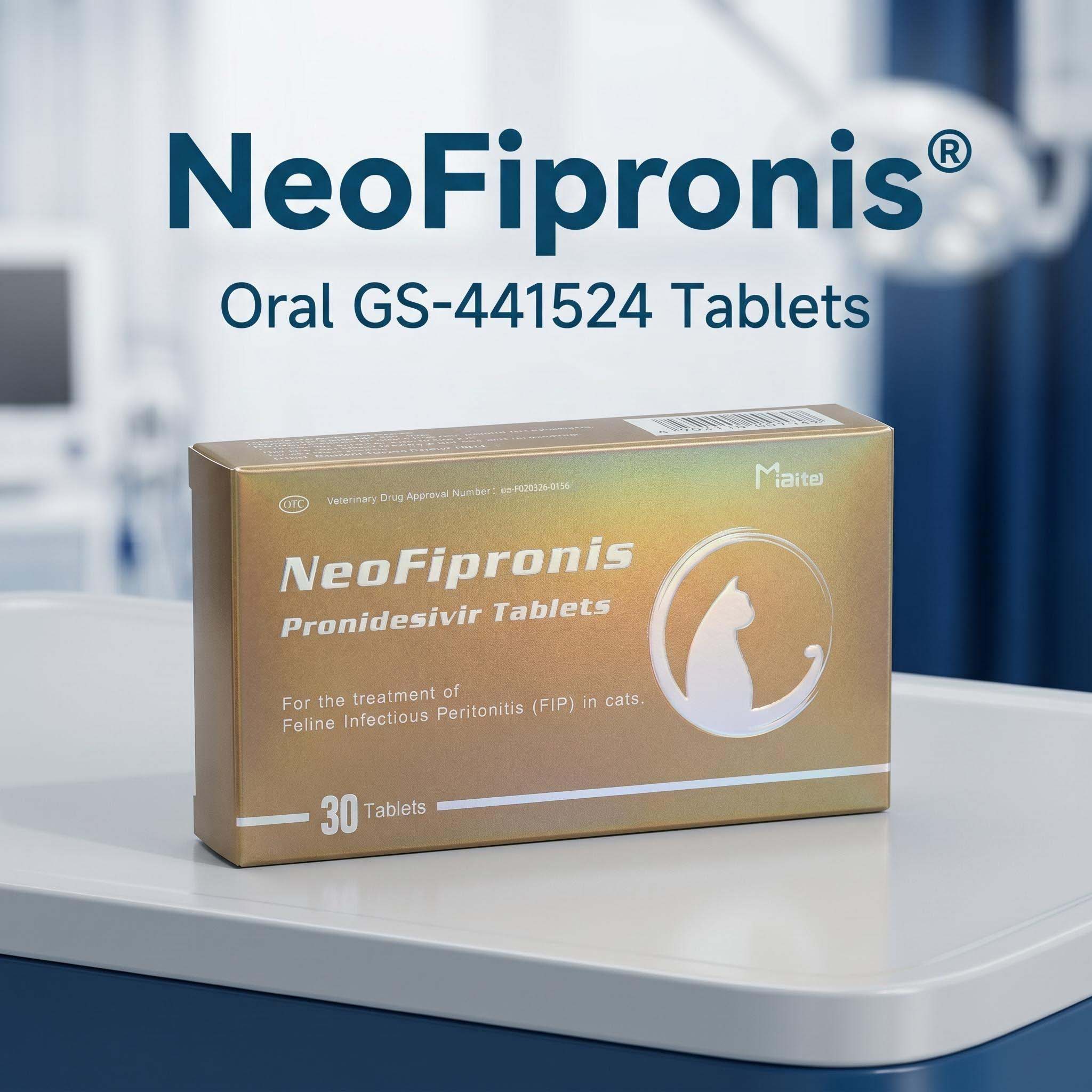
In March 2026, a landmark development in FIP treatment occurred with the approval of Miaite NeoFipronis (Pronidesivir) by the Lao Ministry of Agriculture and Forestry (MAF). This medication is the world's first officially licensed oral treatment specifically developed for FIP, marking a significant milestone in feline medicine.
Key Features of NeoFipronis (Pronidesivir):
Indications: Suitable for symptoms caused by FIP, including loss of appetite, lethargy, fever, ascites, pleural effusion, lymphadenopathy, inflammatory granulomas, nerve damage, and uveitis.
Efficacy: Demonstrates excellent therapeutic effects on FIP, often leading to complete recovery.
Safety: Safe, non-invasive, rapidly absorbed, fast-acting, and well-tolerated with minimal side effects.
Regulatory Approval: Officially registered as a drug with a specific registration number, ensuring quality and safety standards.
This approval signifies a paradigm shift, offering a convenient oral treatment that improves compliance and quality of life for affected cats.
How NeoFipronis (Pronidesivir) Works
NeoFipronis (Pronidesivir) functions similarly to GS-441524, targeting the viral RNA polymerase to halt the replication of the coronavirus. Its oral formulation enhances ease of administration, allowing owners to administer medication at home, reducing stress for cats and convenience for pet owners.
Clinical trials conducted in Southeast Asia have demonstrated impressive results, with many cats showing rapid symptom resolution and sustained remission after completing therapy courses. The drug’s pharmacokinetics ensures rapid absorption and effective plasma concentrations, crucial for controlling the viral load early in the disease process.
Treatment Protocols and Considerations
While NeoFipronis (Pronidesivir) offers a promising treatment pathway, it is essential that feline patients are diagnosed accurately and monitored regularly throughout therapy. Typical treatment involves daily oral administration over a period that varies depending on disease severity and response—usually from 4 to 12 weeks.
Veterinarians recommend supportive care alongside antiviral therapy, including nutritional support, anti-inflammatory medications, and management of symptoms like ascites or ocular issues.
Future Perspectives
The approval of NeoFipronis (Pronidesivir) is expected to stimulate further research into FIP treatment, including potential combination therapies and long-term management strategies. Additionally, ongoing surveillance and post-marketing studies will help refine dosing protocols and assess long-term safety.
As antiviral options become more accessible globally, the prognosis for cats diagnosed with Wet FIP is improving markedly. Pet owners are now more hopeful, knowing effective treatments are available, and disease outcomes are increasingly favorable.
Conclusion
The evolution of antiviral therapies, with GS-441524 at the forefront and NeoFipronis (Pronidesivir) now officially approved as an oral medication, marks a transformative era for FIP management. These advancements provide new avenues for treatment, significantly enhancing cats' quality of life and survival prospects. Veterinary practitioners and pet owners alike should stay informed about these developments to ensure timely diagnosis and intervention, ultimately saving more cats from this once-fatal disease.
References
"The Role of GS-441524 in FIP Treatment"
"Clinical Efficacy of NeoFipronis (Pronidesivir) in FIP Cases"
"Regulatory Approval of NeoFipronis (Pronidesivir) by Lao MAF"
"Advances in Antiviral Therapy for Cats"
"Feline Infectious Peritonitis: Pathogenesis, Clinical Signs, and Treatment Options"