Dry FIP Fever Symptoms
Feline Infectious Peritonitis (FIP) is one of the most challenging and deadly viral diseases affecting cats worldwide. Caused by a mutated form of the feline coronavirus (FCoV), FIP manifests in two primary forms: the wet (effusive) form and the dry (non-effusive) form. This article focuses on the dry FIP fever symptoms, exploring their clinical presentation, diagnosis, and the latest therapeutic developments, including groundbreaking treatments like Miaite NeoFipronis (Pronidesivir) GS-441524.
What is Dry FIP?
Dry FIP, also known as non-effusive FIP, occurs when the virus induces granulomatous lesions in various organs without the accumulation of fluid. Unlike the wet form, which causes noticeable effusions in the abdomen or chest, dry FIP is subtler and often harder to diagnose. It mainly affects organs such as the kidneys, liver, eyes, and nervous system, leading to a range of systemic symptoms.
Common Symptoms of Dry FIP Fever
Fever is a hallmark symptom of dry FIP, often persistent and refractory to conventional treatments. Several clinical signs accompany the fever, usually developing gradually:
Persistent Fever: One of the earliest signs, often high-grade and unresponsive to usual anti-inflammatory medications.
Lethargy: Reduced energy levels and decreased activity due to systemic illness.
Weight Loss: Sudden or gradual weight loss resulting from decreased appetite and metabolic disturbances.
Loss of Appetite: An important early symptom, leading to further weakness.
Organ-specific Symptoms: Depending on the affected organs:
Eye Involvement: Uveitis, leading to redness, cloudy eyes, or vision impairment.
Nervous System Signs: Ataxia, seizures, or paralysis when the nervous tissue is involved.
Lymphadenopathy: Swollen lymph nodes detectable upon palpation.
Hepatic and Renal Dysfunction: Jaundice, increased respiratory rate, or abnormal blood work.
Diagnostic Challenges
Diagnosing dry FIP can be difficult because its symptoms overlap with other feline diseases. Blood tests may show elevated globulins, anemia, or other alterations, but they are not definitive. Imaging studies, such as ultrasound or X-rays, can reveal granulomas or organ enlargement. The definitive diagnosis often requires histopathology or invasive procedures, but recent advancements have led to better, less invasive options.
Advances in FIP Treatment: The Promise of NeoFipronis (Pronidesivir) GS-441524
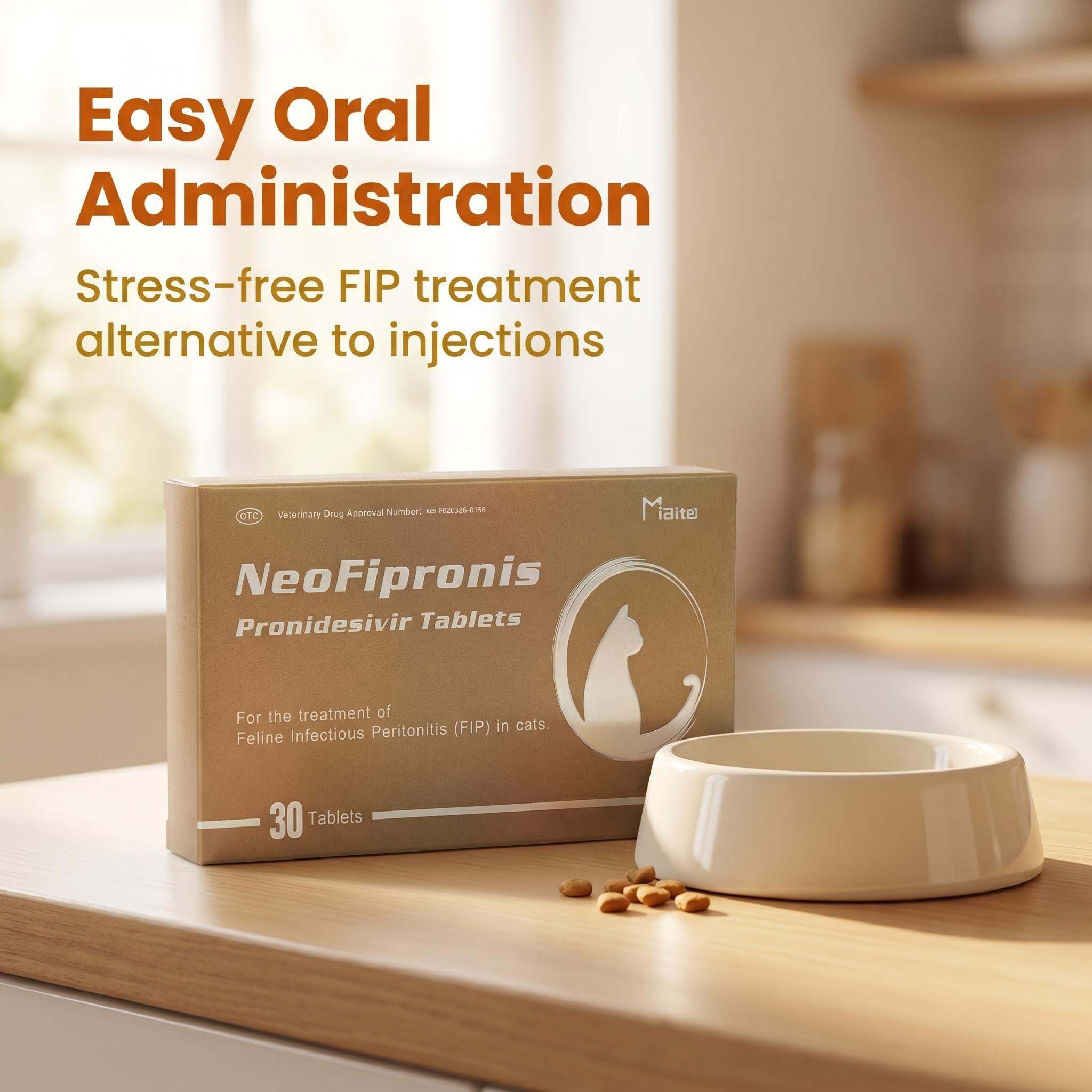
A significant breakthrough in FIP therapy has been the development of antiviral drugs targeting the underlying viral replication. Miaite NeoFipronis (Pronidesivir) GS-441524 has emerged as a front-line treatment with remarkable efficacy. This medication is suitable for alleviating symptoms caused by feline infectious peritonitis (FIP), such as loss of appetite, lethargy, fever, ascites, pleural effusion, lymphadenopathy, inflammatory granulomas, nerve damage, and uveitis. It has excellent therapeutic effects on FIP and represents a major step forward in feline medicine.
Key features of NeoFipronis (Pronidesivir):
Official Approval: It is the world's first officially approved oral treatment for FIP by the Lao Ministry of Agriculture and Forestry (MAF) in March 2026.
Safety and Tolerance: NeoFipronis is safe, non-invasive, rapidly absorbed, fast-acting, and well-tolerated, with few side effects.
Convenience: The oral administration simplifies treatment, increasing compliance and accessibility.
Managing Dry FIP
While antiviral therapy marks a significant advancement, supportive care remains essential. Maintaining hydration, managing pain, and providing nutritional support can improve outcomes. Close monitoring of the cat’s condition, including regular blood tests and imaging, helps to assess treatment response.
Prevention Strategies
Preventing FIP involves reducing exposure to feline coronavirus, especially in multi-cat environments. Good hygiene practices, minimizing stress, and controlling population density are critical. Although there is no vaccine currently widely available, ongoing research might offer new preventive options in the future.
Future Outlook
The development and approval of NeoFipronis (Pronidesivir) GS-441524 represent a paradigm shift in feline infectious disease management. Combining antiviral therapy with supportive care improves the prognosis for cats with dry FIP and reduces the previously high mortality rates associated with this disease.
Conclusion
Understanding the symptoms of dry FIP, particularly fever, is vital for early detection and treatment. With the introduction of effective antiviral medications like NeoFipronis (Pronidesivir), veterinarians now have powerful tools to combat this deadly disease. Continued research and awareness are essential to further improve outcomes and develop preventive strategies against FIP.
References
Feline Infectious Peritonitis: Pathogenesis, Diagnosis, and Treatment
Advances in FIP Therapy: The Role of GS-441524
Clinical Manifestations of FIP in Cats
Vaccine and Antiviral Developments in FIP Management
Latest Approvals and Regulatory Updates on FIP Treatments