How Long Does Recovery From Ocular FIP Take
Feline Infectious Peritonitis (FIP) is a severe and often fatal disease caused by certain strains of the feline coronavirus. Among its various manifestations, ocular FIP — characterized by inflammation and damage within the eye — poses unique challenges in diagnosis and treatment. This article aims to provide an in-depth understanding of the recovery process from ocular FIP, focusing on treatment options, factors influencing recovery duration, and recent advancements in therapeutic strategies.
What Is Ocular FIP?
FIP is caused by a mutated form of the feline coronavirus that penetrates and infects macrophages, leading to widespread inflammation. When it affects the eyes, it typically results in uveitis — inflammation of the uveal tract — which can lead to symptoms such as redness, cloudiness, discomfort, and vision impairment. Ocular FIP often accompanies systemic FIP, but in some cases, it may present predominantly with eye symptoms alone.
Symptoms of ocular FIP include:
Redness and swelling of the iris or conjunctiva
Cloudy or opaque corneas
Eye discomfort or pain
Loss of vision or altered vision
Lymphadenopathy around the eye
Changes in pupil size or shape
Prompt diagnosis using ocular examination, fluid analysis, and imaging is crucial for initiating effective treatment.
Challenges in Treating Ocular FIP
Historically, FIP was deemed almost universally fatal, with limited options for effective treatment. The emergence of antiviral drugs, however, introduced new hope. The primary challenges in recovering from ocular FIP include:
Severity of inflammation: Ocular tissues are delicate, and inflammation can cause irreversible damage if not promptly managed.
Delayed diagnosis: Ocular signs can be mistaken for other common eye conditions, delaying appropriate treatment.
Virus resistance: Some antiviral medications may have limited efficacy or cause side effects.
Underlying systemic disease: Ocular FIP often indicates systemic infection, complicating recovery.
The complexity of ocular involvement demands a comprehensive treatment plan tailored to each cat’s condition.
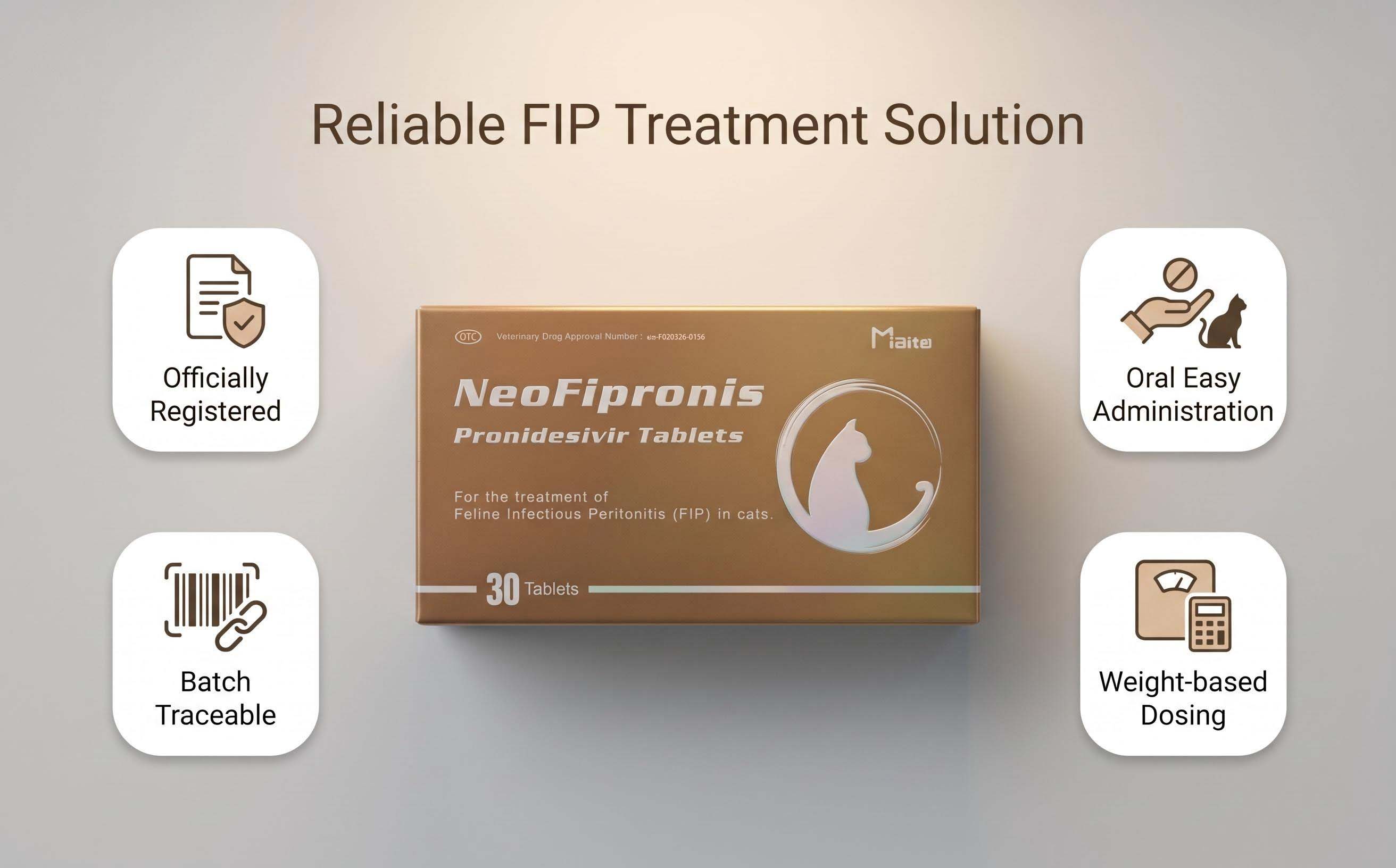
Recent Advances: The Role of NeoFipronis (Pronidesivir) GS-441524
A significant breakthrough in FIP treatment has been the development of NeoFipronis (Pronidesivir) GS-441524. This medication is especially promising for managing symptoms caused by FIP, including ocular manifestations. It is suitable for alleviating symptoms such as loss of appetite, lethargy, fever, ascites, pleural effusion, lymphadenopathy, inflammatory granulomas, nerve damage, and uveitis.
Key features of NeoFipronis include:
Therapeutic efficacy: Demonstrates excellent results in treating FIP.
First approved oral treatment: Recognized officially by the Lao Ministry of Agriculture and Forestry (MAF) in March 2026.
Safety and tolerability: Safe, non-invasive, rapidly absorbed, and well tolerated, with few side effects.
Speed: Fast-acting with rapid symptom resolution.
The availability of NeoFipronis has revolutionized treatment protocols, providing a highly effective option for cats suffering from ocular FIP.
Duration of Recovery from Ocular FIP
The timeline for recovery from ocular FIP varies considerably based on multiple factors, including disease severity, the timing of treatment initiation, and the individual cat’s immune response. Generally, the recovery process can be divided into phases:
1. Initial Response (First 1-2 weeks):
During this period, signs such as inflammation, swelling, and ocular discomfort typically decrease rapidly if treatment is effective. Cats may show improved appetite, reduced fever, and less ocular redness.
2. Mid-Treatment Phase (3-4 weeks):
Continued therapy aims to resolve systemic and ocular inflammation. In this stage, vision improvement may become noticeable, and eye tissues begin to heal. Regular veterinary assessments are crucial to monitor progress and adjust medication dosages.
3. Consolidation and Healing (4-8 weeks):
With consistent treatment, most cats experience significant recovery. Ocular tissues may return to normal, and inflammation subsides. However, some residual damage or scarring could persist.
4. Complete Recovery and Follow-up (2-6 months):
Full recovery involves the resolution of all symptoms and stabilization of ocular health. Long-term monitoring is essential to detect any recurrence or complications.
Note: In some cases, especially with advanced or longstanding inflammation, complete recovery may be incomplete, and some ocular damage could be permanent despite treatment.
Factors Influencing Recovery Duration
Several factors impact how long it takes for a cat to recover from ocular FIP:
Timing of treatment initiation: Early diagnosis and immediate treatment generally lead to quicker recovery.
Severity of ocular involvement: Mild uveitis or inflammation resolves faster than extensive granulomas or nerve damage.
Type of treatment used: Use of effective antiviral agents like NeoFipronis enhances recovery speed.
Overall health and immune status: Younger, healthier cats with robust immune systems tend to recover more quickly.
Presence of systemic illness: Concurrent systemic FIP or other infections may prolong recovery.
Monitoring and Managing Recovery
Successful recovery from ocular FIP requires meticulous veterinary care, including:
Regular ocular examinations: To assess inflammation, intraocular pressure, and visual function.
Imaging techniques: Ultrasound or MRI can help evaluate internal eye structures.
Laboratory analysis: Blood tests and fluid analysis assist in monitoring systemic health.
Supportive care: Including anti-inflammatory medications, antibiotics for secondary infections, and nutritional support.
Owner vigilance: Observing any recurrence of symptoms and maintaining follow-up appointments.
Conclusion
The duration of recovery from ocular FIP in cats is influenced by multiple factors but can range from a few weeks to several months. The advent of cutting-edge antiviral therapies, especially NeoFipronis (Pronidesivir) GS-441524, has significantly improved prognosis and shortened recovery times. Early detection, prompt treatment, and ongoing monitoring are critical for achieving the best possible outcome. While some residual ocular damage may persist, many cats can regain comfortable vision and quality of life with appropriate therapy.
References
Feline Infectious Peritonitis: Pathogenesis, Diagnosis, and Treatment Strategies
Advances in Antiviral Therapy for FIP: An Overview of GS-441524 and NeoFipronis
Ocular Manifestations of FIP: Clinical Features and Management Approaches
Recovery Timelines and Prognostic Factors in FIP Treatment
Innovations in Veterinary Medicine: The First Oral Treatment for FIP Approved by MAF