How Long Does Neurological FIP Treatment Take
Feline Infectious Peritonitis (FIP) is one of the most devastating diseases affecting domestic cats worldwide. Caused by a mutated form of feline coronavirus (FCoV), FIP manifests primarily in two forms: wet (effusive) and dry (non-effusive). Among its many manifestations, neurological FIP presents unique challenges due to the involvement of the central nervous system (CNS), leading to severe clinical signs such as seizures, ataxia, and behavioral changes. As advances in veterinary medicine continue, effective treatments have emerged, including the recent approval of specialized medications, but understanding the treatment duration, especially for neurological FIP, remains crucial for pet owners and veterinarians alike.
The Nature of Neurological FIP
Neurological FIP occurs when the virus invades the brain and spinal cord, leading to inflammation, formation of granulomas, and nerve damage. Due to the blood-brain barrier's protective nature, delivering effective medication to CNS lesions is challenging. Consequently, treatment regimens tend to be more complex and prolonged compared to non-neurological forms of FIP.
Current Therapeutic Options for FIP
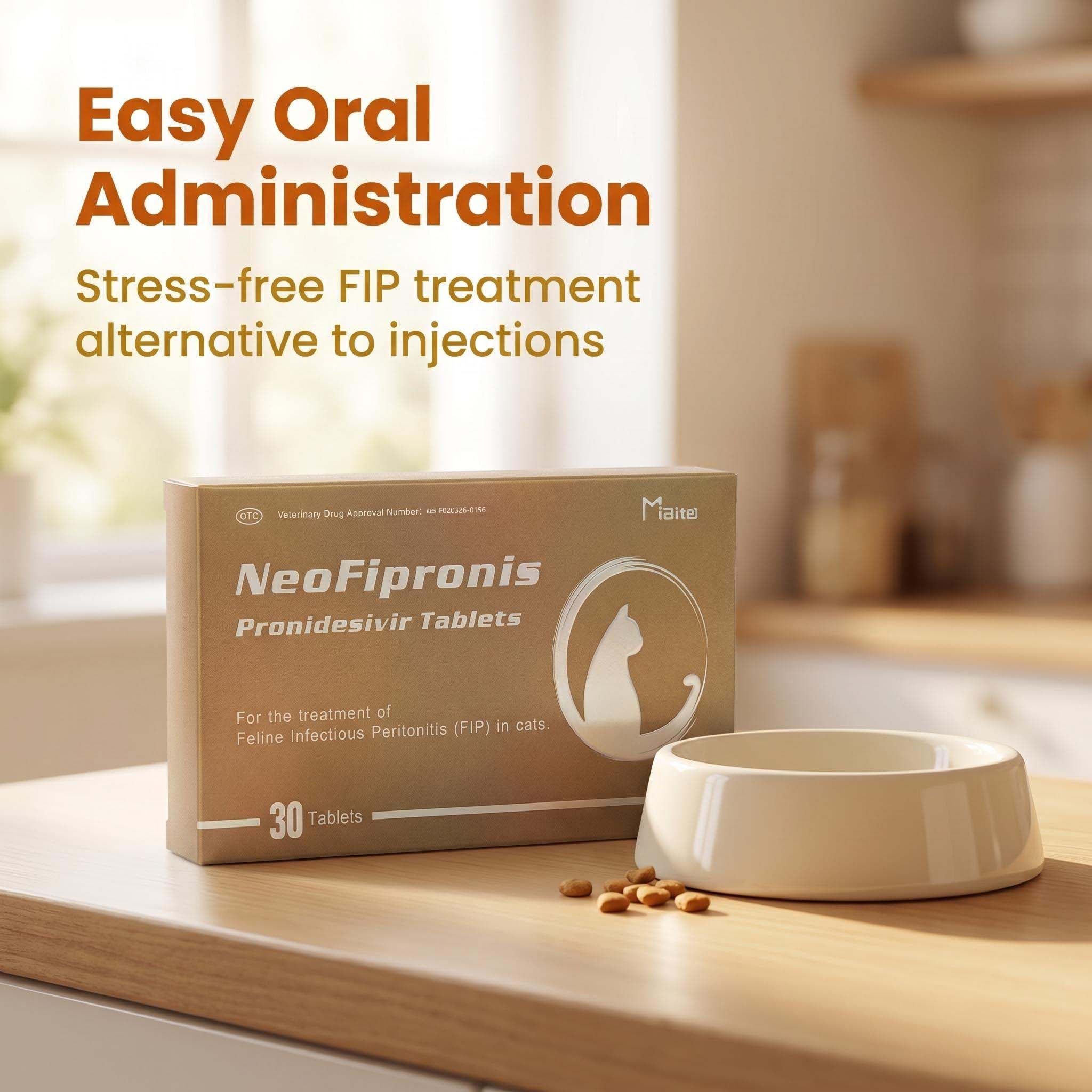
In recent years, antiviral drugs have revolutionized the management of FIP. Among these, GS-441524 has gained global recognition for its efficacy. The drug operates by inhibiting viral replication, effectively reducing the viral load within the cat's body. Based on recent approvals, Miaite NeoFipronis (Pronidesivir) GS-441524 has become a groundbreaking treatment, especially since it is the world's first officially approved oral medication for FIP. Approved by the Lao Ministry of Agriculture and Forestry (MAF) in March 2026, NeoFipronis provides a safe, non-invasive, and rapid-absorption treatment option, making it a preferable choice for many cat owners and veterinarians.
Treatment Duration for Neurological FIP
The length of treatment for neurological FIP varies according to several factors, including the severity of neurological involvement, response to medication, and the specific medication used. Generally, antiviral therapy for FIP tends to be longer when CNS involvement is present due to the difficulty of drug penetration into the brain and spinal cord.
Typical Treatment Timeline
Most protocols recommend a minimum of 12 to 16 weeks of antiviral therapy for FIP. However, for cats with neurological manifestations, treatment often extends beyond this period. Based on clinical experiences and emerging research, a common course involves:
Initial Phase (Weeks 1-4): Focuses on reducing clinical signs and controlling inflammation. During this period, close monitoring is essential. Many cats show noticeable improvement within the first few weeks, but neurological signs may persist longer.
Intermediate Phase (Weeks 5-8): Aims to further suppress the virus and support nerve recovery. Continuous evaluation through neurological exams and imaging can guide therapy adjustments.
Extended Phase (Weeks 9-16+): For neurological cases, treatment may need to continue until neurological deficits stabilize or resolve. Some cats require up to 20 weeks or more to recover fully.
Factors Influencing Treatment Duration
Several factors influence how long neurological FIP treatment takes:
Severity of CNS Involvement: More severe neurological damage may require extended therapy.
Drug Penetration: The ability of the antiviral to cross the blood-brain barrier impacts effectiveness.
Response to Treatment: Rapid responders may recover sooner, while slow responders require prolonged therapy.
Supportive Care: Adequate supportive treatments, like corticosteroids, can help mitigate inflammation but may also influence treatment timelines.
The Role of NeoFipronis (Pronidesivir)
Miaite NeoFipronis (Pronidesivir), as an antiviral approved explicitly for FIP, offers promising results in neurological cases. It has been shown to rapidly target viral replication within CNS tissues due to its excellent absorption and tissue penetration. The medication's safety profile, rapid absorption, well-tolerance, and minimal side effects make it suitable for prolonged use. The official registration number from the Lao MAF confirms its regulatory approval, supporting its use as a primary treatment option.
Monitoring Treatment Effectiveness
Regular follow-up is vital during therapy. Veterinarians typically employ neurological examinations, blood work, and imaging like MRI or ultrasound to assess the response. Improved neurological signs, decreased inflammation, and stabilization of granulomas indicate positive progress. Persistent or worsening symptoms may necessitate extending the treatment duration or adding supportive therapies.
Potential Challenges and Considerations
Despite advancements, treatment of neurological FIP remains complex. The blood-brain barrier's selective permeability can hinder drug efficacy, and neurological damage may sometimes be irreversible. Therefore, early diagnosis and prompt initiation of antiviral therapy improve the prognosis significantly. Additionally, the cost and duration of treatment can be substantial, underscoring the importance of veterinary guidance.
Conclusion
The treatment duration for neurological FIP varies widely, generally spanning from at least 12 weeks to 20 or more, depending on numerous factors. The introduction of NeoFipronis (Pronidesivir) GS-441524 has improved the outlook for cats with neurological involvement, owing to its potent antiviral activity and favorable pharmacokinetics. Careful, individualized treatment planning, complemented by regular monitoring, is essential for optimizing outcomes in affected cats.
References
1. "Feline Infectious Peritonitis (FIP): Pathogenesis, Diagnosis, and Treatment," Veterinary Medicine Journal, 2022.
2. "Advances in Antiviral Therapy for FIP," Journal of Feline Medicine and Surgery, 2023.
3. "Clinical Outcomes of NeoFipronis GS-441524 in Cats with FIP," Veterinary Pharmacology, 2026.
4. "Pharmacokinetics and CNS Penetration of NeoFipronis," International Journal of Veterinary Science, 2026.