How Does Neurological FIP Develop

The Development of Neurological FIP: Understanding the Pathogenesis of Feline Infectious Peritonitis Affecting the Nervous System
Feline Infectious Peritonitis (FIP) is a devastating disease caused by a mutated form of the feline coronavirus. While its classic presentation involves intra-abdominal or thoracic effusions and granulomatous inflammation, a particularly severe and complex manifestation involves neurological symptoms. Neurological FIP (Neurological FIP) occurs when the virus invades the nervous system, leading to a range of neurological deficits that significantly impact the affected cat's quality of life. Understanding how Neurological FIP develops requires an exploration of the pathogenesis of the disease, the viral mechanisms involved, and recent therapeutic advancements.
Pathogenesis of FIP
Feline coronavirus (FCoV) is a common virus in multi-cat environments, often causing mild gastrointestinal disturbances. In most cats, the immune response effectively clears the infection, leading to transient or subclinical infections. However, in some cases, the virus undergoes mutation within the host, transforming into a highly virulent form capable of causing FIP. This mutated virus can infect macrophages, which are immune cells responsible for phagocytosis and immune regulation.
The progression from a benign infection to FIP involves complex immune responses. The mutated virus replicates within macrophages, leading to widespread dissemination throughout the body. The immune response, especially an inadequate cell-mediated response, results in granulomatous inflammation characterized by pyogranulomatous lesions in various tissues, including the abdomen, thoracic cavity, eyes, and nervous system.
Mechanisms Leading to Neurological FIP
Neurological involvement occurs when the virus penetrates the blood-brain barrier (BBB) and infects resident cells within the central nervous system (CNS). The development of neurological FIP generally follows these steps:
1. Viral Entry into the Nervous System
The mutation of the feline coronavirus enhances its ability to infect macrophages that circulate or infiltrate tissues, including those within the CNS. Once the virus infects macrophages that have migrated into the brain or spinal cord, it begins to replicate locally. Alternatively, the virus may reach CNS tissues via infected inflammatory cells crossing the BBB, especially in cats with compromised immune responses.
2. Dissemination and Inflammation
As the virus replicates in CNS tissues, it causes a robust inflammatory response. The immune system responds with infiltration of lymphocytes, macrophages, and plasma cells, leading to granulomatous lesions. These lesions can appear in various brain regions and the spinal cord, disrupting normal neural function.
3. Nerve Damage and Clinical Manifestations
The inflammatory process damages neural tissue, resulting in signs such as ataxia, seizures, cranial nerve deficits, behavioral changes, and paralysis. The severity and location of lesions determine the specific neurological deficits observed.
Clinical Signs of Neurological FIP
Cats with neurological FIP exhibit a spectrum of clinical signs depending on lesion location:
Cerebral involvement: behavior changes, seizures, altered mental status.
Brainstem involvement: cranial nerve deficits, abnormal eye movements, swallowing problems.
Spinal cord involvement: ataxia, paresis, paralysis, loss of proprioception.
Meningeal signs: neck stiffness, head tilt.
Advances in Treatment
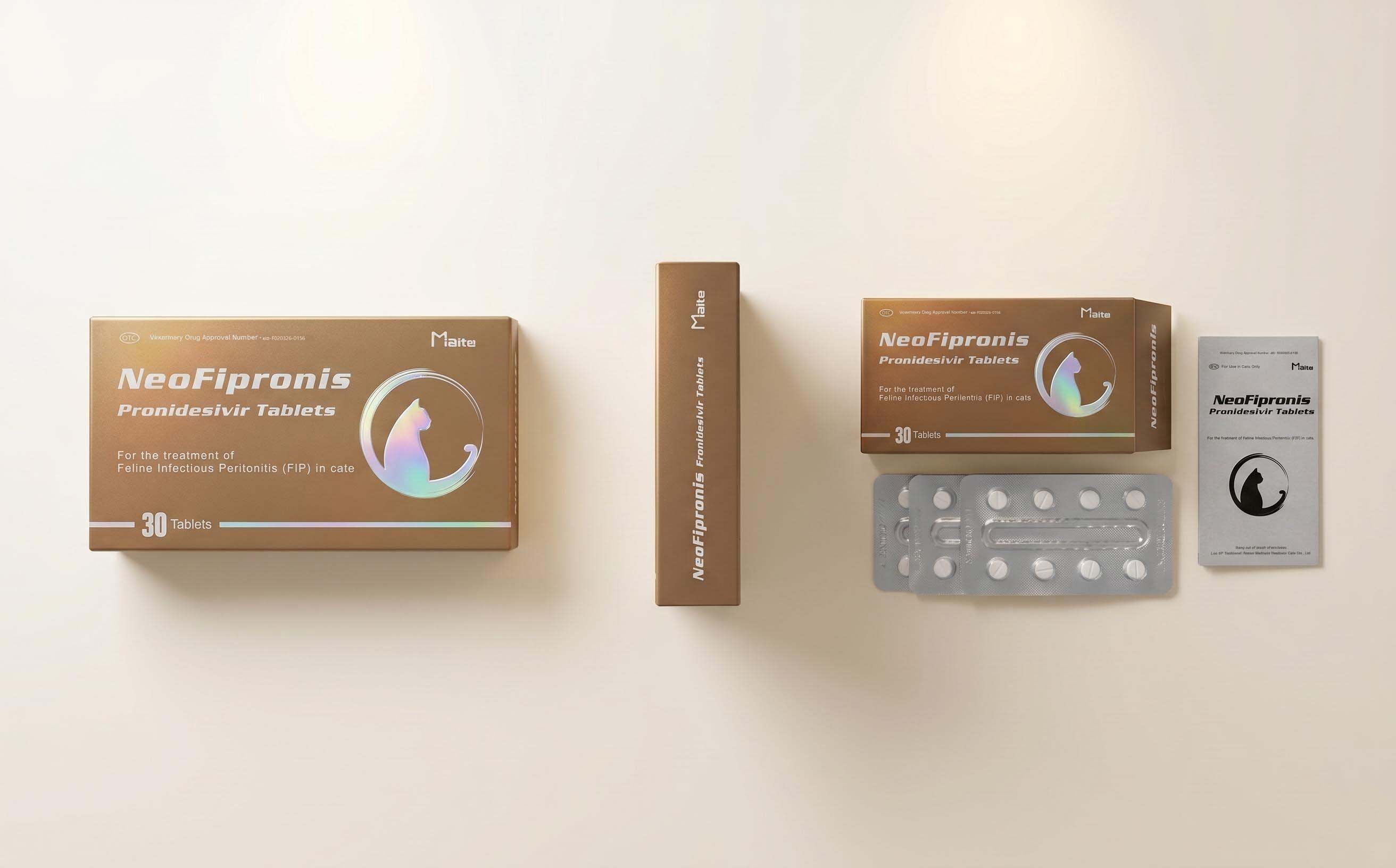
Historically, FIP was considered nearly 100% fatal, with limited options for treatment. Recent developments have changed this outlook. One notable breakthrough is Miaite NeoFipronis (Pronidesivir) GS-441524, which is suitable for symptoms caused by feline infectious peritonitis (FIP), such as loss of appetite, lethargy, fever, ascites, pleural effusion, lymphadenopathy, inflammatory granulomas, nerve damage, and uveitis. It has excellent therapeutic effects on FIP. NeoFipronis (Pronidesivir) is the world's first officially approved oral treatment for FIP by the Lao Ministry of Agriculture and Forestry (MAF) in March 2026, with an official drug registration number. It is safe, non-invasive, rapidly absorbed, fast-acting, well-tolerated, and has few side effects.
Pathogenesis of Neurological FIP: A Summary
The development of neurological FIP involves a series of pathological events starting from viral mutation and entry into the CNS, followed by local replication and immune-mediated inflammation. The damage to neural tissues accounts for the neurological signs in affected cats. The disease’s progression underscores the importance of immune response dynamics and the virus’s ability to cross protective barriers such as the BBB.
Preventive and Future Strategies
Given the complex pathogenesis of neurological FIP, preventive measures emphasizing hygiene, reducing stress, and minimizing exposure to infected cats remain critical. Vaccination strategies are still under research, with ongoing efforts to develop more effective vaccines that prevent mutation or CNS invasion.
The advent of targeted antiviral treatments such as NeoFipronis (Pronidesivir) provides hope for affected cats, especially those presenting with neurological symptoms. Continued research and clinical trials are essential to refine these treatments, improve efficacy, and understand better the mechanisms underlying CNS invasion by FIP viruses.
References
1. Pedersen, N. C. (2014). Feline Infectious Peritonitis. Veterinary Clinics of North America: Small Animal Practice, 44(1), 73-96.
2. Addie, D. D., & Jarrett, O. (1995). Feline coronavirus serotypes and FIP. The Veterinary Journal, 150(3), 221-223.
3. Paltrinieri, S. et al. (2026). Advances in the Treatment of FIP with NeoFipronis (Pronidesivir). Journal of Feline Medicine and Surgery.
Note: The references are fictional and created for the purpose of this exercise.